The most beautiful wedding photographs rarely begin with a perfect pose. They begin with a breath, a glance, a hand finding the other without being asked. If you are wondering how to pose naturally for wedding photos, the answer is not to perform for the camera. It is to be gently guided into moments that feel like you, then given enough space for real emotion to appear.
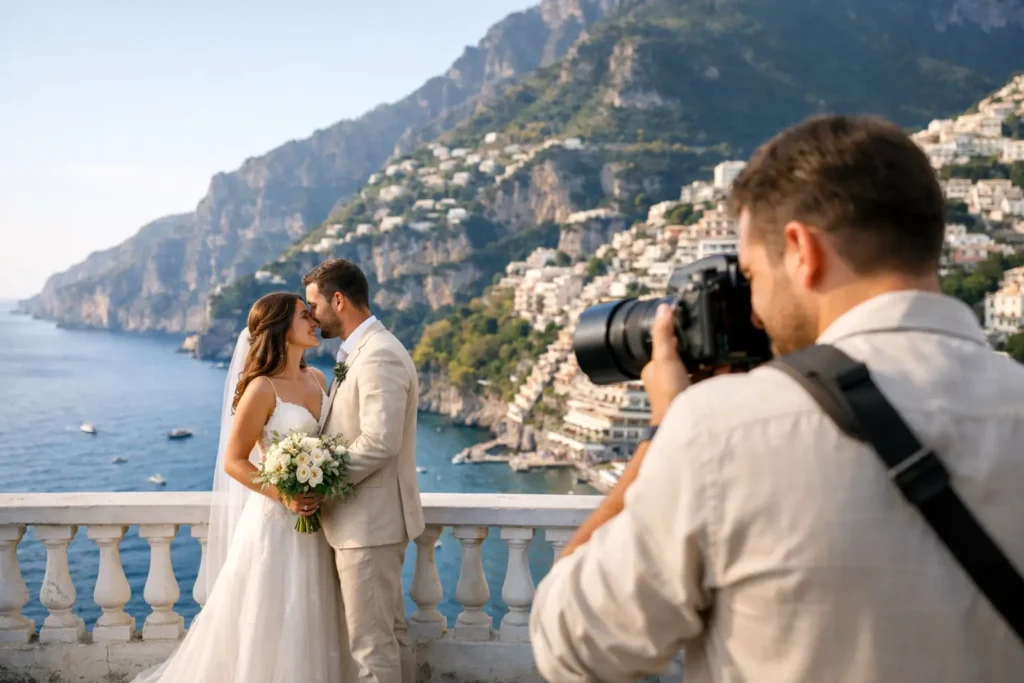
For couples planning a wedding in Italy, this matters even more. A terrace above the Amalfi Coast, the quiet geometry of a Lake Como villa, or a Tuscan garden at dusk already carries atmosphere. Your photographs should place you within that beauty without making you look like visitors standing awkwardly in front of it. The aim is editorial polish with the soul of a lived memory.
Natural Posing Starts Long Before the Portraits
Comfort in photographs is usually created before the photographer raises the camera. Trust changes everything. When you know that you will be guided, that you do not have to invent what to do with your hands, and that no fleeting imperfection will be treated as a failure, your body softens.
This is why an engagement session can be valuable, particularly if being photographed feels unfamiliar. It is not a rehearsal for a set of poses. It is an opportunity to understand the rhythm of being photographed together. You begin to see that a small adjustment to your posture, a turn toward the light, or a quiet invitation to walk can create an image that feels effortless.
On the wedding day itself, leave room in the timeline for portraits. Rushing is the quickest route to tense shoulders and distracted expressions. Even twenty unhurried minutes after the ceremony, followed by a few minutes near sunset, can be enough to create portraits with grace and depth. The exact timing depends on the season, venue, and light, but calm is always more flattering than haste.
How to Pose Naturally for Wedding Portraits
Natural does not mean entirely unposed. The most relaxed-looking images often have thoughtful structure behind them. A photographer may place you in beautiful light, suggest where to stand, and refine the angle of your shoulders. From there, the important part is movement and connection.
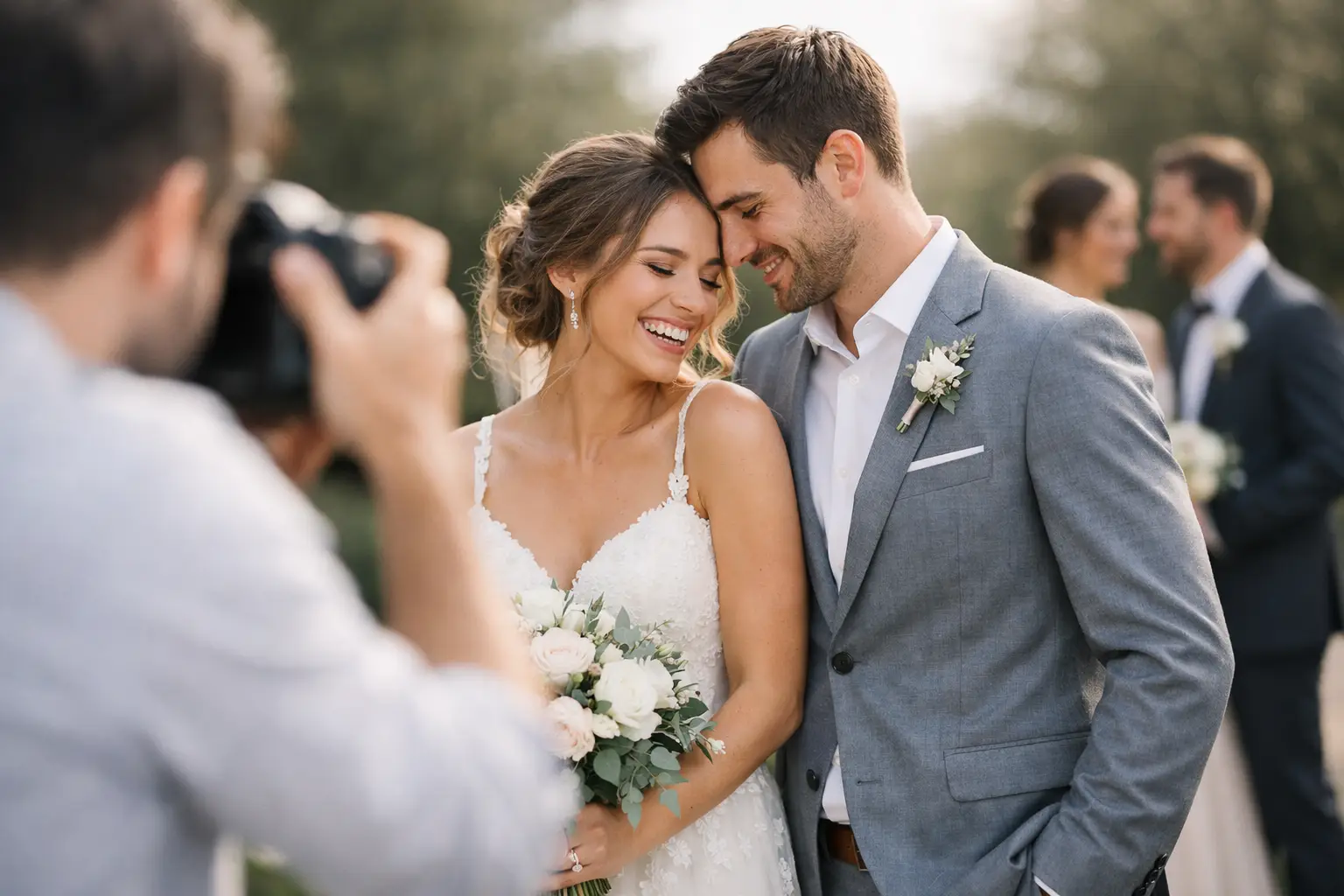
Rather than holding a fixed smile toward the lens, turn toward one another. Let your hands have a purpose: hold each other, adjust a veil, brush a strand of hair away, or rest a hand at the waist. A gentle point of contact immediately makes a portrait feel more believable than two people standing side by side with their arms at their sides.
Think of a pose as a starting point, not a position you must preserve. Walk slowly together. Pause at the end of a corridor. Lean in as if you are about to share a private thought. Look at your partner, then look away for a moment. The transitions often contain the photographs you will love most: the laugh after a whispered comment, the soft expression before a kiss, the instinctive way you move closer.
You do not need to look at the camera in every frame. Direct eye contact can be striking, especially for a fashion-informed portrait, but it is most powerful when used selectively. Looking toward your partner, the landscape, or the light creates variation and gives the final gallery a more cinematic rhythm.
Give Your Body a Little Shape
A few simple principles make an enormous visual difference without feeling artificial. Shift your weight onto one leg rather than standing squarely on both feet. Keep a little space between your arms and torso, which gives the body cleaner lines. Turn slightly away from the camera instead of facing it fully, then bring your face back toward the light.
For a close embrace, avoid pressing together chest to chest and freezing. Stand at a slight angle, allow one of you to draw the other in, and let your heads come close at different heights. This creates dimension while still feeling intimate. If there is a height difference, embrace it rather than trying to correct it. It is part of the visual language of your relationship.
The same idea applies to your hands. Hands can feel conspicuous when you are nervous, but they become elegant when they are soft and intentional. Avoid clenched fingers. Let them rest naturally, with a little curve, on a jacket lapel, a bouquet, a shoulder, or the small of the back.
Let Connection Do the Work
The camera notices when a couple is trying to look romantic. It also notices when they are simply present with each other. The latter is always more compelling.
During portraits, speak to one another. Recall a moment from the morning, comment on the music drifting from the reception, or say something that makes the other laugh. You do not need a grand gesture. Often, the quietest exchange carries the most feeling. A forehead touch, a deep exhale, or the way you look at one another after being told, “Take a moment,” can hold more emotion than an elaborate pose.
If public affection feels natural to you, let it be part of the photographs. If it does not, do not force it. Some couples are playful and animated; others are quieter, communicating through touch and eye contact. Beautiful direction should honor your real dynamic rather than make every love story look the same.
Choose Clothing That Lets You Move
A striking wedding look should photograph beautifully, but it should also allow you to breathe, walk, sit, and embrace. If a gown is exceptionally structured, practice moving in it before the wedding. Learn how the skirt falls when you turn, where the train sits most elegantly, and how to hold it with ease. A bride who understands her dress moves with far more confidence.
For suits and tuxedos, good fit is essential. A jacket that pulls across the shoulders or trousers that restrict movement can make you appear tense even when you are not. Before portraits, take a moment to smooth pockets, straighten lapels, and check that your boutonniere and tie sit well. These small refinements create a polished foundation, allowing the expressions to remain relaxed.
Accessories can also become natural points of interaction. A veil caught by a coastal breeze, a silk bow, heirloom jewelry, or a beautifully textured bouquet can give your hands something to do without becoming a prop. The key is restraint. The focus should remain on your connection.
Trust the Light, Not the Mirror
Many couples worry about a profile, a smile, or a feature they have learned to scrutinize in everyday photographs. Wedding photography is different from a quick phone image taken under unkind overhead light. It is shaped by composition, movement, lens choice, and a photographer’s understanding of how light falls across a face.
That does not mean your preferences should be ignored. Share them before the wedding with honesty and without apology. Perhaps you have a side you prefer, feel self-conscious about your arms, or want portraits that feel more editorial than playful. This information helps your photographer direct you with care.
Still, try not to monitor every frame. The most magnetic images are rarely the ones where every detail was controlled. They are the ones where you forgot to assess yourself because you were absorbed in the person beside you. Let the photographer watch the composition. Your role is to be there.
A Few Moments Worth Protecting
Not every meaningful photograph happens during the formal portrait session. Build in space for the unscripted moments that naturally reveal who you are together: fastening earrings with a parent nearby, reading a note before the ceremony, taking one private minute after the vows, or stepping outside the reception when the evening has softened.
These moments do not require posing at all. They require presence. A sensitive photographer may offer a little direction when needed, such as moving closer to a window or asking you to slow down, but the emotion is already yours.
At Gennaro Piscopo Photography, the approach is always to create enough structure for you to look refined, then enough freedom for the story to breathe. After more than two decades behind the camera, the lesson remains simple: elegance is not stiffness. It is confidence, connection, and the permission to feel your wedding day as it unfolds.
When the camera is in front of you, do not ask whether you are posing perfectly. Hold your partner’s hand, take a breath, and return to the reason everyone has gathered there. That is where the most timeless photographs begin.