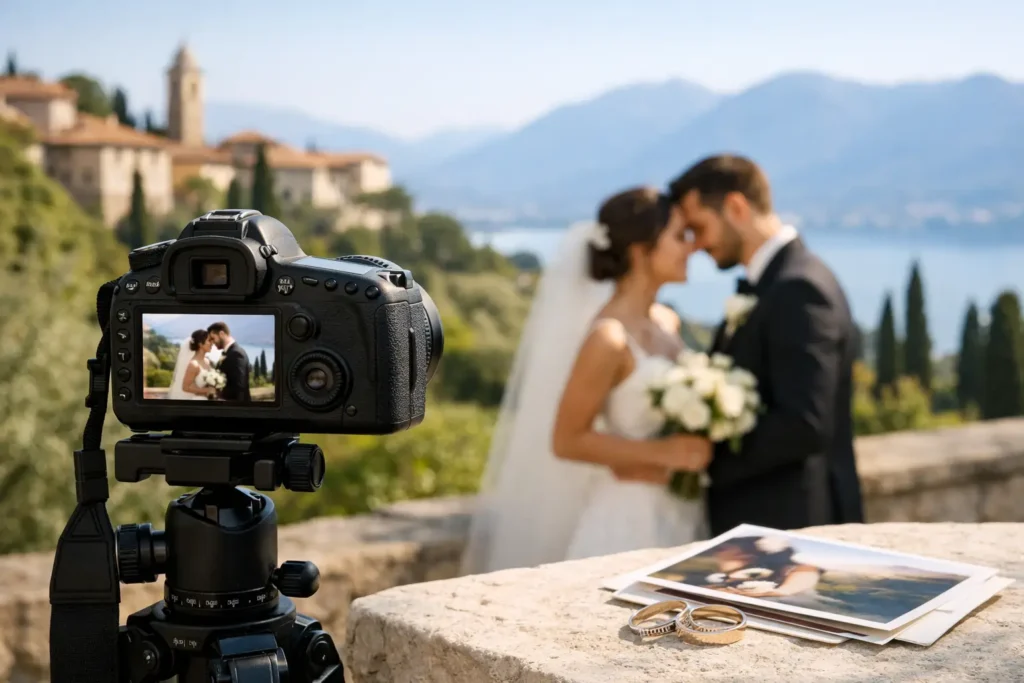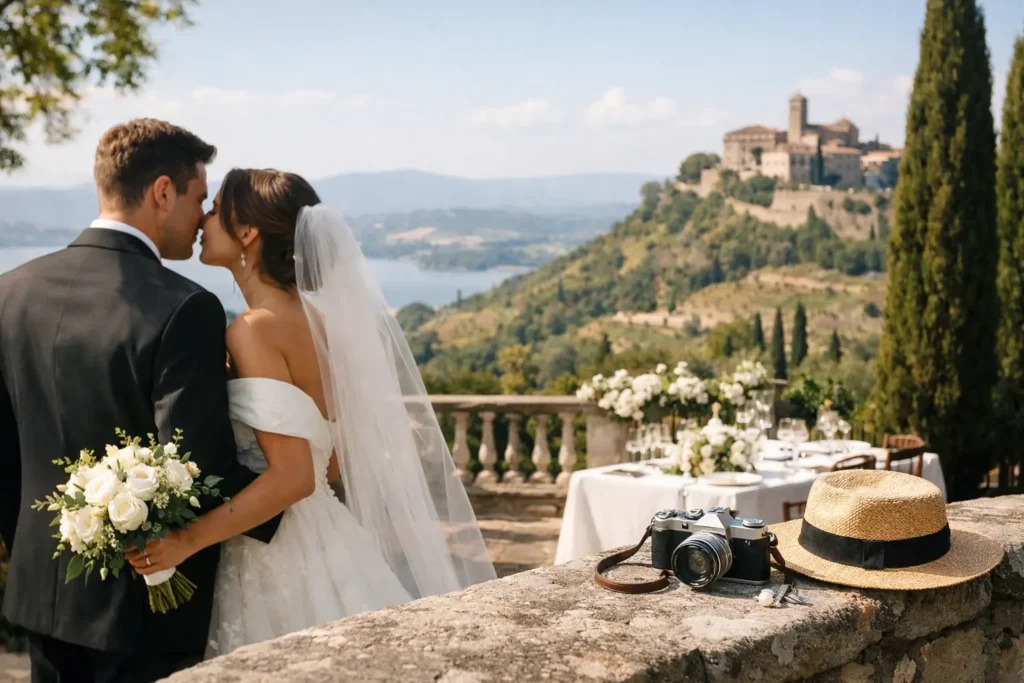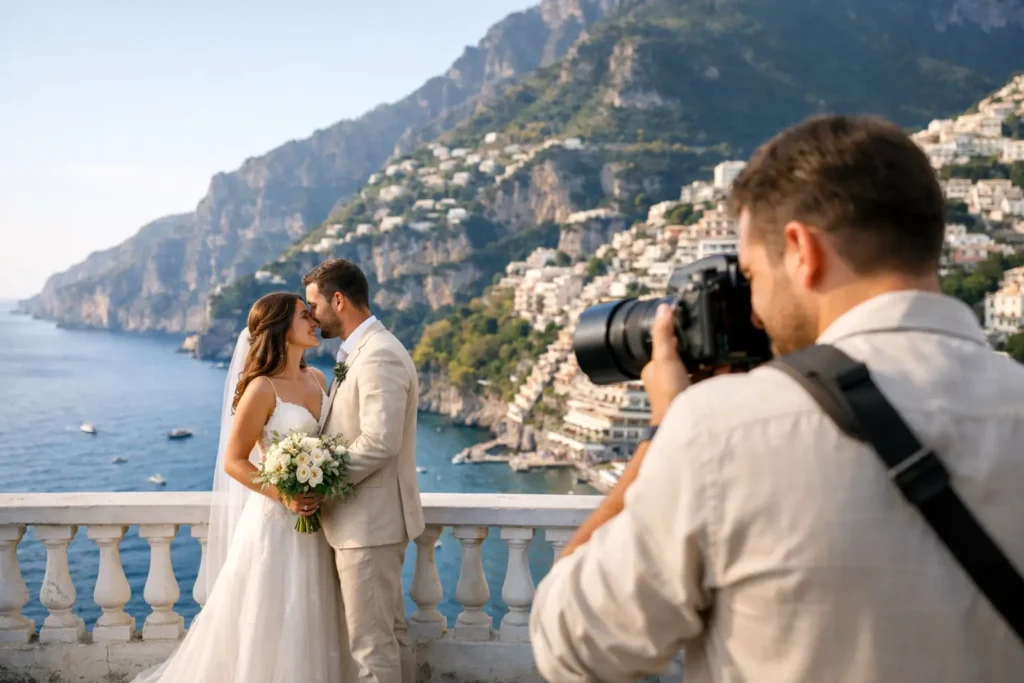
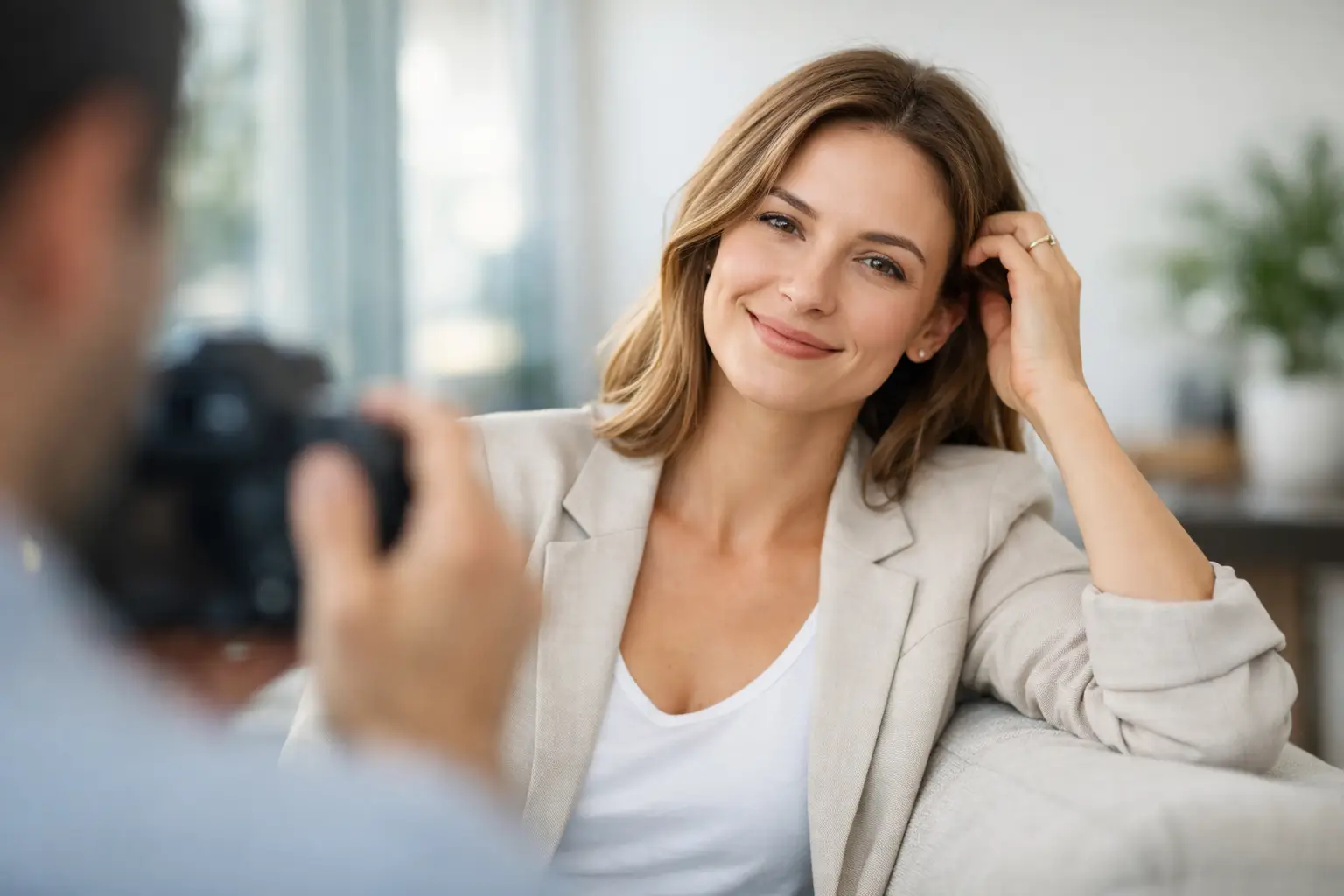
A photograph can feel like a very public place to be vulnerable. You may be standing in a silk gown above the Amalfi Coast, or walking hand in hand through a quiet Tuscan garden, and still hear one anxious thought: What do I do with my hands? Learning how to look relaxed in photos is not about becoming someone more photogenic. It is about being given enough space, trust, and gentle direction to let your real connection appear.
The most beautiful wedding images are rarely made in the moment someone is trying hardest to look beautiful. They happen just before the smile is performed, just after a shared joke, or while you have forgotten, briefly, that the camera is there at all.
Start with the right expectation
Relaxed photographs do not require you to be naturally confident in front of a lens. In fact, many couples who later look completely at ease in their images begin by telling me that they feel awkward, camera-shy, or worried about looking posed.
That is useful information, not a problem. A thoughtful photographer does not expect you to arrive knowing how to stand, where to look, or how to create a cinematic moment on command. Their role is to read the light, shape the frame, and guide you with clarity while leaving room for your personalities to breathe.
Try not to make your goal “perfect photos.” Perfection creates tension in the jaw, shoulders, and hands. Instead, aim to stay present with one another. The photographs will carry the polish, but the feeling inside them should still be yours.
Choose movement over holding a pose
Stillness can be exquisite, especially in an editorial portrait, but it can also make people feel exposed. Movement gives the body something natural to do and gives the mind less time to overthink.
Rather than being asked to stand and smile, you might walk slowly toward the light, adjust your partner’s jacket, tuck a strand of hair behind their ear, or take a moment to look at the view together. These are simple actions, yet they create changing expressions and relaxed hands. They also allow a photograph to feel lived-in rather than arranged.
The key is not to rush. A fast walk often becomes a performance, while a slow, unhurried pace lets fabric move beautifully and gives you time to connect. If a direction feels unfamiliar, say so. The best adjustment may be as small as changing the angle of your shoulders or placing your hands somewhere that feels more like you.
Give your hands a purpose
Hands reveal nerves before a face does. When they are left without purpose, they can stiffen, clutch, or disappear behind the body. You do not need to memorize a series of hand positions. Simply let them interact with something meaningful.
Hold your partner’s hand. Rest a hand lightly at their waist. Smooth the train of your dress, touch an earring, or hold your bouquet low and softly rather than pressing it to your body. The word here is lightly. Tension travels into the fingers, so imagine your hands are holding something precious, not trying to prove where they belong.
How to look relaxed in photos without forcing a smile
A constant smile can be more tiring than a neutral expression, and it often looks less natural. Relaxed faces move. There may be a small smile, a quiet glance, a laugh, or a moment of stillness as you look at your partner. All of those expressions belong in a wedding story.
Instead of smiling directly at the camera for long stretches, focus your attention somewhere real. Look at your partner’s eyes. Notice a detail in their outfit that makes you smile. Whisper something private. Take a breath together before the ceremony begins. A photographer can invite those moments without manufacturing them.
If you are asked to look toward the camera, soften your focus rather than staring into the lens. Let your lips part slightly, lower your shoulders, and exhale. The difference is subtle, but it changes the entire portrait. A calm expression has more depth than a fixed grin.
Breathe before the shutter, not after it
Most people hold their breath when they believe a photograph is being taken. It is an instinctive response, but it tightens the collarbone, lifts the shoulders, and makes the face look more alert than at ease.
Before a portrait, breathe in slowly and let the exhale be longer. Feel your feet settle into the ground. Then allow a little space between your arms and torso, rather than pinning them against your sides. This creates a more open line through the body and, more importantly, helps you feel less guarded.
No one needs to see you preparing. You can do this quietly while your photographer checks the light or adjusts the composition. It is a small ritual that can bring you back to yourself amid the pace of a wedding day.
Wear something that lets you move like yourself
Luxury is not only about how an outfit photographs. It is also about how freely you can inhabit it. A gown with magnificent structure may call for more deliberate movement; a fluid silk dress may respond beautifully to walking and wind. Neither is better. The point is to understand what your clothing needs before the wedding day.
During fittings, practice sitting, walking, embracing, and raising your arms. Notice whether your shoes change your posture or whether a veil catches when you turn. If an outfit needs adjustment, build in time for it. Comfort is not a compromise in an editorial image. It is often what makes the image believable.
The same applies to grooming. Choose hair and makeup that make you feel like a more polished version of yourself, not a stranger with impeccable styling. When you recognize yourself in the mirror, it becomes easier to forget the camera.
Build in breathing room on the wedding day
A packed timeline is one of the quietest enemies of relaxed photographs. When every minute has an assignment, portraits can feel like another obligation rather than a pause to absorb what is happening.
Allow enough time for your couple portraits that you are not stepping out of a car, racing through images, and immediately joining dinner. Even 20 additional unhurried minutes can shift the atmosphere completely. You have time to settle, to take in the location, and to let the initial adrenaline soften.
This is particularly valuable at destination weddings, where the landscape is part of the narrative. On Lake Como, in Capri, or along the Amalfi Coast, the setting deserves to be experienced rather than used as a hurried backdrop. Let the sea air, architecture, and evening light become part of your rhythm. The camera will follow.
It also helps to decide in advance which formal family photographs truly matter. When that list is clear and organized, you can move through it with ease and protect time for the less structured images that often become favorites.
Trust direction, then forget it
There is a balance between being guided and being over-posed. Clear direction is reassuring: where to stand for flattering light, how to turn so your posture feels elegant, when to step closer. But after the initial guidance, the best photographs often come when you stop checking whether you are doing it correctly.
Trust your photographer to notice the details you cannot see: a hand that needs softening, a dress that needs arranging, a background that is competing with the frame. Your job is simpler. Stay close to your partner. Listen when needed. Let yourself react honestly.
With more than two decades behind the camera, Gennaro Piscopo Photography approaches portraits as a conversation rather than a test. Fashion-informed composition can give an image its refinement, while a photojournalistic sensibility protects the emotion within it. You should feel looked after, never managed.
Let imperfect moments stay in the story
Wind may lift your veil. A tear may interrupt your makeup. Your partner may say something that makes you laugh at exactly the wrong moment, according to the imagined version of the photograph in your head. These are often the moments that give an image its soul.
Relaxation does not mean everything goes according to plan. It means you do not have to fight every unscripted detail. A little wind can make a portrait more cinematic. A genuine laugh can be more elegant than a carefully composed expression. The memory of how you felt will matter long after you forget the exact position of your feet.
When the camera comes out, return to the person beside you. Feel the fabric, hear the music in the distance, notice the warmth of their hand in yours. That is where ease begins, and it is where the most enduring photographs are found.