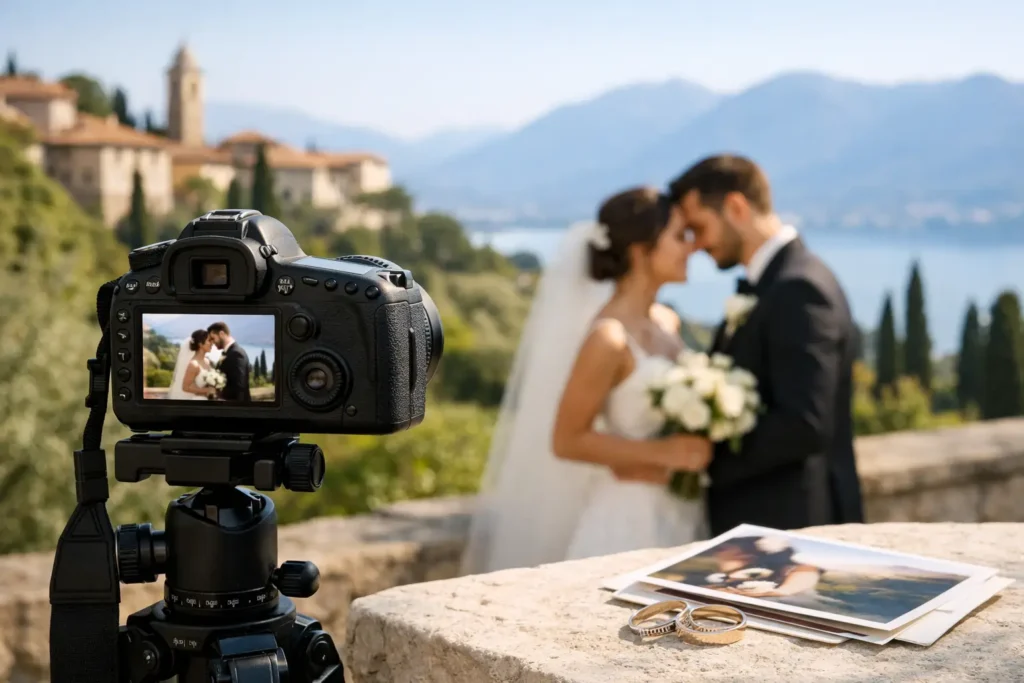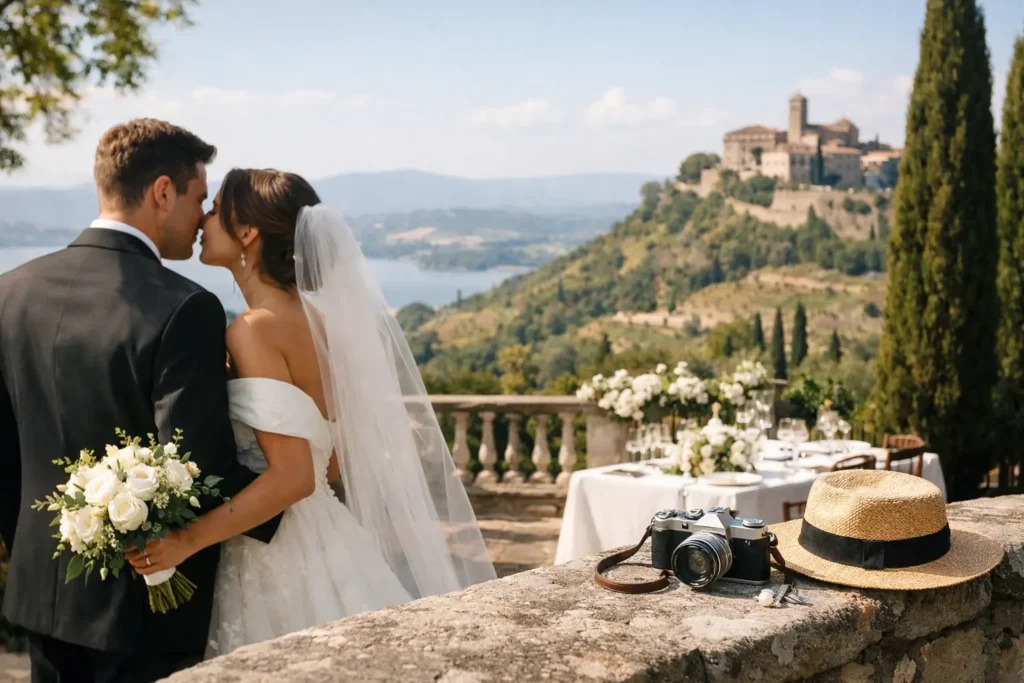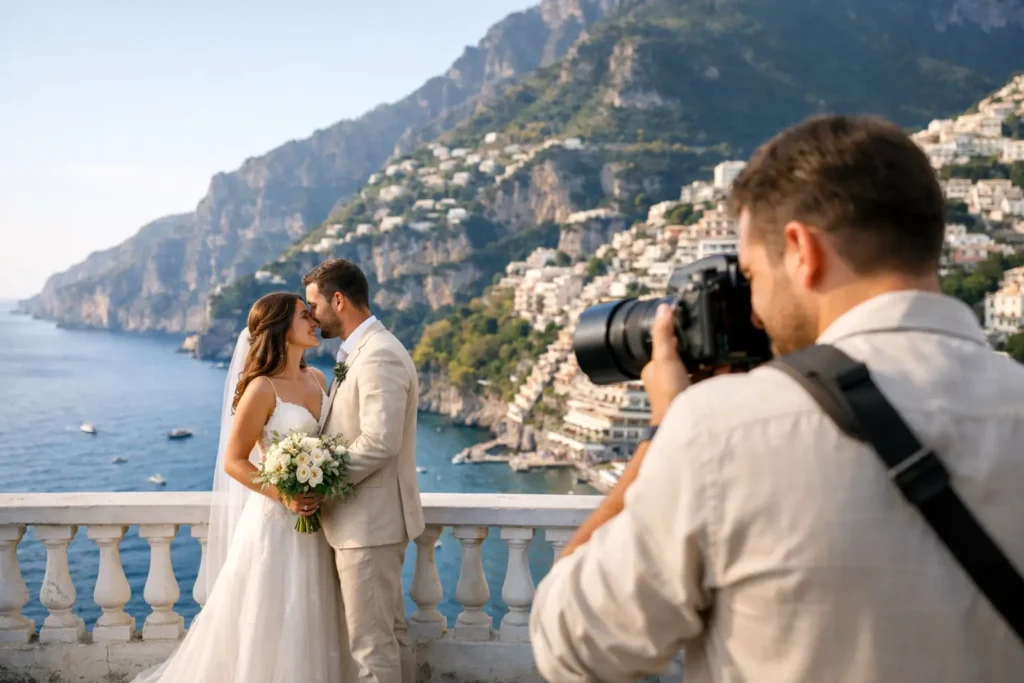
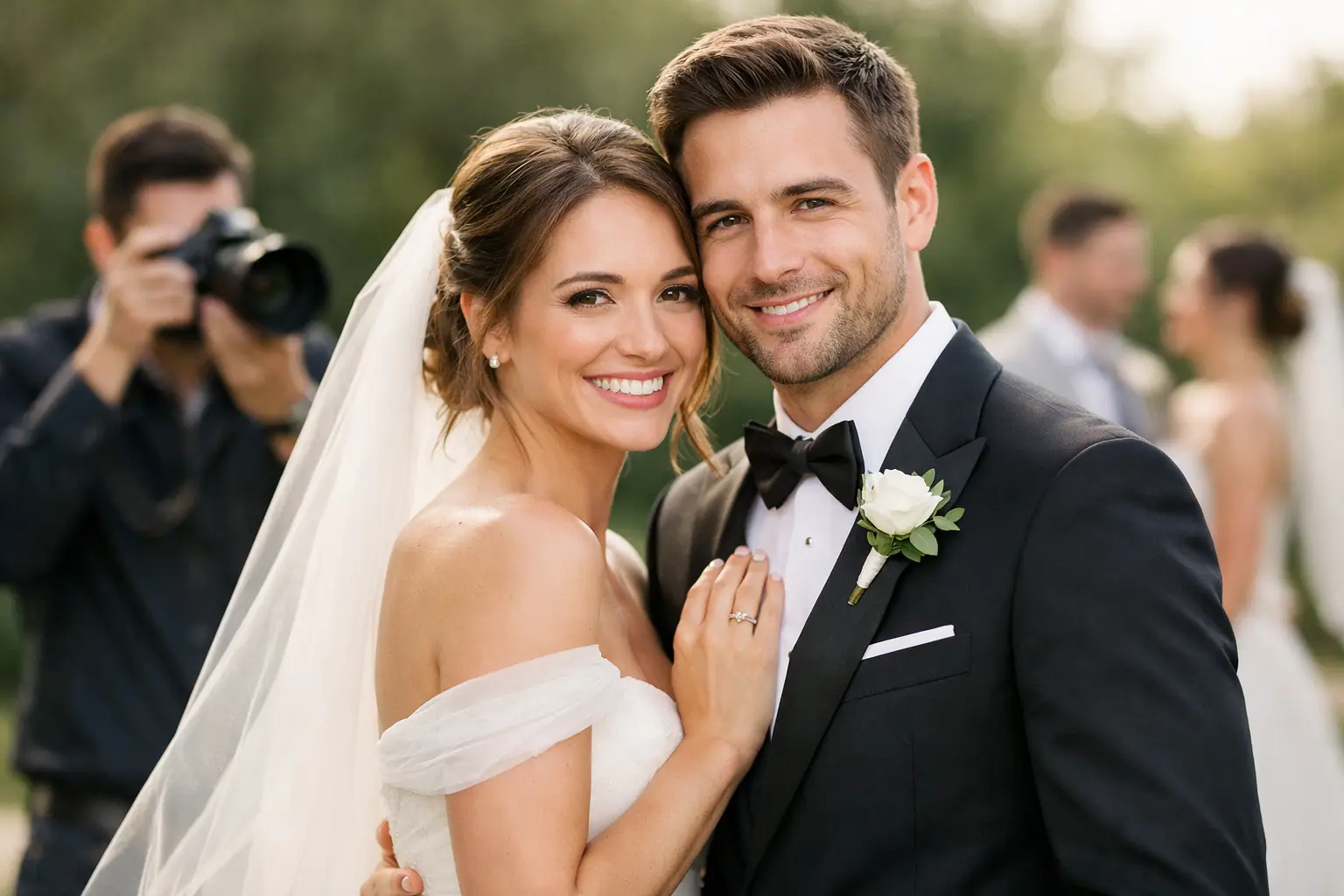
A wedding portrait should never feel like an audition. Yet when the music pauses, the guests are watching from a distance, and a camera turns toward you on a sunlit terrace in Positano or beside Lake Como, even the most self-assured person can wonder what to do with their hands. Learning how to feel confident posing begins with one reassuring truth: you are not expected to become a model. You only need to be present with the person you chose.
The most beautiful wedding photographs balance intention with ease. There is direction, certainly, but it should feel more like a gentle invitation than a series of rigid instructions. A refined image is rarely created by holding a pose perfectly. It is created in the small moments that happen just after you exhale, look at each other, adjust a sleeve, or forget the camera is there.
How to Feel Confident Posing Starts Before the Wedding Day
Confidence in photographs is often built long before the first portrait. If being photographed feels unfamiliar, an engagement session can be a wonderful place to begin. It gives you space to understand how your photographer works, to see that you do not need to manufacture emotion, and to experience what it feels like to be guided with care.
It also helps you replace imagined concerns with real evidence. Many couples arrive saying they are awkward in photographs, then discover that what they call awkwardness is simply uncertainty. Once they know where to stand, how to move, and when they can return their attention to one another, the tension leaves their shoulders.
Choose outfits for any pre-wedding session that make you feel like yourselves at your most polished. This does not mean matching perfectly or wearing something that feels overly formal for your personality. Consider movement, texture, and fit. A dress that you are constantly pulling into place or shoes that make walking uncomfortable can interrupt your presence. The goal is ease with a little sense of occasion.
Most importantly, share your concerns honestly. Perhaps you dislike a particular profile, feel self-conscious about your arms, or worry that you will look too serious. An experienced photographer does not see these conversations as vanity. They are useful creative information. Thoughtful direction can be tailored to help you feel seen at your best without turning your portraits into an exercise in concealment.
Let Go of the Idea of a Perfect Pose
The camera notices tension more readily than it notices an imperfect angle. When couples try too hard to look effortless, they often become still, hold their breath, and wait for the photograph to be over. The result can feel formal even in the most extraordinary setting.
Instead, think of posing as a sequence of small adjustments. Your photographer may place you in beautiful light, turn your body slightly, or ask you to bring your partner closer. From there, allow the scene to breathe. Shift your weight. Let your bouquet rest naturally. Brush a hand along your partner’s jacket. Look out toward the landscape, then back to each other.
A slight angle is generally more flattering and natural than standing squarely toward the camera. Relaxing one knee, lowering your shoulders, and leaving a little space between your arms and your body can create an elegant line without feeling staged. These are useful foundations, not rules that must occupy your mind all day.
The best direction is often simple: walk slowly, lean in, hold each other for a moment, or tell your partner what you were thinking during the ceremony. A prompt gives you something real to respond to. That response is where the soul of the photograph lives.
Keep Your Hands Connected to a Story
Hands are where most people feel suddenly unsure. Rather than asking, “What should I do with my hands?” give them a purpose. Hold your bouquet softly at waist height. Touch the edge of a veil. Rest one hand on your partner’s chest or shoulder. Take their hand as you walk.
Avoid gripping. A relaxed hand has softness in the fingers and movement in the wrist. If you notice yourself clenching, pause and shake out your hands for a second. It is a small reset, but it can change your entire posture.
For couples, connection is more compelling than symmetry. You do not both need to look at the camera, smile at the same moment, or place your hands in identical positions. One of you looking toward the other while the other looks into the distance can create a cinematic sense of intimacy. It should feel like a memory unfolding, not a formal arrangement.
Trust Movement More Than Stillness
Movement is the quiet secret behind photographs that look unforced. A veil catching the breeze, a slow walk through an Italian garden, a turn beneath the arches of an old villa, or a shared laugh as you make your way back to cocktails all create natural transitions. They also take pressure away from the need to hold a single expression.
Move more slowly than you think you need to. A leisurely pace gives your photographer room to shape composition and capture the in-between frames. If you are asked to walk, do not march toward the camera. Stay close together, let your shoulders touch, and keep speaking to each other. The conversation can be nonsense. What matters is that it keeps you engaged rather than self-conscious.
There is a trade-off, of course. Movement can be less predictable than a carefully composed still portrait, especially in strong wind, changing weather, or a crowded destination venue. That is why a well-paced portrait session includes both. A few intentional, beautifully lit images provide the editorial polish; the walking, whispering, and embracing bring the life around them.
Give Yourselves Permission to Pause
A wedding day carries an enormous amount of anticipation. By portrait time, you may be emotionally full, hungry, warm, or still processing the ceremony. None of this makes you bad in front of the camera. It makes you human.
Ask for water. Take a breath. Let your planner know if you need five quiet minutes between family photographs and couple portraits. A calm, unrushed window is one of the greatest gifts you can give your wedding imagery. It is not about taking hours away from your celebration. Even twenty focused minutes at the right time of day can produce portraits with depth and ease.
If a private first look feels right for you, it can also soften the pressure of being photographed later. For some couples, seeing each other before the ceremony creates a quiet emotional space and makes portrait time feel like a continuation of that connection. For others, the anticipation of meeting at the aisle is essential to the story. Neither choice is more photogenic. The right choice is the one that honors how you want to remember the day.
Use Your Photographer as a Calm Point of Reference
You do not need to direct yourselves. In fact, trying to remember every piece of advice you have seen online can make you feel less natural. Your photographer is there to watch the details you cannot see: the fall of a dress, the quality of the light, the line of a jacket, and the moments when your expression softens into something true.
At Gennaro Piscopo Photography, the approach is rooted in both fashion-informed composition and photojournalistic instinct. That means offering clear, unobtrusive guidance when a portrait needs shape, then stepping back when the emotion is already happening. You should feel supported, never managed.
Trust also means accepting that not every frame needs to be camera-facing. Some of the photographs you treasure most may be the ones where you are looking down, laughing with your eyes closed, or standing close enough to forget where the lens is. These images hold atmosphere. They remember the feeling, not merely the appearance, of the moment.
Make Space for Real Emotion
Confidence does not always look like a broad smile. It can look serene, reflective, joyous, overwhelmed, flirtatious, or quietly certain. Give yourself permission to have the expression you genuinely have. If you are nervous, tell your partner. If you are moved, do not rush to compose yourself for the camera.
Your wedding photographs are not meant to prove that every second was perfect. They are meant to preserve the particular beauty of your day: the way you reached for each other, the warmth in your faces after the vows, the light on your skin as evening arrived. When you focus on the person beside you rather than the lens in front of you, confidence tends to arrive without being chased.
When the camera comes close, soften your shoulders, breathe out, and return to each other. That is where an elegant portrait begins.