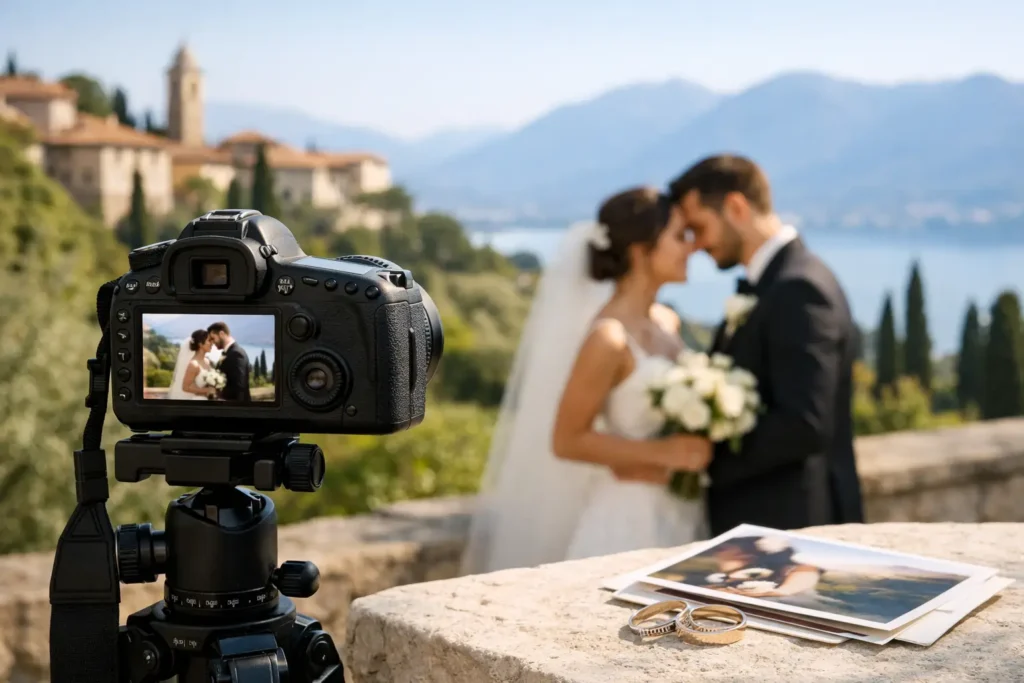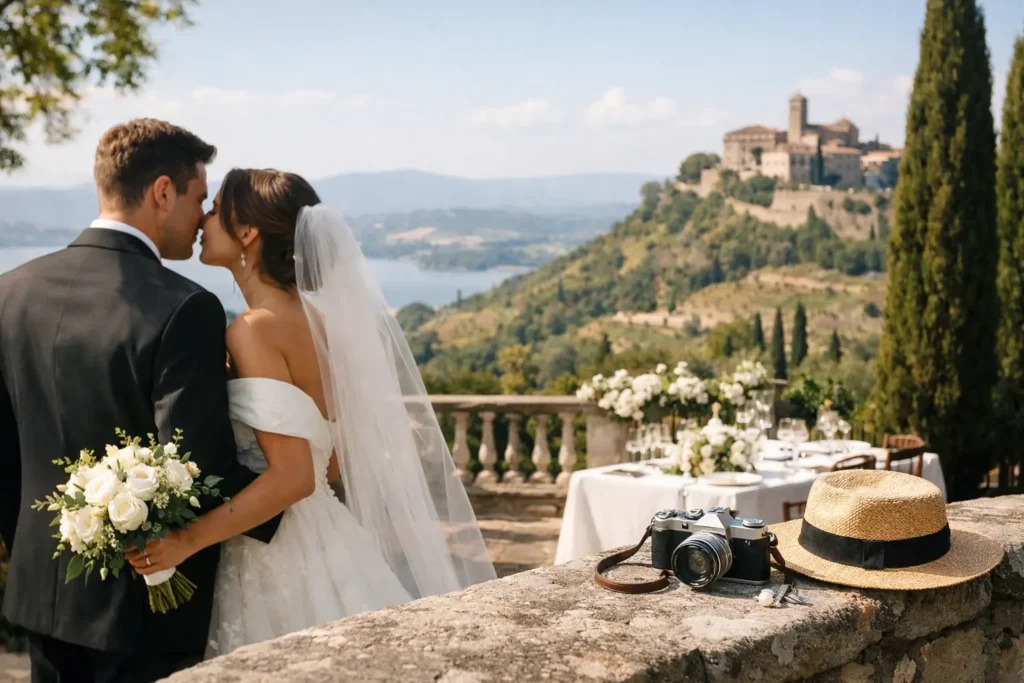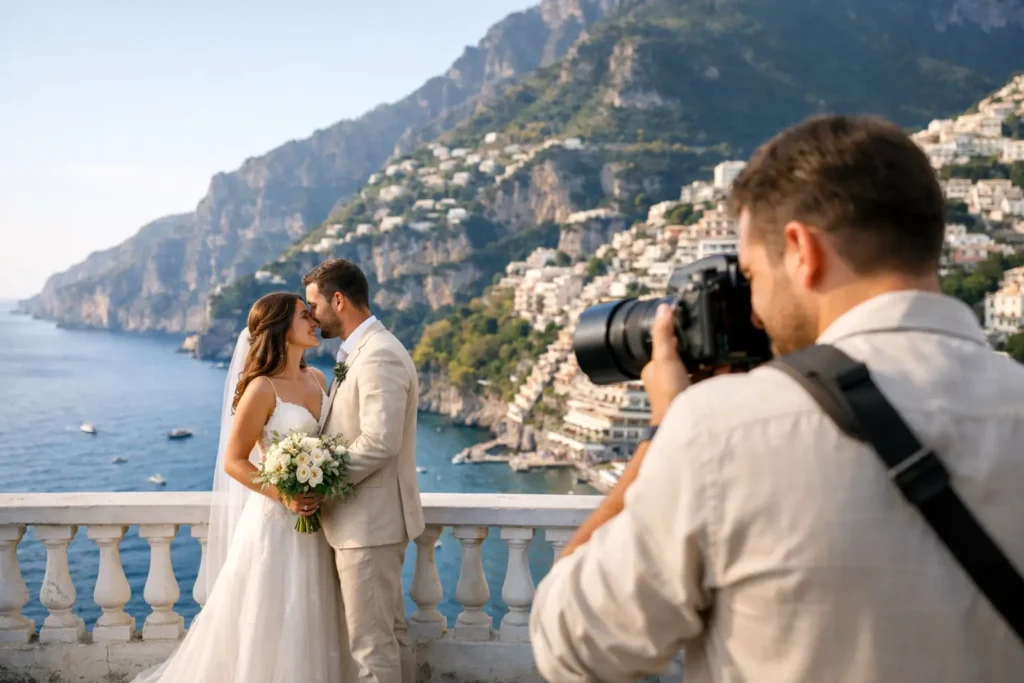
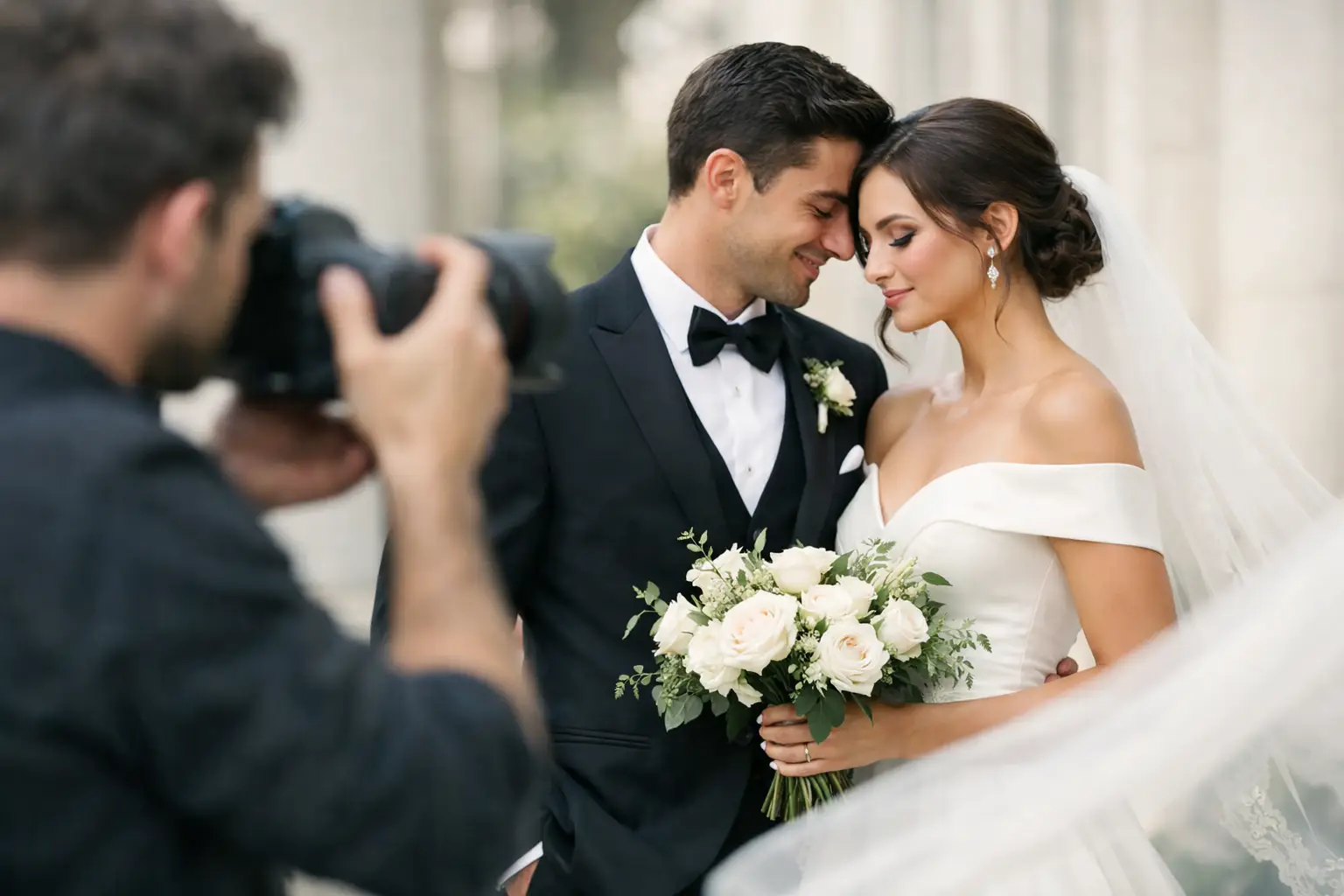
A silk veil lifting in the sea breeze. A groom looking at his bride just before the ceremony begins. Candlelight settling across a table set beneath lemon trees. Editorial wedding photography style is made for these moments, but it does not manufacture them. It sees the visual poetry already present and gives it shape, light, and a sense of enduring intention.
For couples planning a celebration in Italy or another extraordinary destination, the appeal is clear. You want photographs that belong in the pages of a beautiful magazine, yet still hold the pulse of your actual day: the nerves, the laughter, the tears, and the people who traveled far to be there.
What Is Editorial Wedding Photography Style?
Editorial wedding photography borrows the visual language of fashion and luxury magazines. There is care in the composition, an awareness of architecture and landscape, and an instinct for the way fabric, light, and movement can transform a frame. The finished imagery feels refined, cinematic, and artfully composed.
But at its best, editorial does not mean detached. A wedding is not a campaign shoot, and it should never feel as though the day has been paused simply to create photographs. The style works when elegant direction meets genuine human connection. You may be gently placed in the most flattering light or invited to walk slowly through a villa garden, but the expression, touch, and feeling within the image remain yours.
That balance is what gives editorial wedding images their soul. They are polished without becoming rigid, and elevated without losing the imperfect, beautiful life of the occasion.
The Difference Between Editorial and Traditional Wedding Photography
Traditional wedding photography often prioritizes formal coverage: clear family groupings, straightforward portraits, and a record of each major event. Those images have value, particularly when they are efficiently and thoughtfully created. Every family deserves a beautiful photograph together.
An editorial approach expands the visual ambition. Rather than simply documenting that a bride entered a room, it considers the line of the doorway, the fall of her gown, the anticipation on her father’s face, and the atmosphere around the moment. Rather than photographing a reception table as a list of details, it captures the experience of arriving at it – glassware catching the last light, flowers in motion, guests leaning toward one another in conversation.
The distinction is not about choosing style over substance. A strong editorial photographer still documents the essential moments, family connections, and unscripted joy. The difference is in how those memories are seen and shaped.
Direction That Feels Natural
Many couples love editorial imagery but worry they will feel uncomfortable in front of the camera. This is where experience matters. Fashion-informed direction should never leave you wondering what to do with your hands or feeling as though you are performing all afternoon.
The best guidance is subtle and specific. A photographer may suggest turning toward the window, slowing your walk, relaxing your shoulders, or bringing your partner closer. These small adjustments create beautiful posture and movement while leaving room for conversation, laughter, and spontaneous affection.
You do not need to be a model. You need to feel seen, supported, and free enough to be present with the person you are marrying.
Why the Setting Matters So Much
Destination weddings offer an extraordinary visual vocabulary. On the Amalfi Coast, a terrace can frame the sea like a film set. In Tuscany, long dinner tables, stone villas, and evening warmth create a quieter, painterly romance. Lake Como brings sculptural gardens, historic hotels, and light that changes beautifully across the water.
Yet a remarkable setting alone does not make an editorial image. The photographer must know when the location should lead the frame and when it should fall away. A grand view can be breathtaking, but the glance between you may be the photograph you return to most.
This is why a considered timeline is part of the creative process. Allowing a little breathing room for portraits, ideally at the gentlest times of day, gives the imagery a more unhurried quality. It also means you are not pulled away from your guests for long stretches when the celebration is in full flow.
What an Editorial Approach Captures Beyond Portraits
Portraits are often the first images couples notice in an editorial wedding portfolio. They are striking, intentional, and often visually dramatic. But the style should extend across the entire story.
It lives in the anticipation of getting ready, when a mother fastens a dress or friends share a quiet toast. It appears in the movement of a ceremony, the texture of handwritten vows, the sweep of a venue before guests arrive, and the energy of the dance floor after midnight. It is present in the details because they hold meaning, not because every object needs to be photographed in isolation.
A story-driven collection moves between wide scenes and intimate fragments. You see where you were, who was there, and how it felt to inhabit the day. The result is not merely a sequence of attractive images. It is a visual narrative with rhythm and emotional depth.
Is Editorial Wedding Photography Right for You?
This style is often a natural fit for couples who care deeply about design, location, and atmosphere, but who do not want their wedding to feel like a production. You may be drawn to timeless tailoring, meaningful details, expressive flowers, beautiful light, and photographs that hold both confidence and tenderness.
It may be less suitable if your priority is a fully hands-off documentary experience with no portrait direction at all. Editorial photography asks for a small amount of collaboration. You will occasionally be guided, asked to step into better light, or invited to take a few quiet minutes together. In return, you receive imagery with a heightened sense of composition and presence.
There is also no single version of the style. A black-tie celebration in Capri may call for bold, architectural portraits and flash-lit evening energy. An intimate countryside wedding may ask for softer images, looser movement, and a quieter visual pace. The aesthetic should respond to the couple and the celebration, not impose the same formula on every story.
How to Prepare Without Overplanning
The most successful editorial photographs begin before the wedding day, with trust and clear communication. Share the parts of the celebration that carry real significance: a family heirloom, an emotional first look, the reason you chose a particular villa, or the people you most want close to you. These details help shape the visual story with greater sensitivity.
Consider an engagement session if you would value time to become comfortable in front of the camera. It is a relaxed way to understand how gentle direction feels and to discover that the photographs you admire do not require you to be anything other than yourselves.
On the day, protect pockets of time. A calm getting-ready room, a few minutes after the ceremony, and a brief window near sunset can make a remarkable difference. Just as importantly, allow yourselves to let go of the schedule once the photographs are made. The finest frames often arrive when you have forgotten the camera is there.
A Lasting Way to Remember the Day
Trends will always shift, but photographs with emotional truth and thoughtful craft remain. An editorial image can be dramatic enough to hang as art, then become even more valuable years later because of the feeling held inside it: a familiar hand, a parent’s expression, the warmth of a room full of people you love.
Choose a photographer whose work makes you feel something, not simply one whose images look beautiful at first glance. When artistry, trust, and real connection meet, your wedding photographs can become more than a record of a destination. They become a place to return to – one that still feels like you.