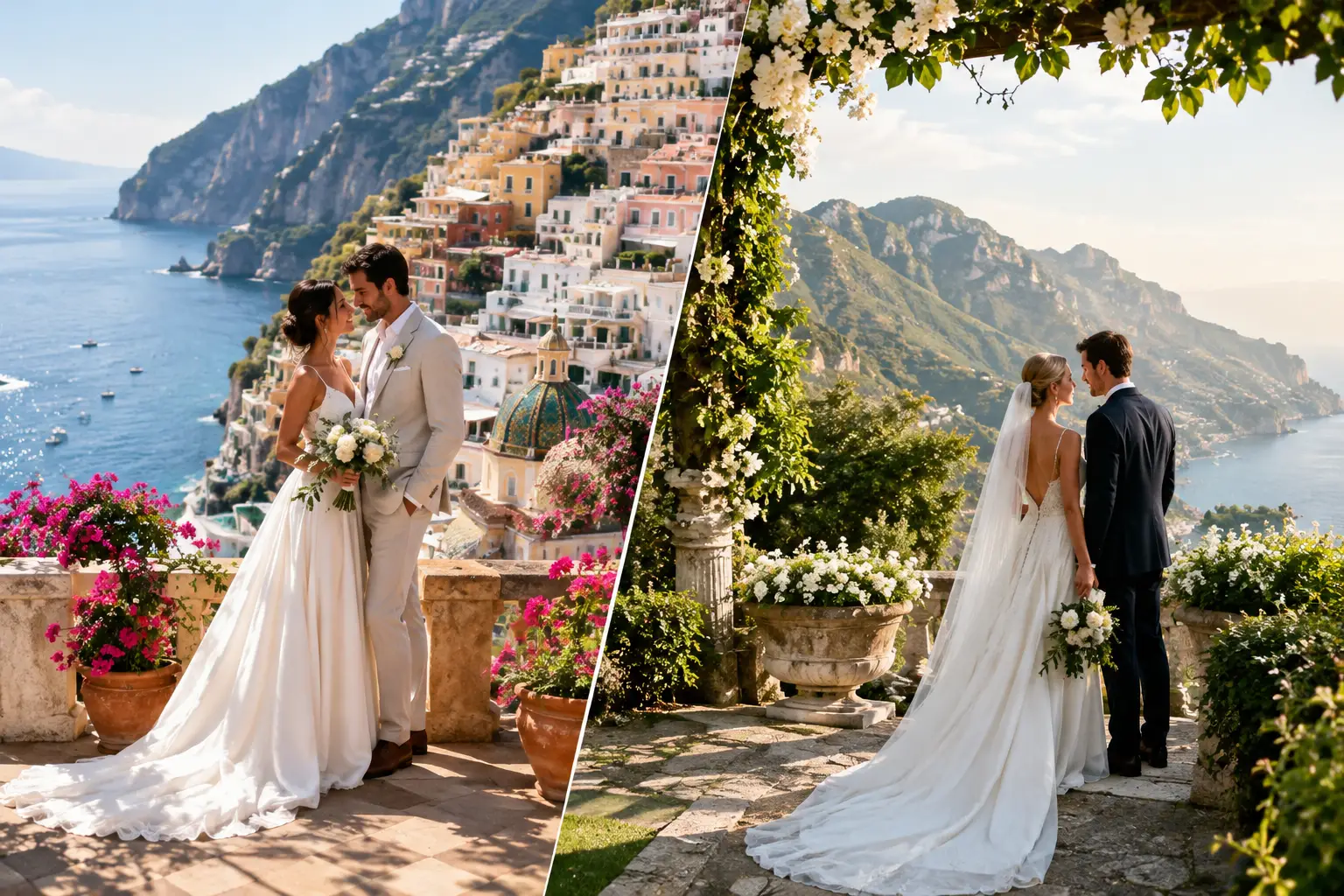
The choice between a Positano vs Ravello wedding atmosphere is not simply a choice between two celebrated Amalfi Coast towns. It is a decision about rhythm. Positano places you inside the movement of the coast: boats below, footsteps on narrow lanes, music carrying upward after dark. Ravello feels more removed, composed, and suspended above the sea, where gardens, stone terraces, and long views create a quieter kind of occasion.
Both can hold an elegant, deeply personal wedding. The better fit depends on how you want the day to feel while you are living it, not only how it will look in photographs.
Positano vs Ravello Wedding Atmosphere: The Essential Difference
Positano is immediate. Its architecture rises in layers from the water, with stairways, balconies, and pastel facades constantly drawing the eye outward. A wedding here has a cinematic sense of arrival. Guests may come by boat, gather for an aperitivo above the beach, or move through the town as its evening lights begin to appear across the hillside.
That energy is part of Positano’s appeal. It is social, glamorous without needing to announce itself, and wonderfully alive. For couples who want the Amalfi Coast to feel present in every part of their celebration, Positano offers texture at every turn: the sound of the sea, warm terracotta underfoot, bougainvillea against white walls, and the compact drama of a town built vertically.
Ravello has a different confidence. High above Amalfi, it has a slower, more private quality. The landscape unfolds rather than surrounds you. Instead of looking across a busy shoreline, you are looking outward from gardens and terraces toward an immense horizon of mountains and sea.
For many couples, that altitude creates emotional space. The morning can feel unhurried. A ceremony has stillness around it. Dinner under the trees or on a terrace feels intimate even when the guest count is substantial. Ravello is often right for couples drawn to classical architecture, cultivated gardens, and a celebration with a more measured pace.
How Each Place Shapes the Wedding Day
Positano feels spontaneous and connected to the coast
A Positano wedding day tends to have momentum. Even when the celebration is carefully planned, the town itself brings movement: guests arriving from different directions, the changing light on the cliffside, passing boats, and the compact pathways that connect one scene to the next.
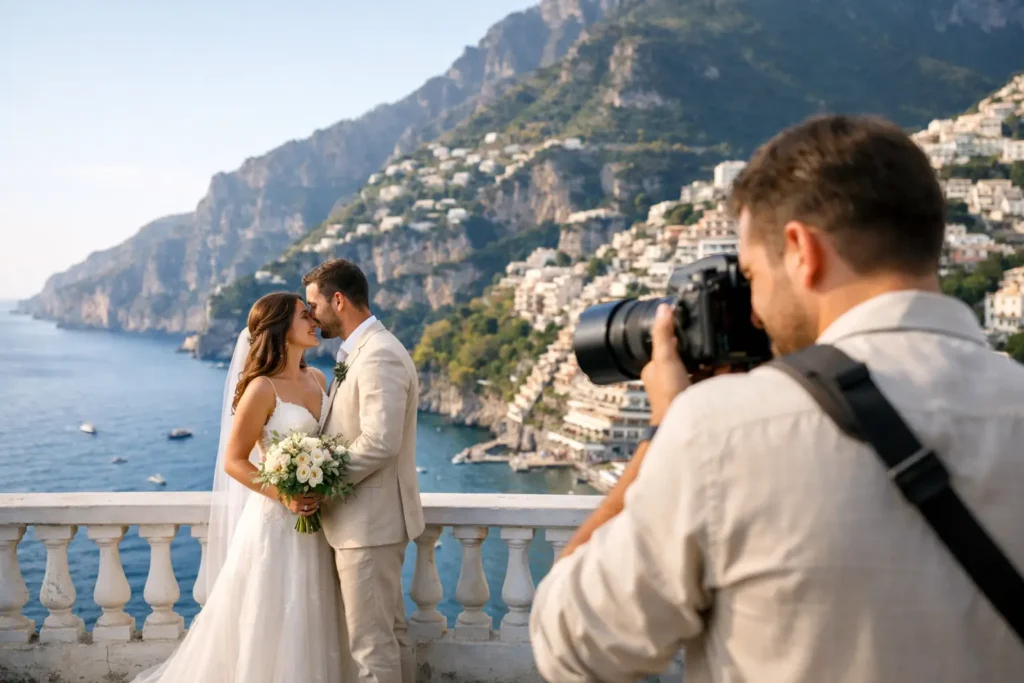
This can make the day feel wonderfully unscripted. From a documentary photography perspective, Positano offers small, human transitions that often become meaningful parts of the story: a hand held while navigating a staircase, friends gathering at a lookout, a veil catching the coastal breeze, or a quiet pause before rejoining the celebration.
It also asks for thoughtful timing. In high season, Positano is active from morning through evening. Couples who value privacy should plan their portrait time and movements with care. The most compelling images are rarely about finding an empty version of Positano. They are about using its life intelligently, then creating space for calm, connected portraits when the light and location allow.
Ravello feels considered, spacious, and inward-looking
Ravello generally gives a wedding more room to breathe. Its setting encourages a day that unfolds in chapters: quiet preparation, a garden ceremony, time for portraits without rushing, then an evening that gradually gathers warmth as candles and conversation take over.
The atmosphere suits couples who do not need a constant sense of spectacle. Ravello’s beauty is architectural and atmospheric rather than immediate. Pale stone, old gates, formal greenery, distant blue water, and the soft geometry of terraces create a refined backdrop without competing with the people in front of the camera.
This does not mean Ravello is formal or stiff. It can be joyful and exuberant, especially once dinner and dancing begin. But the setting naturally gives that energy a frame. There is a sense of occasion, of stepping slightly away from the world below.
Light Is a Major Part of the Decision
On the Amalfi Coast, light is never a decorative detail. It determines how a place is experienced and photographed.
In Positano, the close cliffside setting creates contrast. Depending on the season and time of day, one terrace may be bathed in bright sun while another sits in open shade. This can be visually dramatic, with strong color, layers of architecture, and a real sense of place. It also requires an experienced approach to pacing. Preparations, ceremony timing, and portrait locations need to work with the conditions rather than against them.
After sunset, Positano changes character quickly. The town becomes a constellation of warm lights across the slope. Blue hour portraits can feel cinematic, while a candlelit dinner carries the energy of the village around it.
Ravello’s elevated position often provides broader, gentler views of the sky. Late-afternoon light can move beautifully across gardens and terraces, and the horizon remains part of the visual story for longer. There is an openness here that is particularly flattering for editorial portraits with a relaxed, natural feeling.
Neither location is universally better for photographs. Positano is richer in visual density and coastal movement. Ravello offers greater calm, cleaner compositions, and a more expansive relationship with the landscape. A strong photographer will see the possibilities in either, but couples should choose the atmosphere they want to inhabit first.
Guest Experience, Access, and Privacy
The guest experience in Positano is part of the adventure. It is ideal for a group that enjoys being in the center of a celebrated coastal town, with the beach, boats, boutiques, and evening life close at hand. The trade-off is that mobility can involve stairs, traffic, and a degree of coordination. This matters for older relatives, very young children, and anyone who finds steep walking difficult.
Ravello is usually easier to experience at a slower pace once guests have arrived. It suits those who appreciate long lunches, garden walks, and time spent together away from the busier parts of the coastline. Its setting can feel more private, particularly for a wedding centered around one property or terrace.
Privacy, however, is never automatic. It depends on the exact venue, the season, the schedule, and the scale of the event. A photographer familiar with the coast can help shape a portrait plan that protects time for the two of you, whether that means choosing a quieter corner in Ravello or stepping into Positano at the right moment.
Which Atmosphere Fits Your Story?
Choose Positano if you want your wedding to feel immersed in the movement of the Amalfi Coast. It is for couples drawn to dramatic vertical scenery, a lively sense of place, and images that carry the color and pulse of a Mediterranean town.
Choose Ravello if you want a more private, contemplative setting with an emphasis on gardens, architecture, and long coastal views. It is especially suited to couples who imagine a graceful day with time to be present with one another and with their guests.
There is also a practical emotional question worth asking: when you picture the quiet minutes before the ceremony, do you see yourselves overlooking a lively village and sea, or standing together in a serene garden above it all? The answer is often more revealing than a list of venue features.
For photography, the most lasting images will not come from choosing the more famous backdrop. They will come from choosing the setting in which you can relax into yourselves. If you are drawn to the animated poetry of Positano or the hushed elegance of Ravello, review portfolio stories that reflect that feeling, then make an inquiry with enough time to discuss light, timing, and the rhythm you want your celebration to hold.