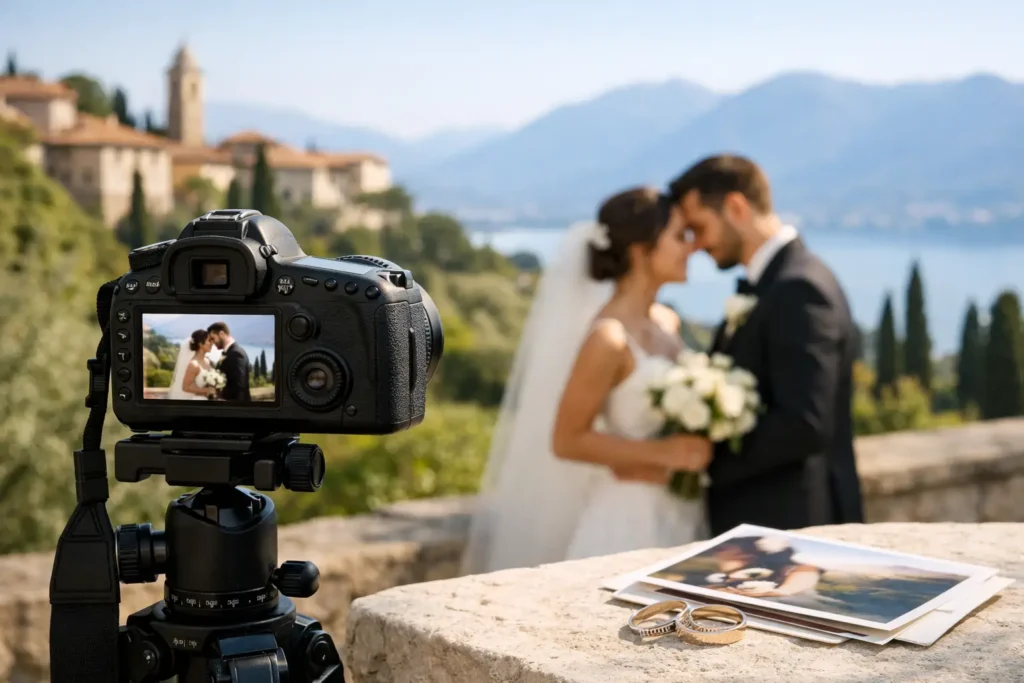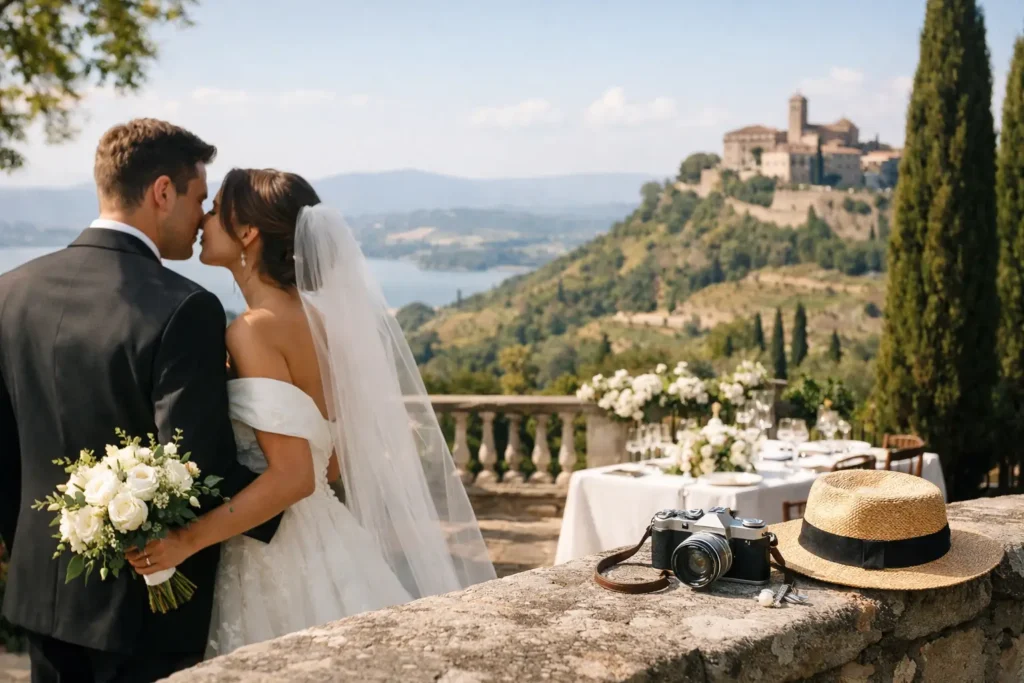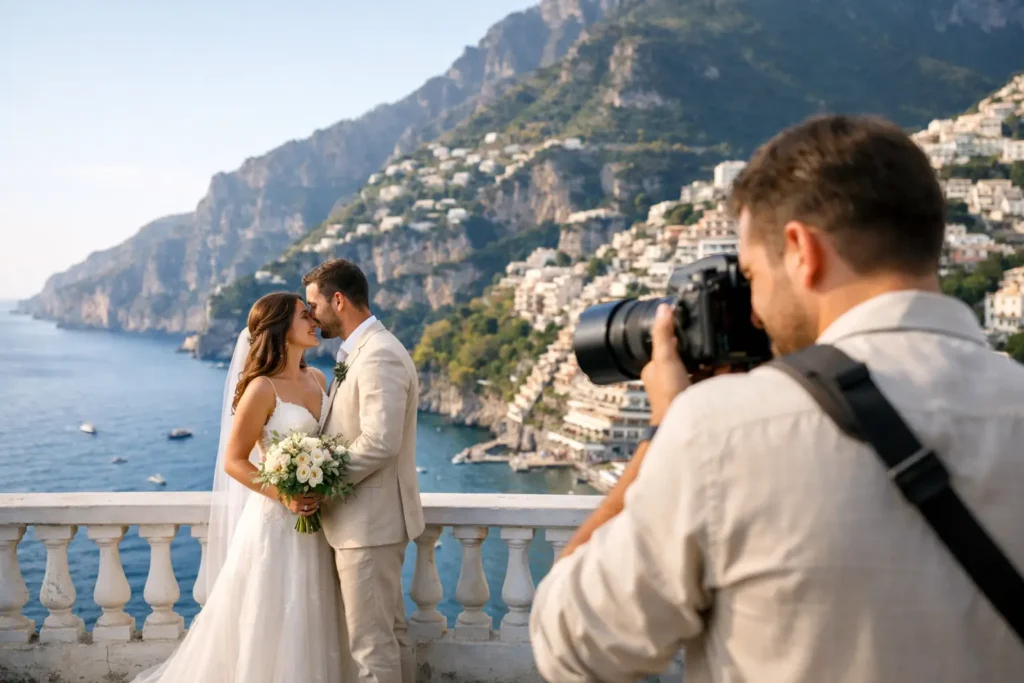
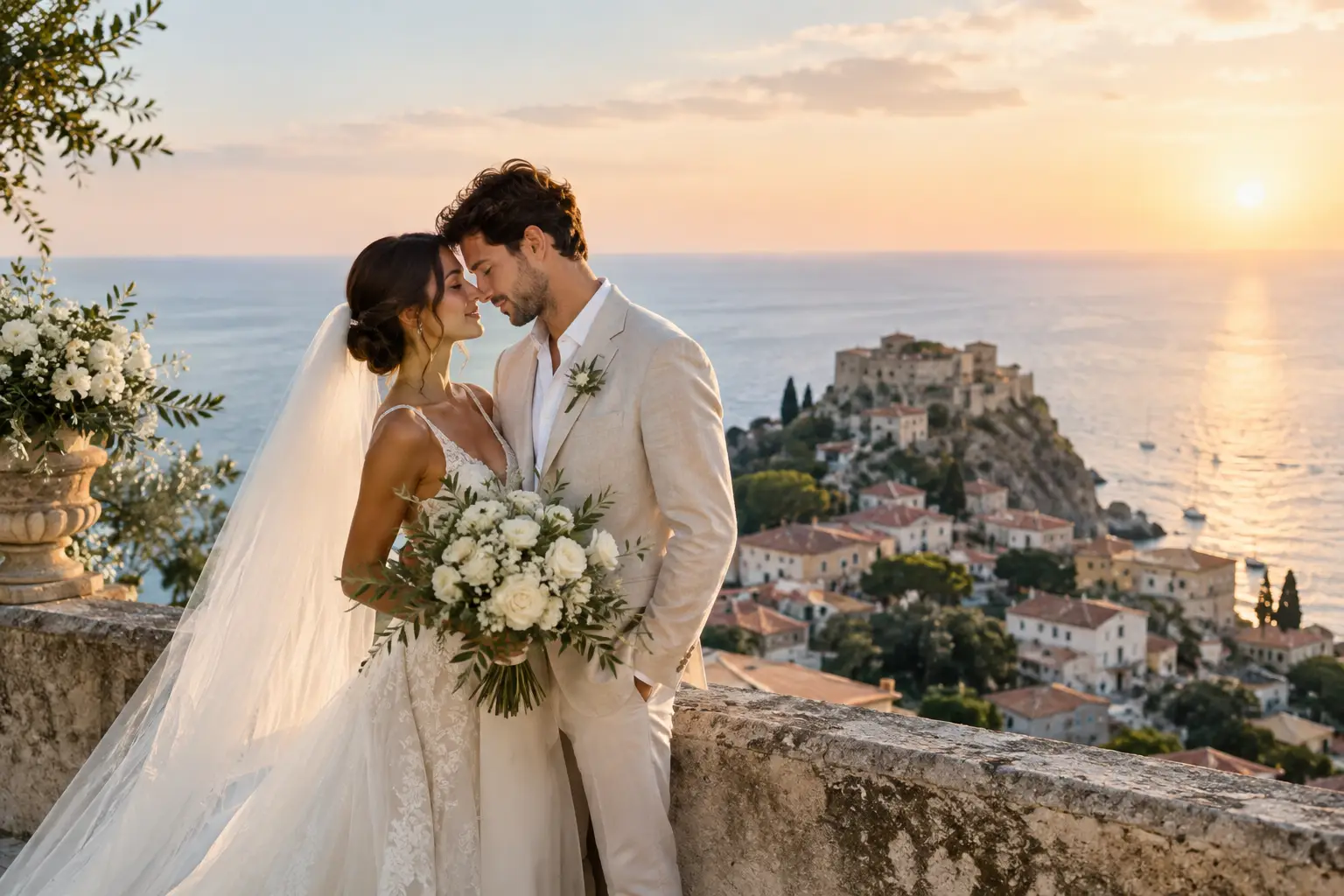
Castellabate wedding photography is less about imposing a scene on the day and more about paying attention to what is already there: the warm stone beneath the historic center, the long blue horizon beyond Santa Maria di Castellabate, and the unhurried closeness of a celebration held away from the busiest stretches of the coast. For couples drawn to Southern Italy’s quieter side, this part of Cilento offers a setting with texture, soul, and room for genuine connection.
The photographs should feel as considered as the destination itself. They should hold the energy of family arriving through narrow streets, the light changing over an aperitivo by the sea, and the small gestures between two people who have traveled a long way to gather their favorite people in Italy. That requires more than a beautiful backdrop. It requires an understanding of timing, movement, and when to step forward with direction or remain quietly at a distance.
Why Castellabate photographs differently
Castellabate has two distinct visual rhythms. The medieval hill town is intimate and architectural, with stone passages, arches, terraces, and views opening unexpectedly toward the Tyrrhenian Sea. Below it, Santa Maria di Castellabate has a gentler coastal pace, where pale waterfront buildings, boats, and the shoreline introduce air and openness into a wedding story.
This contrast gives a wedding day natural variety without needing to force it. Preparations may have the soft shadows and tactile detail of an old Italian interior. A short walk can lead to a terrace or a sea-facing road where the landscape feels expansive. Later, candlelight and warm evening tones bring everything inward again, toward conversations, embraces, and a dinner that feels lived in rather than staged.
Cilento light is one of its defining qualities. In the middle of the day, the sun can be direct and bright, especially near the water and against pale surfaces. That is not a problem to be avoided, but it does need to be handled with intention. Shaded courtyards, interiors with window light, and protected corners of the historic center can create elegant portraits while the sun is high. As afternoon softens, the coast becomes more luminous and flattering, allowing the landscape to play a fuller role.
A story-driven approach to Castellabate wedding photography
The most enduring wedding photographs do not ask a couple to perform happiness all day. They make space for it. An unobtrusive documentary approach is especially valuable in Castellabate, where so much atmosphere comes from the unscripted details: a parent adjusting a veil, friends leaning together at the edge of a terrace, a glance exchanged during dinner when everyone is finally seated.
At the same time, editorial imagery benefits from calm, precise guidance. A fashion-photography background informs how a portrait is composed, how clothing moves in the coastal breeze, and how a couple can be placed in beautiful light without looking posed. The goal is never to turn the wedding into a production. It is to create a small number of intentional frames that belong naturally within the day.
This balance matters for international couples who want refined images but may not feel comfortable in front of a camera. Direction should be simple and human: where to stand, how to turn toward the light, when to take a breath and forget the camera is there. Once that trust is established, the photographs become more relaxed, more cinematic, and more recognizably theirs.
Allow time for portraits without leaving the celebration
A portrait session in Castellabate does not need to be long to be meaningful. Often, twenty minutes near sunset is enough when it is planned around the location, the season, and the flow of the reception. The strongest approach is usually to choose an area close to the celebration rather than building a complicated transfer into an already full schedule.
The historic center rewards a slower pace. Uneven stone lanes, steps, and changing pockets of shade require comfortable shoes and a willingness to move carefully. In return, they offer photographs with depth and a strong sense of place. Coastal locations offer easier movement and wider views, but they can be exposed to wind and strong reflected light. Each choice has its own character, and the right one depends on the couple’s priorities rather than a fixed formula.
Planning for the coastal conditions
A well-photographed destination wedding feels effortless in the final images, but that ease is often the result of quiet preparation. On the Cilento Coast, schedules should respect the light as well as the realities of travel, heat, and guest comfort.
For spring and early fall celebrations, the softer temperatures make it easier to use outdoor spaces across more of the day. Summer brings long evenings and a lively coastal atmosphere, though ceremonies held in full sun may call for a later start or carefully selected shade. If a ceremony must take place earlier, photography can be planned around it, with portraits divided into short moments rather than relying on one extended session.
Wind deserves consideration, particularly for veils, loose hair, and waterfront tables. It can be beautiful in photographs when treated as part of the atmosphere, adding movement to a dress or a veil. But it also calls for practical thinking: secure paper details, a sheltered alternative for delicate styling, and a timeline that does not depend entirely on one exposed viewpoint.
A photographer with local coastal experience also watches the small transitions. The walk from a ceremony to an aperitivo, the moment the sun slips behind a building, the few minutes before dinner when guests are naturally gathering. These are often where the emotional photographs happen, because nobody has been asked to recreate anything.
Details that make the setting feel personal
Castellabate does not need excessive decoration to make an impression. Its character is already present in the stone, the sea air, the native vegetation, and the contrast between the village above and the coast below. The most elegant visual choices tend to work with these elements rather than compete with them.
For photography, this means looking beyond formal details in isolation. A place setting is more evocative when it is photographed in the context of hands reaching across the table. Flowers become part of the story when they appear beside a handwritten note, a glass lifted in a toast, or a grandmother’s expression during dinner. The visual narrative becomes richer when the design, the landscape, and the people are allowed to coexist.
This is also why full-day coverage has value for a destination celebration. The story is not only the ceremony or the sunset portrait. It begins with anticipation and ends after the pace loosens, when the dance floor is full and the day takes on its own warmth. For couples planning several gatherings, an engagement or pre-wedding session can add another, quieter chapter while helping them become comfortable with the camera before the wedding day.
Choosing photographs that will last beyond the trip
A wedding in Castellabate invites images that feel rooted in a particular place without becoming a travel postcard. The sea should be present when it adds emotion or scale. The historic streets should be used for their texture and intimacy, not simply because they are recognizable. Most of all, the photographs should preserve the people who gave the destination meaning.
That perspective shapes the final edit and the way images live after the celebration. A handcrafted fine-art album, made in Italy, can hold both the broad coastal scenes and the quieter frames that tend to grow more valuable with time: a hand held under the table, a tear quickly brushed away, the last look back at a room filled with loved ones.
For a sense of this story-driven, editorial approach, browse the Cilento Coast and Southern Italy portfolio work, then enquire with the date, location, and shape of the celebration. The most useful planning conversation begins with how you want the day to feel, not simply with a list of photographs you think you should have.
Castellabate rewards couples who leave a little space in their schedule: space to walk slowly after the ceremony, to watch the light turn warmer, and to be present with the people who have come to celebrate. Those unplanned minutes are often where the photographs find their soul.