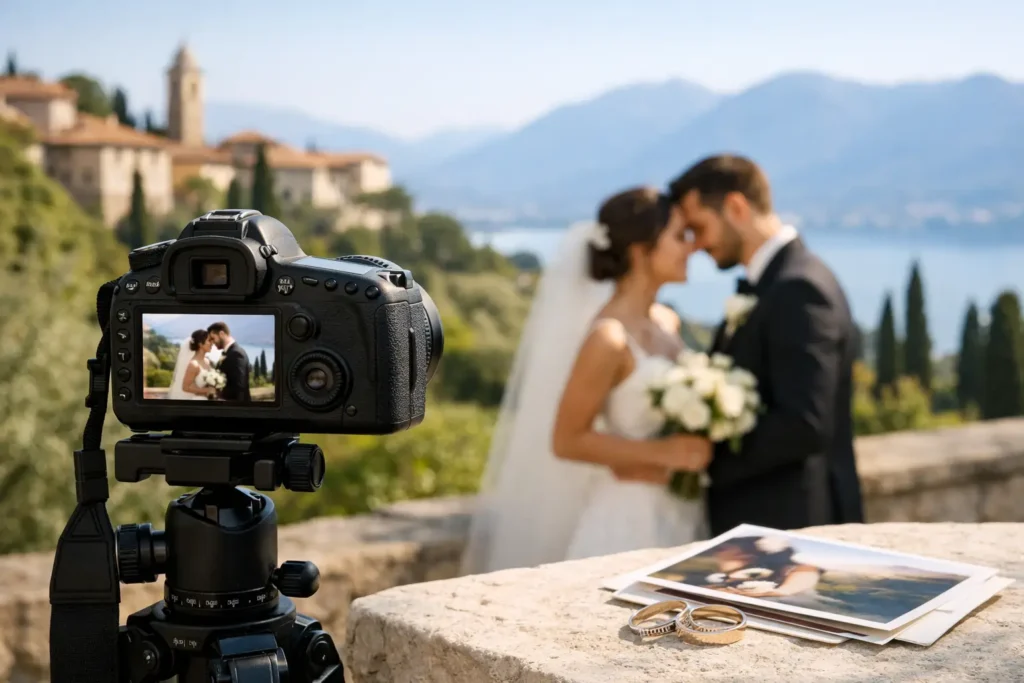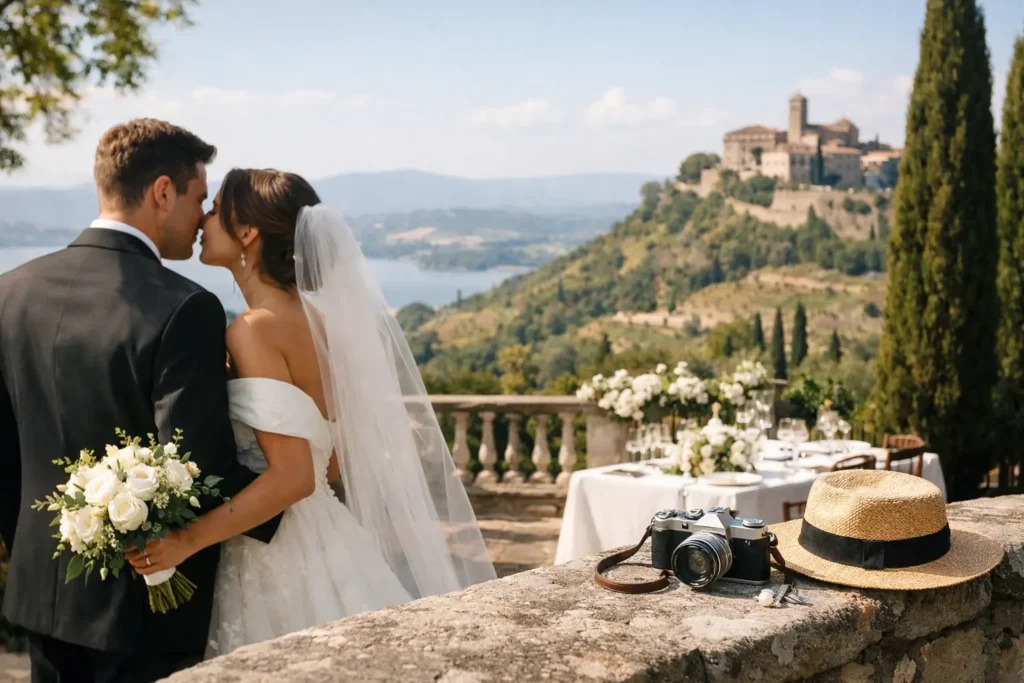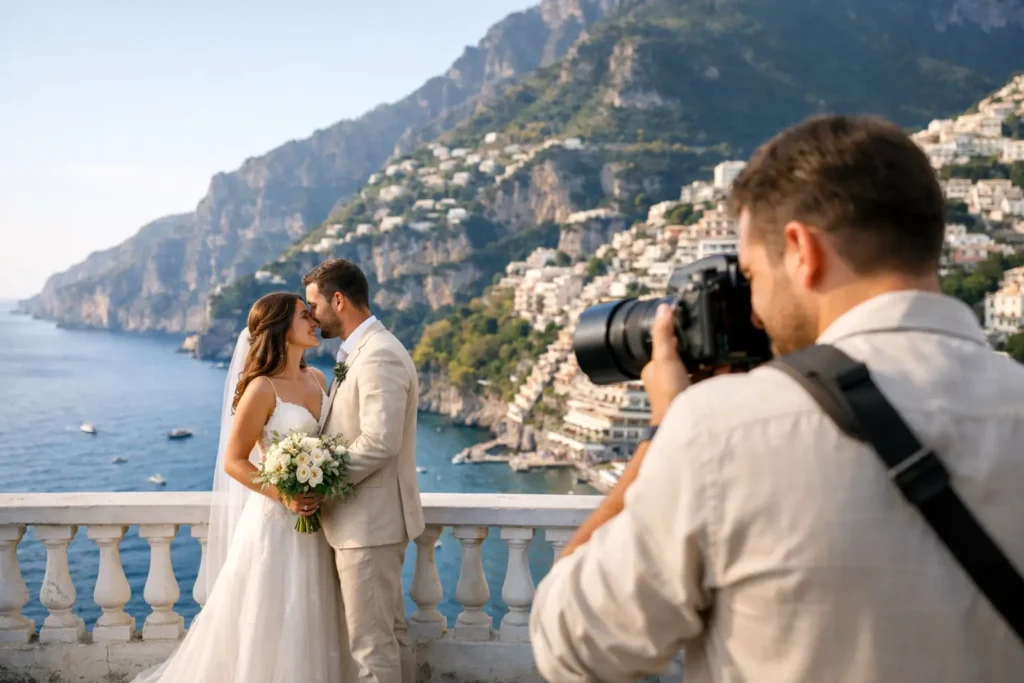
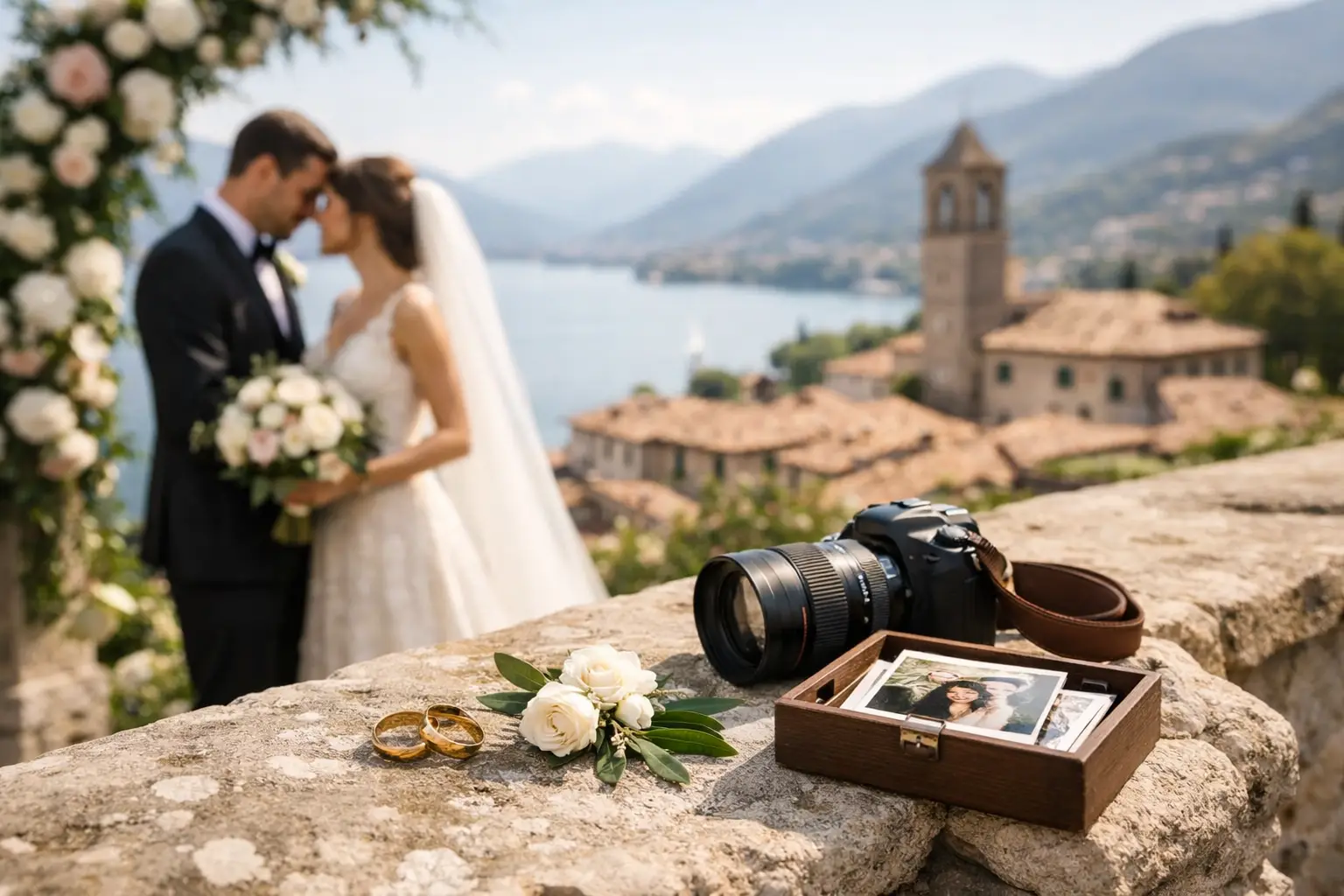
A wedding in Italy is never only about the view. It is the hush of a palazzo before guests arrive, the sound of glasses meeting at aperitivo, a veil caught by coastal wind, and the way you look at each other when the day finally becomes real. This Italy wedding photo checklist is designed to protect those moments while ensuring the imagery feels as polished, cinematic, and personal as the celebration itself.
The best wedding photographs are not made by trying to document every second with equal weight. They come from knowing which details hold meaning, where the light will fall, and when to step back so genuine emotion can unfold. Think of this as a thoughtful framework, not a rigid shot list.
Start With the Story You Want to Remember
Before listing family groupings or choosing a portrait location, consider the feeling you want your photographs to carry decades from now. Some couples picture an editorial series with sculptural architecture, immaculate styling, and a quiet sense of drama. Others care most about movement, laughter, and the unplanned tears that arrive during a parent’s toast. Most want both.
Share visual references with your photographer, but also share what cannot be seen in an image board. Mention the friend who introduced you, the grandmother whose presence matters deeply, the music that has followed your relationship, and the reason you chose Italy. These details give a photographer the emotional context to recognize a moment before it disappears.
Your priorities should shape the timeline. If portraits are central to your vision, reserve time when the light is beautiful rather than fitting them into a hurried gap between dinner and speeches. If your greatest joy is having everyone together, make room for the welcome, aperitivo, and dance floor, where the character of your guests comes alive.
Italy Wedding Photo Checklist: The Essential Chapters
The morning: anticipation, details, and connection
The day begins long before the ceremony. Photograph the setting as it wakes up: sunlight across limestone floors, flowers being placed on a table, a handwritten note, the texture of a gown or tailored jacket. These images establish the atmosphere of the story and preserve the craftsmanship behind the celebration.
Have your most meaningful details gathered in one place: rings, stationery, fragrance, jewelry, shoes, vow books, and any family heirlooms. This is not about creating a catalog. It simply gives the photographer time to compose these pieces with care while you enjoy the morning.
Then allow space for real life. A parent fastening a button, friends sharing coffee, a moment alone before getting dressed, or an emotional first look with a sibling often becomes more significant than a perfectly arranged flat lay. Keep the getting-ready room visually calm where possible, but do not let perfection make the morning feel staged.
The ceremony: expressions, architecture, and the quiet in between
For a ceremony in a Ravello garden, a Tuscan chapel, or on a terrace above Lake Como, the setting deserves to be photographed with the same sensitivity as the people in it. Wide frames show the scale of the place. Closer frames preserve hands finding one another, the breath before vows, and the expressions of those who know your story best.
Discuss the ceremony rules in advance. Some churches limit movement or restrict photography from certain positions. A seasoned destination photographer will work respectfully within those boundaries, anticipating the essential moments without disrupting the occasion.
Your checklist here should include the processional, both reactions as you see each other, the vows, ring exchange, first kiss, recessional, and a few moments of your guests. Just as valuable are the pauses: your hands resting together, the smile after a sentence in the vows, or the glance you exchange while everyone applauds.
Portraits: make time for art without losing the party
Portrait time is where editorial intention and natural connection meet. You do not need to perform for the camera. You need time to slow down, be close, and receive gentle direction that lets you look elegant while still feeling like yourselves.
Plan at least one portrait session in soft late-afternoon or early-evening light. In southern Italy, summer sun can be intense, and midday portraits may require shade, interiors, or a more architectural approach. A brief second session around sunset often creates the most luminous, cinematic images, especially along the Amalfi Coast or beside the water.
Include a few images that show the complete scene, then bring the focus back to intimacy: a hand at the waist, a shared laugh, the movement of your dress as you walk. If your venue has a signature staircase, historic facade, boat dock, or garden path, use it with purpose. The location should deepen the story rather than overwhelm it.
Family photographs: clear, warm, and efficiently organized
Family portraits matter, even for couples drawn to candid photography. The key is to make them feel considered rather than formal or prolonged. Prepare a concise list of the combinations that truly matter, beginning with immediate family and including anyone whose absence would be felt in the album.
Assign a trusted person who knows both families to help gather people. This small decision can save valuable time, particularly at large destination weddings where guests have drifted toward the bar, the view, or a passing tray of champagne. A clean, shaded location near the ceremony site is often best, and ten focused minutes can be enough when the list is realistic.
The reception: the celebration after the formalities
Do not treat the reception as an afterthought. Italy gives a wedding evening its own rhythm: aperitivo in golden light, long tables dressed with candles and flowers, the first taste of dinner, speeches that grow more emotional as the sky darkens, and a dance floor that becomes gloriously less composed.
Ask for the room to be photographed before guests enter, when every place setting, floral arrangement, and candle is exactly as intended. After that, let the evening breathe. Your checklist should cover entrances, toasts, first dances, parent dances, cake cutting if planned, and the energy of the party, but the most memorable frames may be your guests singing, your shoes in hand, or a private smile stolen between courses.
Plan Around Light, Travel, and Italian Timing
A beautiful photography plan needs to be practical. Many Italian venues are spread across hillsides, historic centers, or waterfronts, and moving between getting-ready spaces, ceremony locations, and reception areas can take longer than expected. Build in breathing room for traffic, boats, stairs, and the simple pleasure of being with your guests.
Light changes the character of every location. A pale stone courtyard can glow in the morning and become harsh at noon. A west-facing terrace may be ideal just before sunset, while an indoor frescoed room can offer a romantic alternative during rain or high heat. Your photographer should help create a timeline that honors the setting rather than fighting it.
If you are marrying in peak summer, consider an earlier ceremony or a later dinner. This can make guests more comfortable and leave room for portraits in softer light. In spring and fall, weather can be more changeable, so identify a graceful indoor or covered option without assuming a backup plan will diminish the beauty of the day.
Give Your Photographer the Right Information
A thoughtful checklist also includes the details you share before the wedding. Send the final timeline, addresses, access instructions, your planner’s contact information, and any venue guidelines. Identify important guests, family sensitivities, surprise moments, and traditions that may not be obvious to an international team.
It also helps to communicate what you do not want. If you prefer minimal posed images, say so. If you want to protect cocktail hour from formal photography, your timeline can reflect that. If an unplugged ceremony matters to you, your planner or officiant can set the expectation with guests before you walk down the aisle.
At Gennaro Piscopo Photography, the aim is never to turn a wedding into a production. It is to arrive prepared enough that you can be fully present, while the visual story is shaped with calm attention and an editorial eye.
Leave Room for What You Cannot Plan
The most meaningful image may not be on any checklist. It may be the wind lifting your veil as you step outside, a friend crying harder than expected, or the moment you pause together at the end of the night and realize how much love has surrounded you.
Choose the essential photographs, build a timeline that respects light and feeling, and then let the day be alive. The photographs will be more than proof of what happened. They will hold the atmosphere, soul, and timeless romance of how it felt to be there.