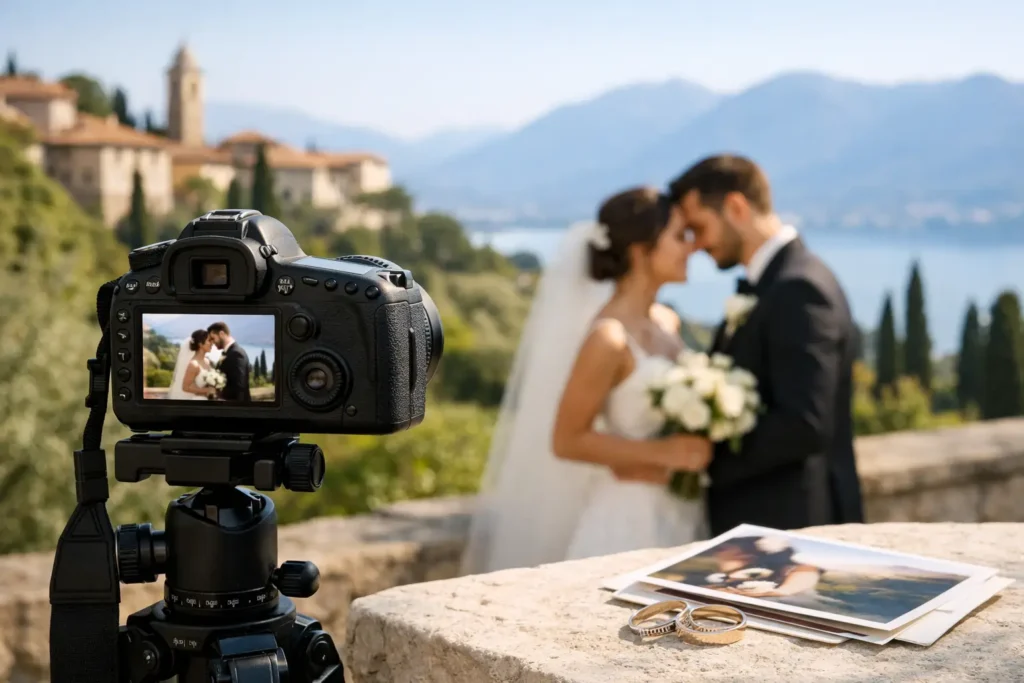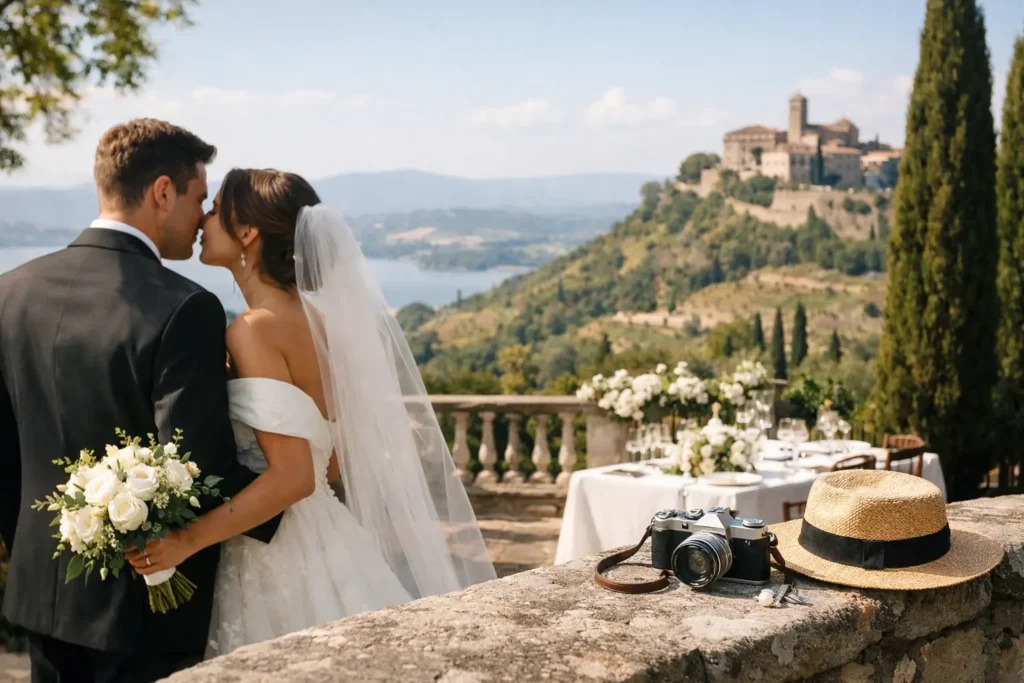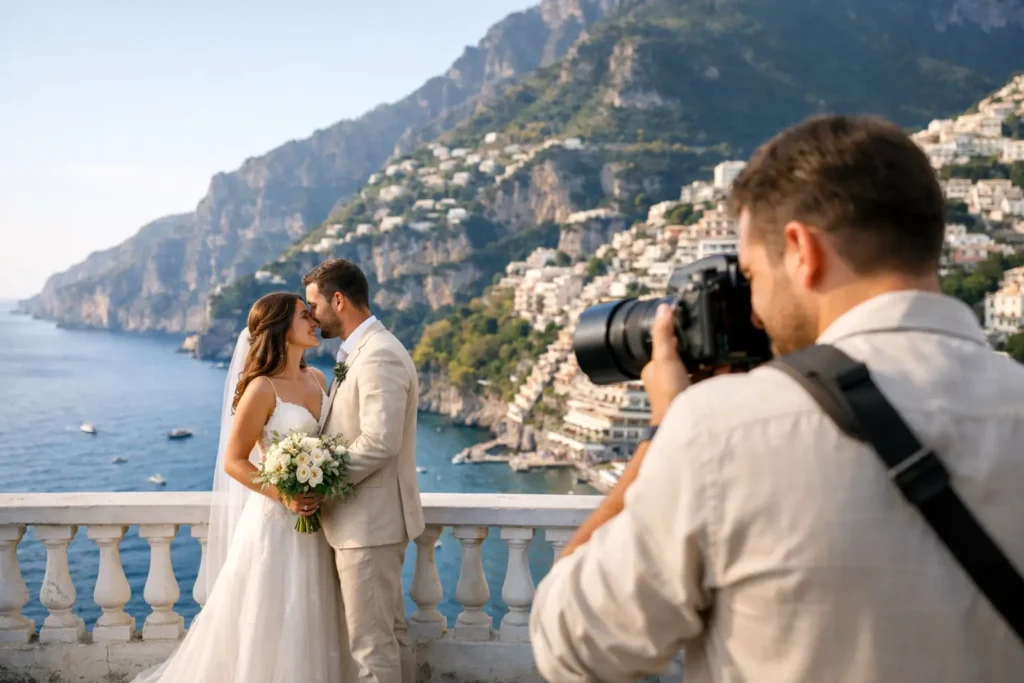
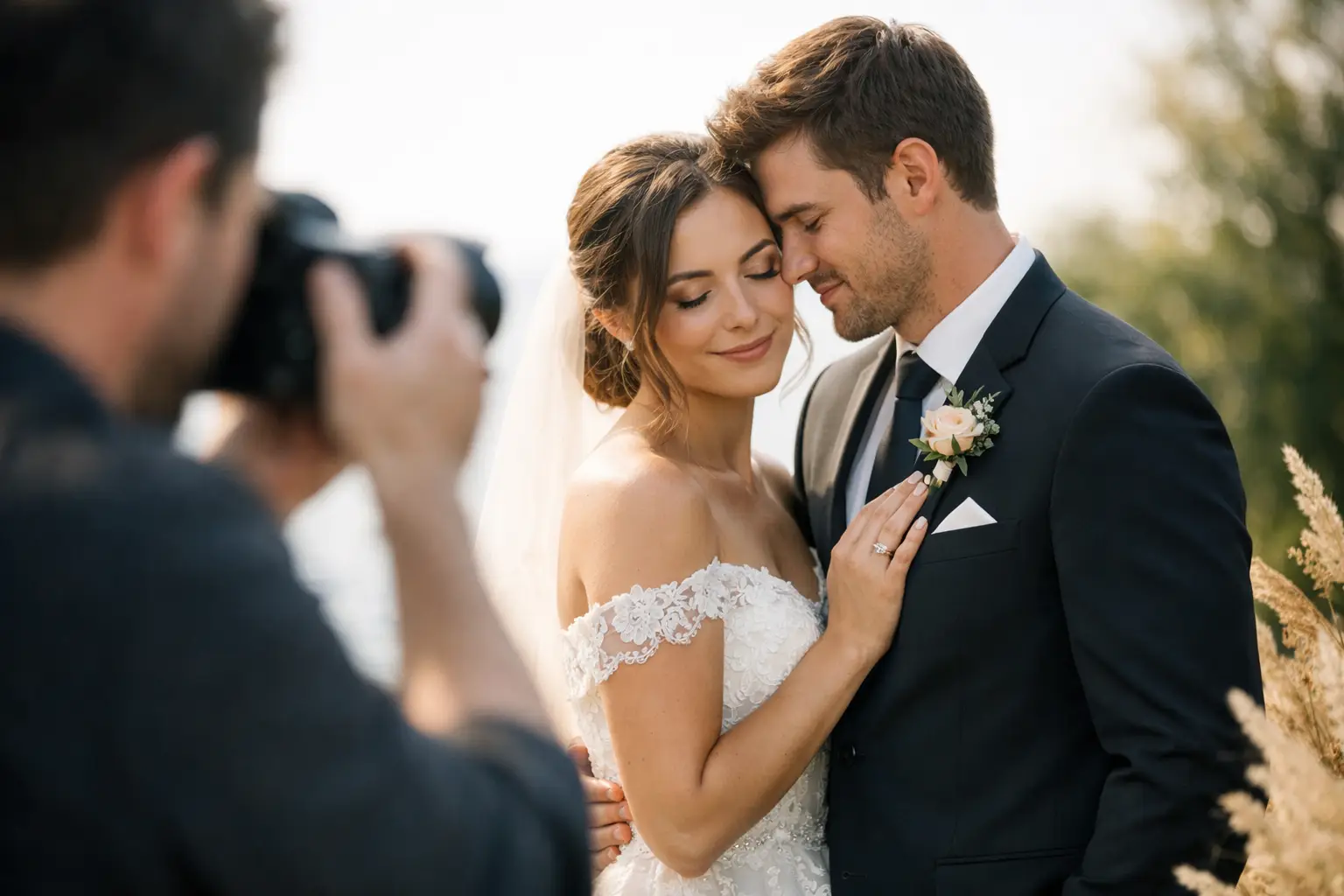
The most memorable wedding portraits are rarely the result of elaborate posing. They come from a quieter kind of preparation: knowing when the light will soften, protecting a little space in the day, and choosing a setting that feels true to the two of you. When couples ask how to plan wedding portraits, the real question is often how to look polished without losing the emotion of the occasion.
The answer is not to turn your wedding into a production. It is to create a thoughtful framework around a few beautiful moments, then leave room for the glances, laughter, and stillness that cannot be choreographed. A portrait session should feel like a pause within the celebration, not an interruption to it.
Begin with the feeling you want to remember
Before discussing locations or timelines, consider the emotional character you want your images to hold. Perhaps you imagine a cinematic walk through Positano at dusk, a quiet embrace overlooking Lake Como, or the warmth of a Tuscan garden just before dinner. These references are useful not because they need to be recreated exactly, but because they reveal what you are drawn to: movement, intimacy, grandeur, fashion, softness, or a sense of place.
Share a small, edited collection of images you love with your photographer, alongside the reasons you love them. A photograph may appeal because of its shadows, its energy, the couple’s closeness, or the way an architectural setting frames the scene. This gives your photographer a more meaningful creative brief than a long list of poses ever could.
It also helps to be honest about what makes you feel comfortable. Some couples love a little editorial direction and a dramatic setting. Others want to forget the camera is there as quickly as possible. The finest portrait experience often brings both together: gentle, assured guidance at the beginning, followed by space to be present with one another.
How to plan wedding portraits around light
Light is one of the few elements that changes the mood of an image more dramatically than a location. A historic villa, a cliffside terrace, or an ornate ballroom can be photographed beautifully at many times of day, but each will tell a different story depending on the light.
Early afternoon can offer clean, bright images, particularly in shaded interiors or beneath covered terraces. Yet direct midday sun is often unforgiving for outdoor portraits, especially along the Amalfi Coast where pale stone and open water reflect light intensely. If your ceremony falls in the middle of the day, plan only a short set of portraits afterward, using open shade, architectural arches, or an interior with character.
The most flattering and atmospheric outdoor light usually arrives in the final hour before sunset. This is when skin tones soften, landscapes become more dimensional, and a dress begins to move beautifully in the evening breeze. In Italy during summer, sunset can be late, so a portrait session at this time may overlap with cocktails or the beginning of dinner. That is not necessarily a problem, but it should be a deliberate choice.
Many couples choose a two-part approach: a brief portrait session immediately after the ceremony, then ten to twenty minutes at sunset. The earlier session captures the excitement while everyone is still close by. The later session creates a more intimate chapter, often with the most cinematic images of the day. You do not need an hour away from your guests to make this work. A well-chosen fifteen minutes can be enough.
Consider the season and the setting
A summer wedding in Capri needs a different plan from an October celebration in Tuscany. Summer light is bright and late, while autumn can bring earlier sunsets and shifting weather. On Lake Como, mountains may cause light to disappear sooner in certain locations. In Ravello, a garden may be luminous while a nearby terrace has already fallen into shadow.
An experienced destination photographer will read these details in advance and shape the timing accordingly. This is one reason to share your venue schedule early, including ceremony orientation, dinner location, travel between spaces, and any restrictions on access. Beautiful portraits are often made in the margins of a well-considered timeline.
Protect time without over-scheduling the day
Portraits need time, but they do not need to dominate the celebration. The goal is to protect enough breathing room that you never feel rushed, while preserving the joyful momentum of the day.
For most weddings, allow a short window after the ceremony for immediate family photographs and a few relaxed portraits. Then reserve another small window close to sunset. If travel is involved, build in more time than the map suggests. A narrow road, a waiting boat, a crowded town square, or a long walk through a property can turn ten minutes into twenty quickly.
It is also wise to create a little buffer before your ceremony. If you are getting ready in a visually beautiful suite, courtyard, or private villa, this can be an ideal time for a few individual portraits. There is a distinctive calm before the day gathers pace: the final fastening of a gown, a hand resting on a window frame, a quiet look toward the landscape. These images can become some of the most personal in the final story.
A first look is another option worth considering, particularly when daylight is limited. Seeing each other privately before the ceremony can give you a more generous portrait window and a rare moment of calm together. It is not right for every couple. Some want the ceremony entrance to be their first meeting, and that anticipation can be deeply moving. There is no universal rule. Choose the rhythm that feels most meaningful to you.
Choose locations with variety, not excess
A destination wedding offers no shortage of extraordinary backdrops, but too many locations can make portraits feel hurried and disconnected. One exceptional setting with several visual possibilities is usually more effective than a tour of five places.
Look for contrast within a small area: a grand staircase and a quiet garden, a sunlit terrace and a textured corridor, a waterfront view and an intimate interior. This allows your gallery to feel layered without requiring constant movement. It also gives you the chance to settle into the experience rather than repeatedly stepping in and out of it.
Think beyond the obvious viewpoint. The sweeping landscape matters, especially when you have traveled to a place with such visual power, but the details matter too. A reflection in a mirror, the movement of a veil through an old doorway, hands held beneath a frescoed ceiling, or a moment of laughter in the back seat of a vintage car can say just as much about your day.
If a public location is important to you, discuss it carefully with your photographer and planner. Popular places may be busy, have permit requirements, or be impractical at certain hours. Sometimes the more private corner of your own venue offers a stronger image and a far more relaxed experience.
Let your wardrobe support the photographs
Wedding attire is already part of the visual language of your day, and a few practical choices can make portraits more fluid. A gown with movement photographs differently from a structured silhouette. A long veil can add drama in an open landscape, but it needs time and an assistant to manage in the wind. Comfortable shoes, or a discreet second pair for walking between locations, can preserve your ease and posture.
For the partner in a suit or tuxedo, details matter: a well-fitted jacket, clean lines, and enough freedom to move naturally. The goal is not perfection in every frame. A loosened hand, a jacket caught by the breeze, or a little laughter while adjusting a cuff can bring life to an otherwise formal look.
If you are planning an outfit change, be realistic about the time it takes. It may be worthwhile for an evening portrait session or a pre-wedding shoot, but it should enhance the flow of the day rather than create pressure.
Trust direction, then forget the camera
The fear of looking awkward is nearly universal, even among people who appear entirely at ease in photographs. You do not need to know how to pose. A photographer with a fashion-informed eye should understand how to place you in beautiful light, refine posture subtly, and create a composed frame without making you feel arranged.
The most natural results come when direction is simple. You may be asked to stand closer, turn slightly toward the light, walk slowly, or take a breath before looking at each other. These small prompts create a shape for the image, but your connection gives it soul. Do not feel obliged to smile at the camera in every frame. Look at each other. Let the moment settle. Speak quietly if that helps you relax.
A good portrait session has a rhythm. It begins with a little guidance while you find your confidence, then becomes less about posing and more about responding to one another. This is where polished editorial imagery and honest documentary feeling can meet.
Include the people and details that deepen the story
Couple portraits may be the visual centerpiece, but they are not the only portraits worth planning. A few minutes with parents, siblings, closest friends, and grandparents can become increasingly precious over time. Keep formal family groupings efficient with a prepared list, then allow space for less structured moments: a mother adjusting a veil, friends gathered at a window, a grandparent’s hand in yours.
Details also deserve their own quiet attention. Consider having your stationery, rings, perfume, heirloom jewelry, and any meaningful textiles ready in one place during preparation. These pieces do not replace emotion, but they add texture to an album and help preserve the tactile world you created.
The most beautiful wedding portraits are not about performing a version of romance for the camera. They are about giving yourselves permission to step away for a few minutes, take in the place you chose, and see each other clearly amid everything you have brought together. Plan for that pause, and let the rest be felt.