The most compelling engagement photographs rarely begin with a pose. They begin with the moment you stop trying to perform for the camera and simply notice one another. Knowing how to prepare for an engagement session gives you the freedom to arrive feeling composed, beautifully dressed, and fully present – so the images can hold the real atmosphere between you.
An engagement session is not a rehearsal for perfection. It is a quieter chapter of your story: the anticipation before the wedding, the private glances, the ease of being together in a place that feels extraordinary. With thoughtful planning and gentle direction, your photographs can feel as polished as an editorial while remaining unmistakably yours.
Begin With a Setting That Feels Like Your Story
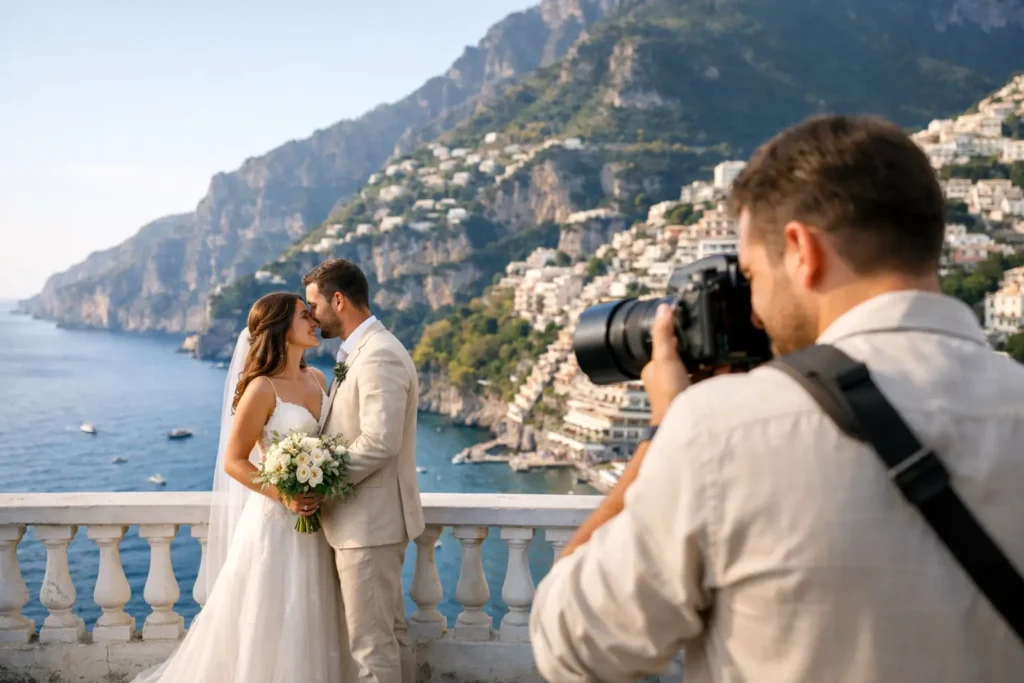
Location shapes more than the background. It influences the pace of the session, the way you move, the light on your skin, and the emotional character of the finished imagery. A walk through Positano at first light feels entirely different from an evening on Lake Como or a slow afternoon among Tuscan cypress trees.
Choose a setting that offers both visual beauty and room to breathe. Grand architecture, a historic hotel terrace, a private garden, or a coastline with open horizons can create an exquisite frame, but the location should also allow you to be comfortable together. If a place is crowded, difficult to reach, or overly structured, it may look beautiful in theory while making it harder to relax.
For destination couples, it is often wise to plan the session for a day when you are not rushing between flights, fittings, or welcome events. The best photographs need unhurried time. A session is far more enjoyable when it feels like an elegant evening together rather than another appointment on a tightly managed itinerary.
Choose Outfits With Movement and Intention
Your clothing should feel elevated, but it should never feel like a costume. The most timeless approach is to select pieces that reflect your usual style at its most refined. Think of what you might wear for an exceptional dinner in Rome, a private boat ride, or an evening at a beautiful European hotel.
For one partner, a flowing dress, tailored suit, silk blouse, impeccably cut trousers, or a sculptural jacket can photograph wonderfully. For the other, a well-fitted suit, lightweight tailoring, an open-collar shirt, or fine knitwear brings a sense of understated elegance. The goal is not to match exactly. Instead, create harmony through a shared palette and comparable level of formality.
Soft neutrals, rich earth tones, muted blues, warm ivory, black, and jewel tones tend to photograph with depth and longevity. Very bright neon shades, large logos, overly busy patterns, and clothing that is visibly restrictive can pull attention away from your connection. This does not mean every outfit must be neutral. A vivid red dress against the faded walls of Ravello can be breathtaking when it genuinely feels like you.
Bring a second look if the schedule allows. One outfit can be more formal and fashion-forward, while the second may feel lighter and more relaxed. Changing looks can also shift the mood of the photographs, creating a natural progression from cinematic portraits to something more spontaneous and intimate.
Details Matter, but Comfort Matters More
Choose shoes you can walk in, especially on cobblestones, steps, beaches, or uneven garden paths. You can always bring a pair of comfortable flats for moving between locations, then change into your chosen shoes for portraits. This small decision preserves your energy and keeps your attention where it belongs.
Consider your accessories with the same restraint. Jewelry, a beautiful watch, a silk scarf, or a small bouquet can add texture and personality. Avoid bringing too many items simply because they photograph well individually. A few considered details will feel more luxurious than an excess of options.
Plan Hair and Makeup for the Camera, Not a Different Version of You
Professional hair and makeup can offer confidence, especially in coastal humidity, wind, or warm Mediterranean light. The most successful approach is polished rather than overdone. Your engagement photographs should still look like you on your very best day, not like someone you do not recognize.
If you are scheduling a hair or makeup trial for the wedding, an engagement session can be an ideal occasion to plan it on the same day. It allows you to see how everything wears, how it photographs, and how it feels after a few hours. Let your artist know that the session may include walking, wind, close portraits, and natural light.
For both partners, a little preparation makes a meaningful difference. Consider a haircut or trim several days beforehand rather than the morning of the session. Keep skincare simple and familiar in the week leading up to it. Trying a new treatment immediately before photographs can create unwanted irritation or redness.
Let the Light Set the Pace
Beautiful light is not an afterthought. It is part of the visual language of the session. Early morning and the final hours before sunset are often ideal, when the light is softer, the colors are gentler, and popular locations are quieter.
That said, the right timing depends on the destination. In a narrow Italian street, midday shade may create a beautifully cinematic atmosphere. Along the Amalfi Coast, late afternoon can bring warmth to the cliffs and sea, while a lake setting may call for the calm, silvery light of morning. Trust your photographer’s guidance on timing. It is shaped by experience with the location, the season, and the way light moves through a particular space.
Build in more time than you think you need. Leave room for traffic, a coffee, a wardrobe adjustment, or simply a few quiet minutes together before the camera comes out. Rushing is visible in photographs. Ease is visible too.
Arrive Ready to Be Together
You do not need to know how to pose. In fact, trying to memorize poses from social media often creates tension. Your photographer will guide you into flattering light and offer direction for your hands, posture, and movement, while leaving space for the gestures that belong only to the two of you.
The most natural images often happen between instructions: when you laugh after getting something wrong, when one of you fixes the other’s collar, when you reach for a hand without thinking. Rather than asking, “What should we do?” focus on your partner. Speak to each other. Walk slowly. Let yourselves react.
Before the session, share any concerns honestly. Perhaps one of you feels camera-shy, dislikes a particular profile, or needs a little more guidance at the beginning. A photographer with a fashion-informed eye and a documentary instinct can shape the session around those needs without making the experience feel staged.
Bring Only What Supports the Experience
Keep personal items to a minimum. A small bag with touch-up makeup, water, comfortable walking shoes, a lint roller, and any necessary medication is usually enough. If you are bringing a meaningful detail, such as a handwritten letter, a vintage car, or a family heirloom, mention it in advance so it can be incorporated with intention rather than becoming a distraction.
Avoid arriving with a large group of friends or family unless their presence is essential to the plan. Even well-meaning guests can make couples more self-conscious. The session works best when it feels private, with enough quiet for genuine connection to emerge.
Treat It as Part of the Celebration
The question of how to prepare for an engagement session is ultimately less about getting every detail right and more about creating the conditions for an honest, beautiful experience. Choose clothing that makes you feel confident. Give yourselves time. Trust the light, the setting, and the person guiding you.
Afterward, continue the feeling. Reserve a table for dinner, take a walk, or open a bottle of wine on your terrace. When the photographs are made within a day that already feels meaningful, they carry more than beautiful clothes and a remarkable destination. They carry the memory of how it felt to be on the threshold of your next chapter, together.