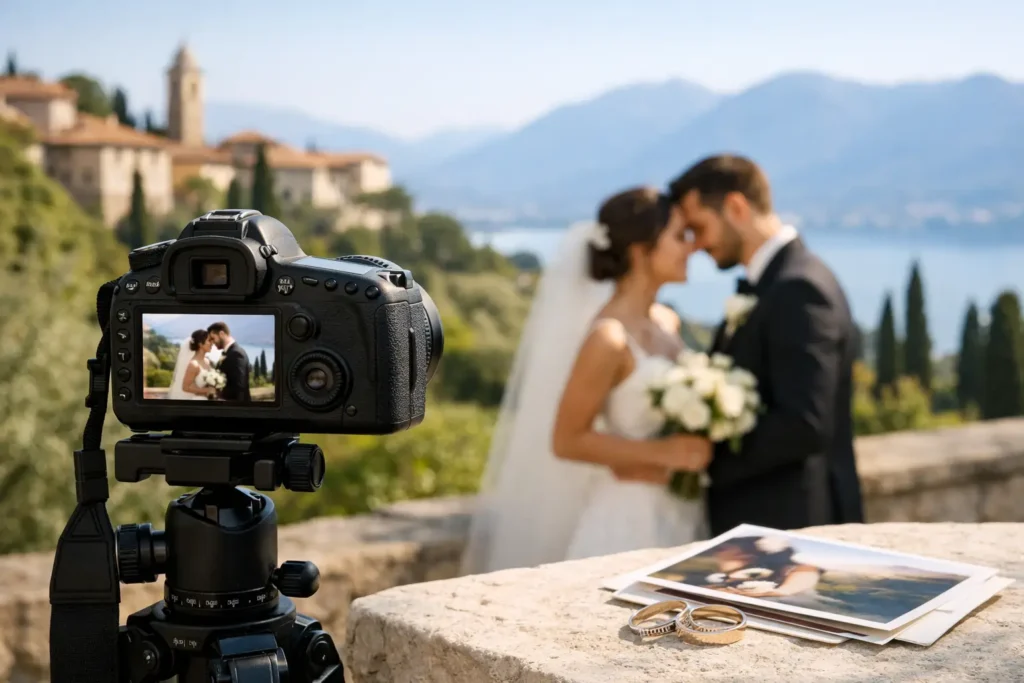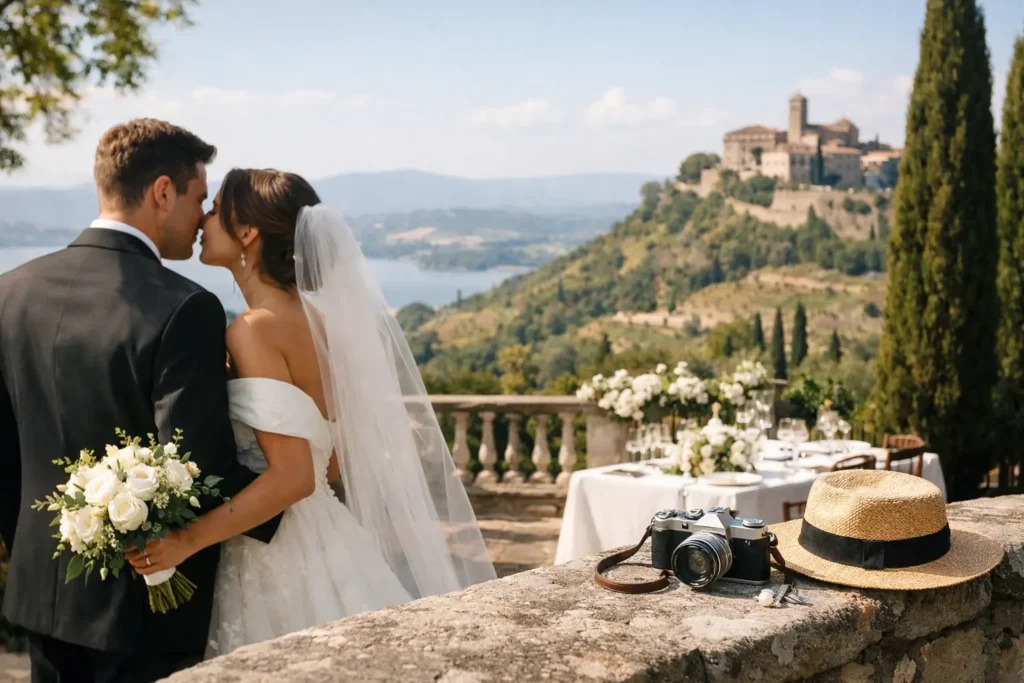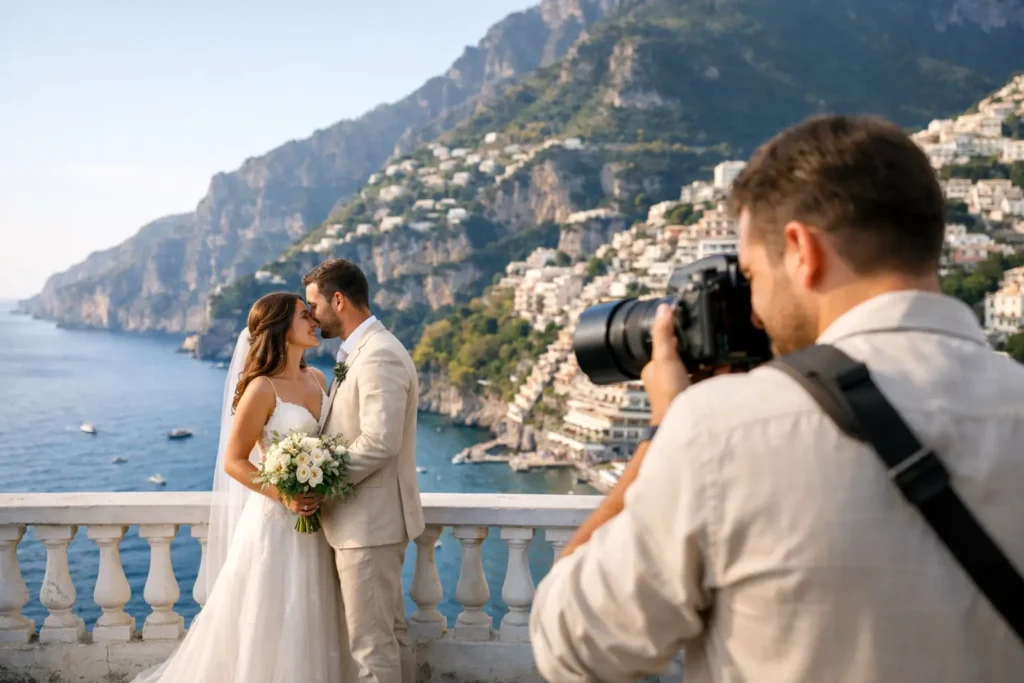
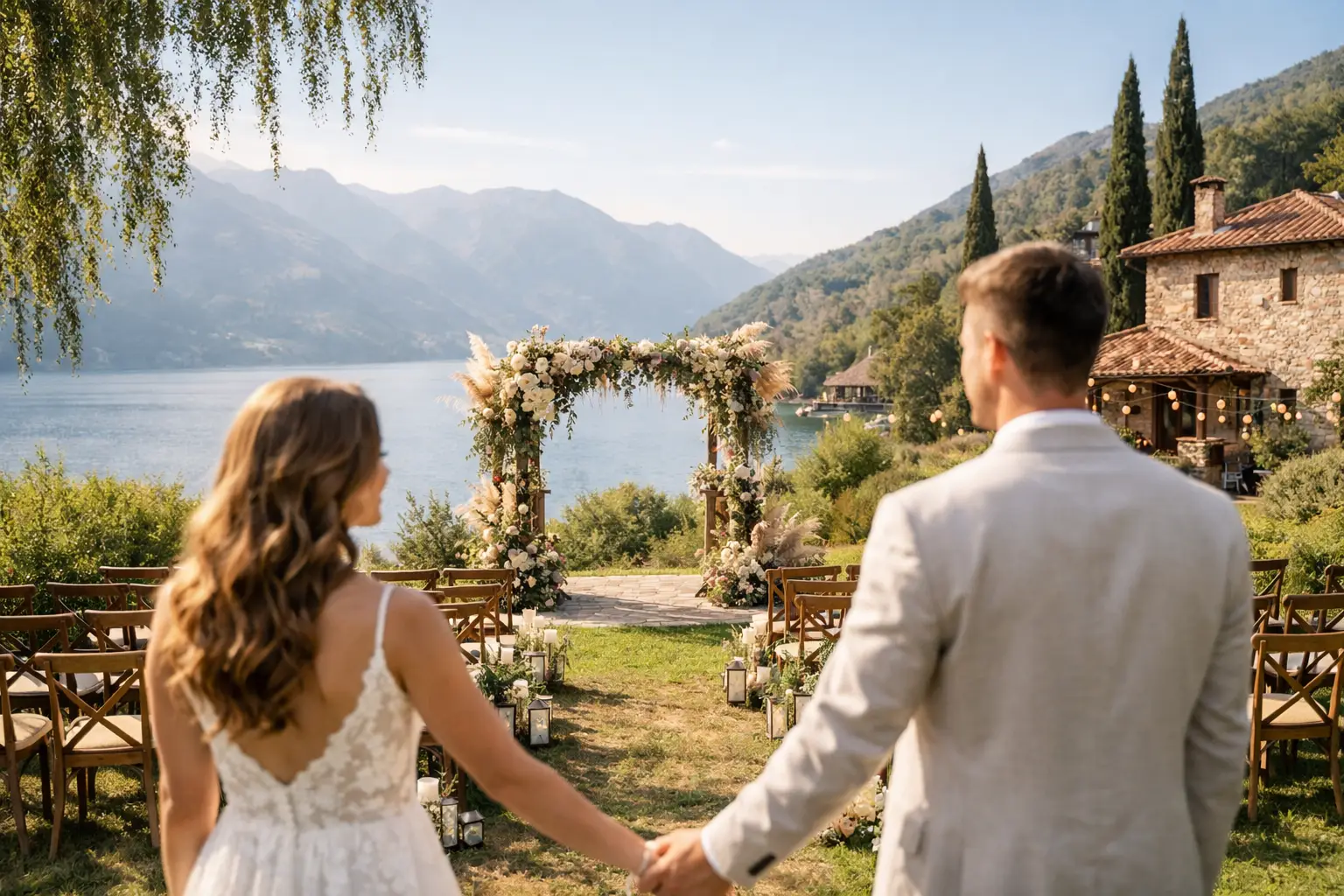
A wedding location is more than a beautiful backdrop. It sets the pace of the day, shapes the way your guests feel, and becomes part of the visual language of every memory. When considering how to choose wedding locations, look beyond the first breathtaking view. The right place should feel like an honest extension of your relationship: atmospheric, effortless, and alive with possibility.
For destination celebrations, this decision carries even more weight. A villa in Tuscany, a terrace above the Amalfi Coast, or a lakeside palazzo on Lake Como can be extraordinary, but each creates a very different experience. The goal is not to select the most photographed setting. It is to find the setting where your story can unfold with beauty, comfort, and genuine emotion.
Begin With the Feeling You Want to Remember
Before opening a venue directory or creating a mood board, talk about the atmosphere you want to create. Not the color palette or the floral installation, but the feeling. Do you imagine a long, candlelit dinner beneath olive trees, with everyone lingering over wine and conversation? Or a black-tie celebration in a grand historic residence, with marble halls, formal gardens, and a sense of cinematic occasion?
This emotional starting point is more useful than a list of design details because it guides every later decision. Couples are often drawn to a location because it is objectively spectacular, then discover it does not suit the celebration they truly wanted. A dramatic cliffside venue may be perfect for an intimate, fashion-forward gathering, yet feel challenging for a relaxed weekend with older relatives and young children.
Think about how you want the day to move. Some locations invite a slow, sun-warmed rhythm. Others are built for grandeur, energy, and late-night celebration. Neither is better. What matters is that the place supports the version of the day you want to live, not simply the version you want to post.
How to Choose Wedding Locations That Photograph Beautifully
Beautiful photographs need more than a beautiful venue. They need light, space, movement, and a setting that gives people room to be themselves. An experienced photographer can create striking imagery in almost any environment, but a thoughtfully chosen location makes the visual story richer and the experience calmer.
Look for light, not just the view
A panoramic view can be unforgettable, particularly at sunset, but pay attention to what happens during the rest of the day. Where will you get ready? Is there a light-filled suite with elegant textures and enough space for your closest people to move comfortably? Is the ceremony area in harsh direct sun at the time you plan to exchange vows? Is there a graceful indoor alternative if the weather changes?
In Italy, afternoon light can be intense in summer. A ceremony positioned in open sunshine may be visually difficult and physically uncomfortable. A garden with dappled shade, a courtyard with soft reflected light, or a terrace scheduled closer to golden hour can create a more flattering, intimate atmosphere.
Notice the transitions between moments
The most compelling wedding galleries do not feel like a collection of isolated portraits. They feel like a film: anticipation in the morning, the quiet breath before the ceremony, the release of joy after the vows, and the warmth of dinner turning into celebration.
Ask how guests will move from one chapter to the next. Can you walk from the ceremony to cocktails through a garden or along a historic pathway? Is there a natural reveal when guests arrive at dinner? Are portraits possible nearby, without disappearing from your guests for an hour? A location with varied but connected spaces creates a sense of narrative depth while keeping the day relaxed.
Choose character over perfection
The most memorable places have texture. Weathered stone, faded frescoes, old citrus trees, a sweeping staircase, embroidered linens, or a terrace that catches the last light over the sea can say more than a perfectly neutral room ever could.
This does not mean every surface needs to be ornate. Minimal architecture can be equally powerful when it has strong proportion, beautiful materials, and a clear sense of place. The question is whether the venue has a soul of its own, rather than whether it resembles an image you have seen many times before.
Let Guest Experience Shape the Decision
A destination wedding asks guests to travel for you, which makes their comfort part of the hospitality. Romance and logistics should work together. The most beautiful cliffside venue may involve steep paths, multiple transfers, or limited accessibility. That may be entirely manageable for a small, adventurous group, but it deserves honest consideration before contracts are signed.
Consider travel time from the nearest airport, the availability of quality accommodations, and whether guests can enjoy the destination beyond the wedding day. Positano is dramatic and unforgettable, but its vertical streets require thoughtful planning. A countryside estate outside Florence may offer an easier, more self-contained experience, especially for a multi-day celebration. Capri offers a singular sense of escape, while a lake setting can bring a quieter, more formal elegance.
Also consider the scale of the venue in relation to your guest count. A large ballroom can make an intimate dinner feel dispersed, while a tiny courtyard may become uncomfortable once tables, music, and service are added. Ask to see a real wedding setup with a guest count close to your own. Empty spaces can be deceptive.
Match the Location to Your Wedding Weekend
Many destination weddings are no longer contained within a single day. They are gatherings with a welcome dinner, a morning by the pool, a boat excursion, a rehearsal evening, or a final lunch before everyone departs. Your wedding location does not need to host every event, but it should make the wider experience feel possible.
A private villa can create a wonderful sense of intimacy and continuity, especially when your closest guests stay nearby. A hotel may offer more ease for a larger group, with staff, rooms, and contingency plans all in one place. A historic venue may provide incomparable atmosphere for the wedding itself, but require separate arrangements for accommodations and additional events.
There is a trade-off between privacy and convenience. There is also a trade-off between being in the heart of a lively destination and having the quiet space to create something personal. Neither choice is wrong. The best fit depends on whether you want the weekend to feel like a private house party, a glamorous escape, or a celebration woven into the life of a city or coastal village.
Visit With a Different Set of Eyes
If possible, visit your shortlisted locations at the same time of year and roughly the same time of day as your wedding. Notice the temperature, the sound, the wind, the traffic, and the number of visitors nearby. A terrace that feels peaceful in April may be very different on a summer Saturday.
During the visit, imagine the day in sequence. Where will you see each other for the first time, if you choose to do so? Where will family portraits happen without becoming a production? Where will guests gather during cocktail hour? Where does dinner feel most magical after dark? A strong location offers options, so the day does not depend on one perfect patch of weather or one exact sunset.
It is also wise to ask practical questions with visual consequences. Are there restrictions on candles, music, or outdoor timing? Can furnishings be moved? Is the ceremony space private? How late can the celebration continue? These details affect not only planning but the emotional rhythm of the day.
Trust the People Who Know the Place
A destination venue is best understood through the perspective of professionals who work there regularly. A planner can clarify timing and guest flow. A photographer can identify where the light is most beautiful, where privacy is possible, and how to build portrait time into the day without pulling you away from the celebration.
At Gennaro Piscopo Photography, the approach is always to understand the location as part of the story, not as a stage set. A grand room may call for composed, editorial portraits; a sunlit lemon grove may invite something softer and more spontaneous. The finest images come from responding to the place while keeping the connection between two people at the center.
Do not be afraid to choose the venue that gives you a feeling you cannot quite explain. The right wedding location often reveals itself in a small moment: the way the evening light falls across a terrace, the sound of glasses clinking in a courtyard, or the sudden certainty that you can picture your favorite people there. That is usually where the story begins.