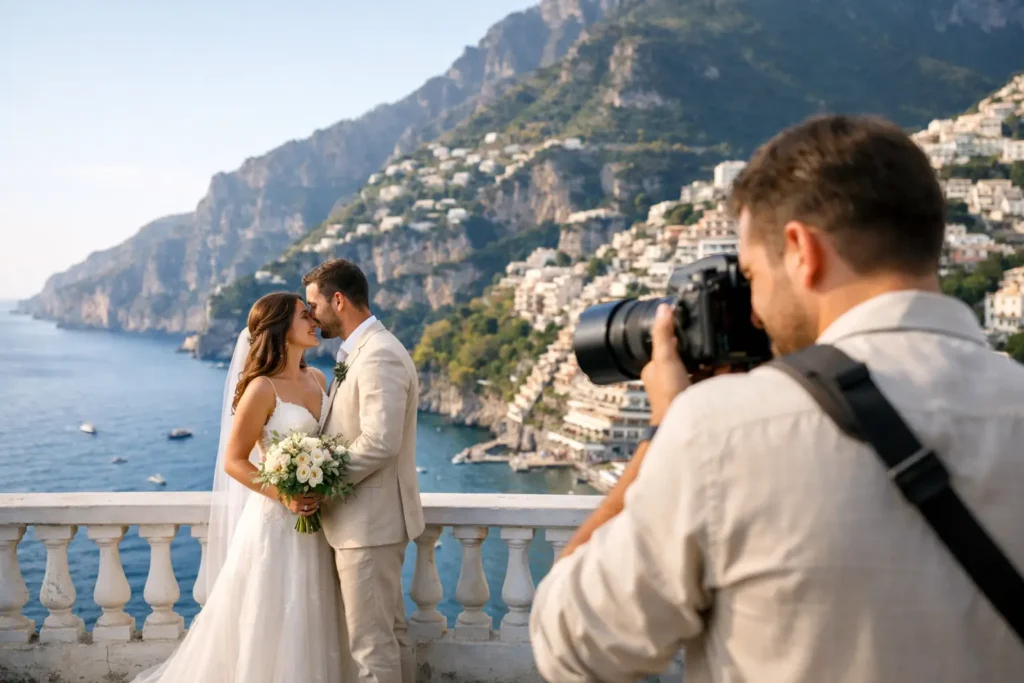
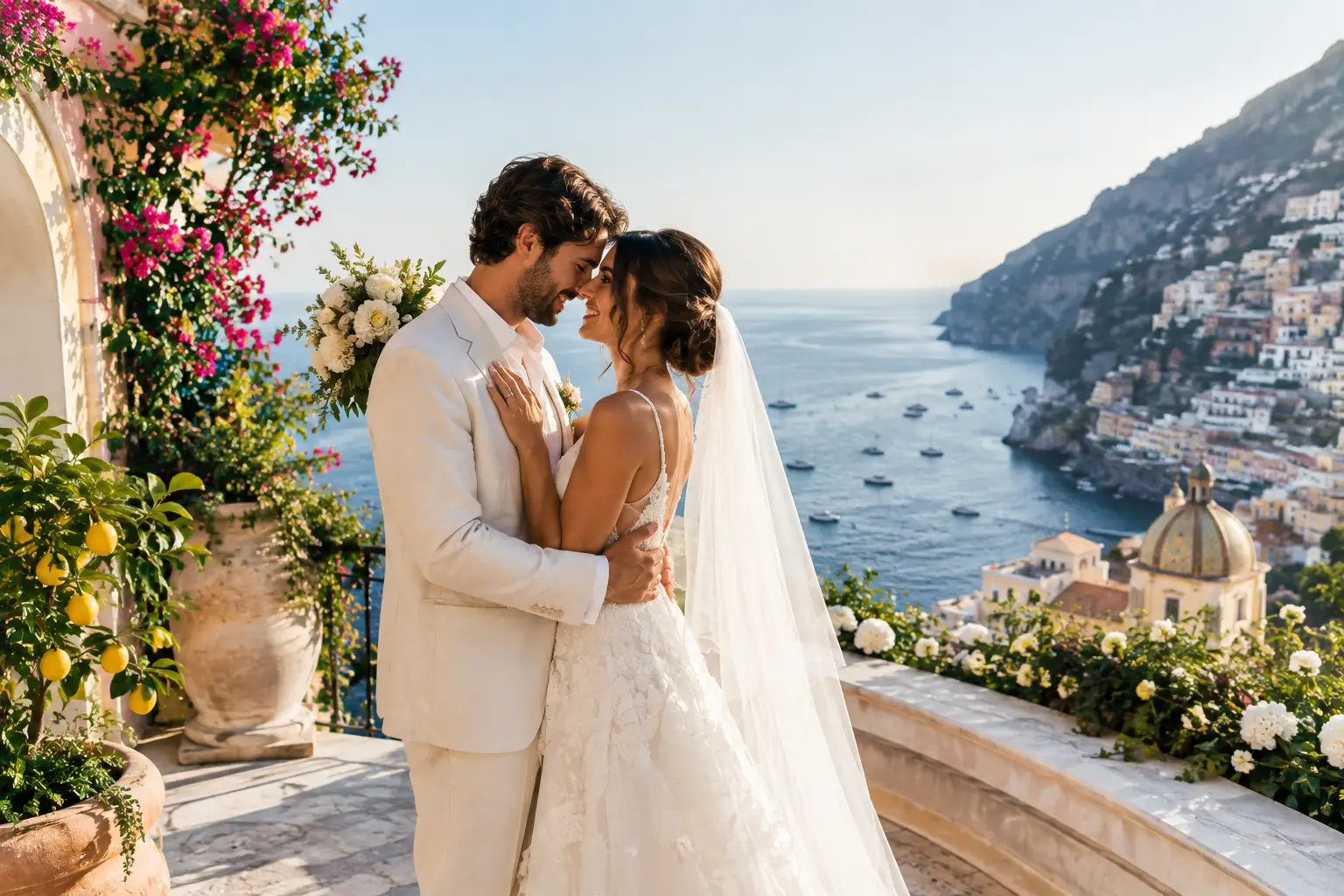
Positano weddings are shaped by a landscape that refuses to sit quietly in the background. The town rises in layers above the sea, with pale facades, bougainvillea, tiled terraces, and a coastline whose color changes by the hour. For photography, that beauty is extraordinary, but it also asks for experience: an understanding of steep streets, shifting light, crowded summer passages, and the pace required to let a celebration feel unhurried.
A strong photographic story here is not built on views alone. It comes from the way a couple moves through the day, the quiet before a ceremony, the gesture of a parent fastening a cufflink, and the sea appearing beyond an open window. Positano can be cinematic, but the images that last should also feel personal.
Why Positano Weddings Need Thoughtful Timing
The Amalfi Coast has a distinct visual rhythm. In the morning, light often enters rooms softly from the sea, particularly in spaces with white walls, shutters, or terraces facing east. By midday, the sun can become direct and highly reflective, bouncing from stone, water, and painted architecture. This is beautiful light when handled with intention, but it is not forgiving of a rushed schedule.
For a wedding day, timing influences far more than portraits. It affects where preparations happen, how guests arrive, whether a ceremony feels comfortable, and how much space is available for the couple to breathe. A well-considered plan usually protects a small part of the day for stillness, rather than moving from one scenic location to another simply because Positano offers so many tempting backdrops.
Late afternoon is often especially flattering. The sun softens across the cliffs, skin tones become warmer, and the town takes on a more dimensional quality. Yet every date is different. The angle of light changes with the season, as do the shadows cast by the hills and buildings. An experienced local photographer studies the exact setting, not just the destination name on the invitation.
The value of an unhurried portrait window
Couples who want editorial portraits without a staged feeling benefit from a short, protected window around the best available light. It does not need to interrupt the celebration for an hour. Often, 20 minutes of calm direction is enough to create images with shape, movement, and genuine connection.
The key is not to ask you to perform. It is to place you well, give clear but light guidance, and allow room for real interaction. A hand finding the other, a private laugh after the ceremony, or a quiet walk down a stone stairway can hold more soul than an elaborate pose.
Photographing the Texture of Positano
Positano is visually rich in a way that can easily become overwhelming. A wedding gallery needs scale and spectacle, certainly, but it also needs restraint. The wide image of the coast has greater impact when it sits beside close details: the texture of linen, a veil moving in sea air, candlelight against evening skin, or a guest watching the first dance from a terrace.
This is where documentary observation and editorial instinct belong together. The documentary approach preserves the unscripted energy of the day. The editorial eye considers composition, color, and the way people inhabit a frame. Neither should overpower the other.
For international couples, this balance can be especially reassuring. You may be traveling with family and friends who have never experienced the Amalfi Coast, while also carrying the emotional weight of hosting a wedding far from home. The photographs should show the grandeur of the setting, but they should also return you to how it felt to have your people there.
Architecture, sea, and human scale
The architecture of Positano offers natural framing everywhere: archways, terraces, narrow lanes, balconies, and staircases. These elements can add depth without requiring elaborate styling. At the same time, they demand care. A staircase may look effortless in a photograph, but a photographer needs to consider the dress, the shoes, the light, passing pedestrians, and whether the moment still feels like yours.
The sea creates its own considerations. It is rarely one fixed shade of blue, and haze can soften the horizon in warmer months. Rather than forcing a highly saturated look onto every image, refined color work respects the atmosphere that was actually present. Some days are bright and crystalline; others are silvery, humid, and intimate. Both can be beautiful when photographed honestly.
The Practical Reality Behind Relaxed Images
The most natural wedding photographs usually depend on preparation that remains largely invisible to the couple. In Positano, this begins with access and movement. Vehicles do not reach every address easily, and even short distances can involve steps, narrow pathways, or time spent coordinating arrivals. A photographer who knows the area plans for this quietly, so the day retains its elegance.
It also means recognizing when not to chase a photograph. During busy periods, the most photographed corners of town can be full of visitors. There are times when a brief walk makes sense and times when the better decision is to stay close to your celebration, use the light available, and protect the atmosphere with your guests.
Weather is another part of the coast’s character. A bright forecast can become cloudy, while a soft afternoon can turn luminous after a passing shower. The right response is not panic or a rigid backup plan. It is calm adaptation. Covered terraces, interior architectural details, window light, and a few minutes between rain can all become part of a beautiful visual narrative.
Build photography into the day, not around it
The most successful schedules do not treat photography as a separate production. They allow it to unfold through the day. Preparations deserve enough time for the room to settle. Family photographs benefit from a clear, concise plan. Sunset portraits work best when guests are comfortably enjoying cocktail hour rather than waiting for the couple to return.
For a multi-day celebration, an engagement session or pre-wedding portrait session can also change the feeling of the wedding day. It offers time to become comfortable with the camera and creates a quieter set of images that belong to your time in Italy, beyond the formalities of the celebration itself.
What to Look for in a Positano Wedding Photographer
A beautiful Instagram grid is only one part of the decision. Look for complete wedding stories, where the photography holds together from morning through the dance floor. Notice whether indoor images feel as considered as sunset portraits, whether guests are photographed with affection, and whether the images retain a coherent sense of color and emotion in changing conditions.
Ask how the photographer works during portraits and during unscripted moments. For many couples, the ideal answer is a blend of gentle direction and discreet observation. You should never be left wondering what to do, yet you should not feel that every part of the day has become a photo shoot.
Local familiarity matters because Positano is not a studio. Its beauty is dynamic, and its logistical details are real. A photographer with experience on this coastline can anticipate transitions, read the light, and work with planners and venues in a composed, respectful way. That confidence allows you to remain present with the people you came to celebrate with.
At Gennaro Piscopo Photography, the approach is story-driven and unobtrusive, informed by more than two decades behind the camera and a fashion-photography sensibility. The aim is not to impose a look on your wedding, but to make images that feel elevated while remaining unmistakably your own.
Let the Day Keep Its Own Pace
The finest Positano wedding photographs are rarely the result of doing more. They come from choosing a few meaningful moments, allowing time for the light to change, and trusting a photographer who knows when to direct and when to disappear. When you begin reviewing portfolios or planning an inquiry, look for images that make you feel something before you analyze the view. That instinct is often the clearest sign that the story will endure.