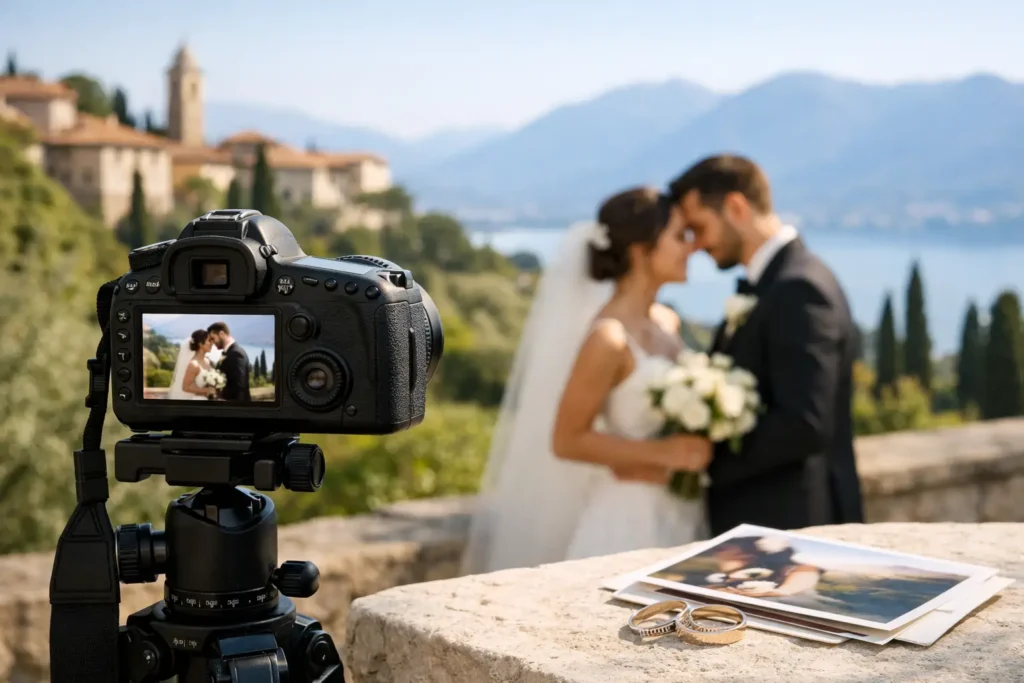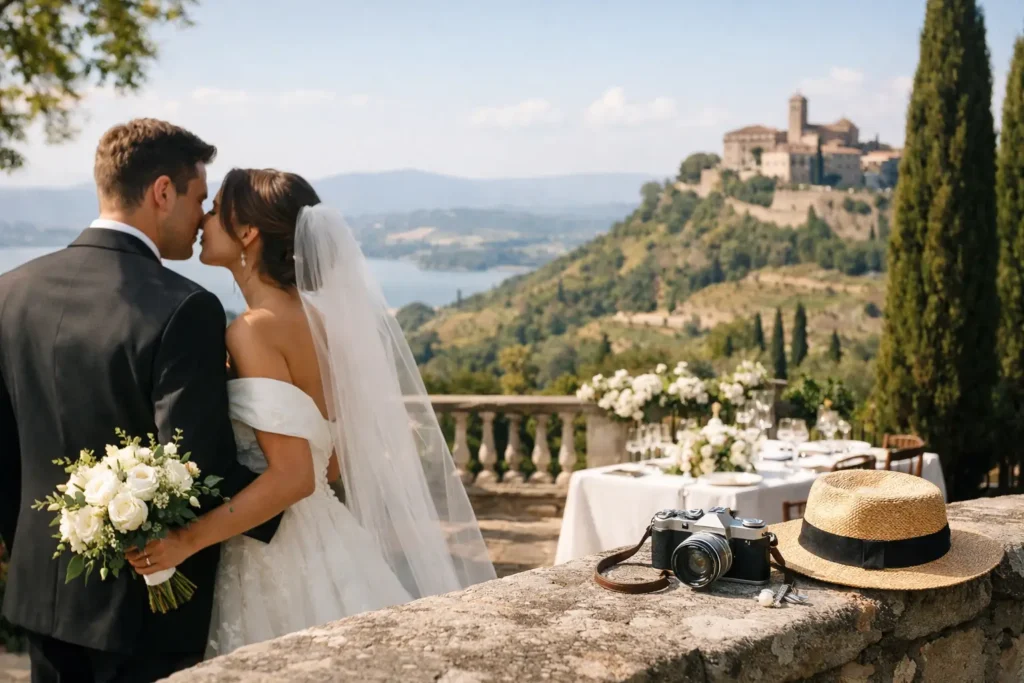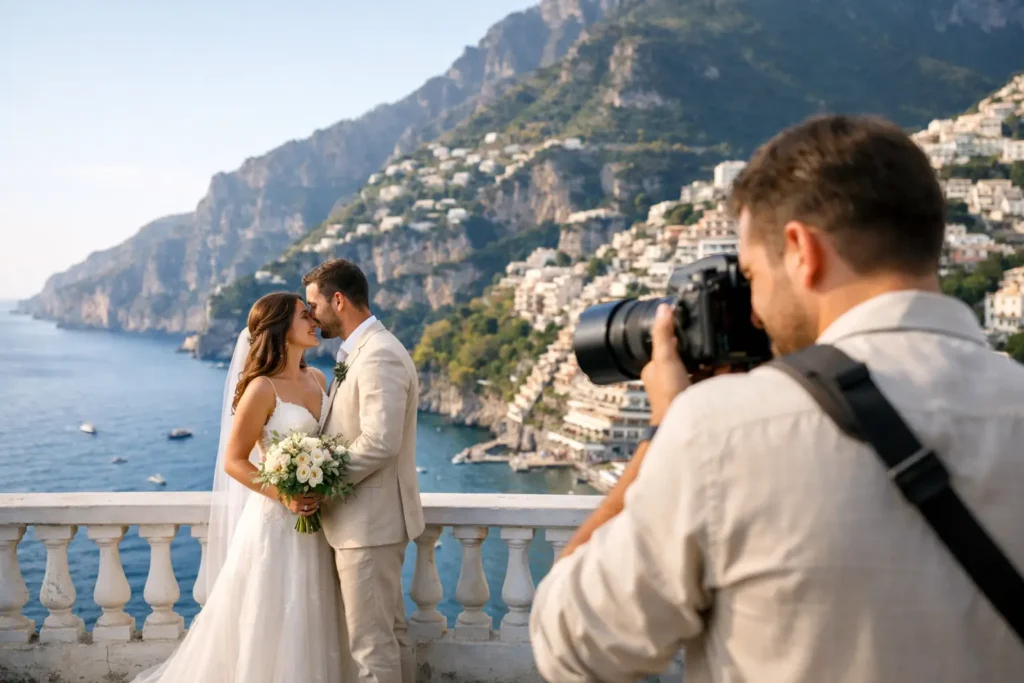
The decision often arrives quietly in the middle of a busy planning call: would you rather see each other before the ceremony, or wait until you walk down the aisle? Knowing how to choose a first look is less about following a trend than protecting the emotional rhythm you want for the day. On the Italian coast, where a ceremony may be timed around a late-afternoon sun and dinner begins as the sky turns cobalt, that choice also shapes your photographs, your schedule, and the amount of time you truly have together.
What a First Look Actually Changes
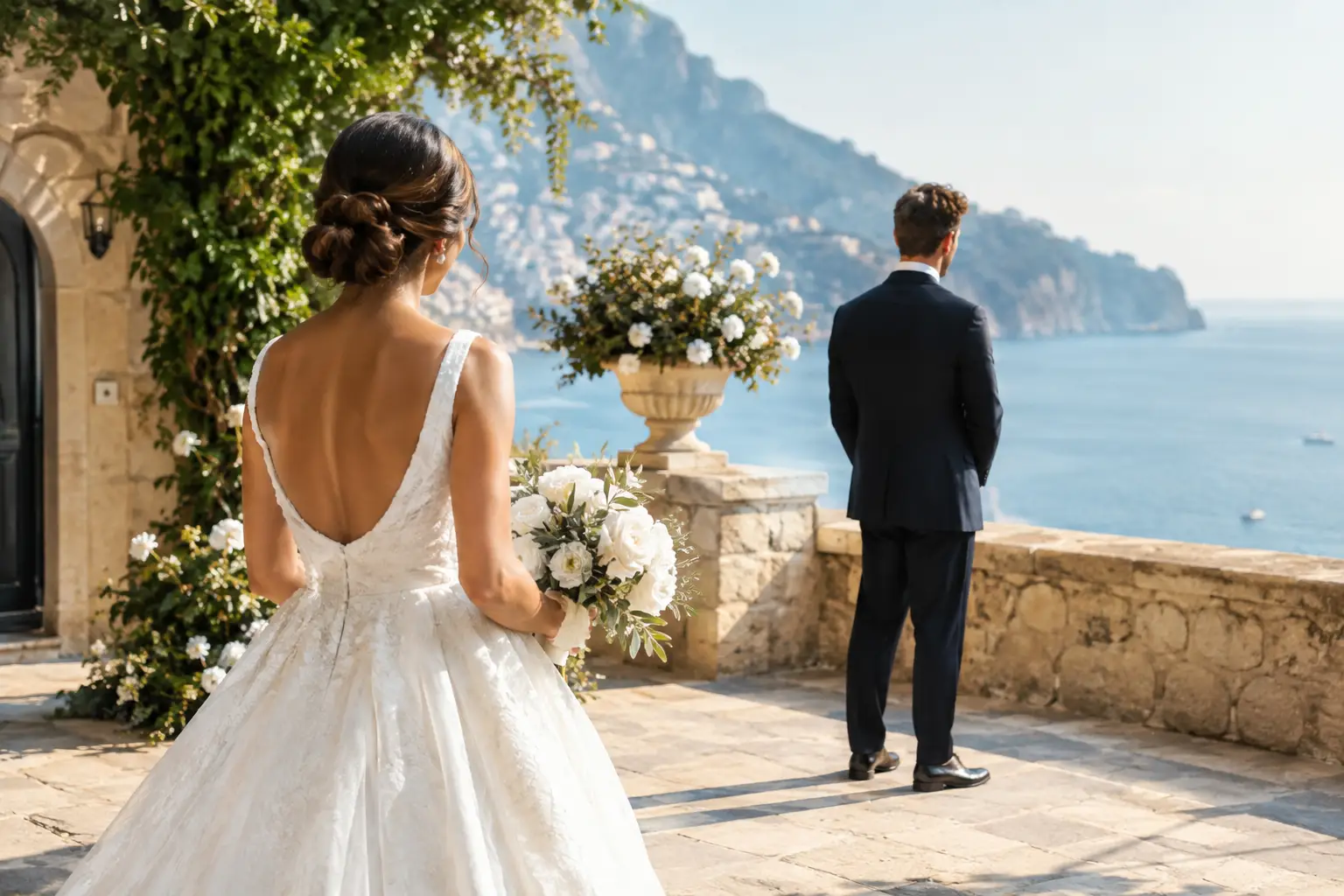
A first look is a private meeting between the two of you before the ceremony, usually arranged in a quiet, beautiful part of the venue or nearby landscape. One partner waits while the other approaches, and the moment is allowed to unfold without an audience. It can be a few minutes of conversation, a deep breath, tears, laughter, or simply the chance to take in how the other looks.
From a photographic perspective, it creates space. Rather than compressing family portraits, wedding party photographs, and couple portraits into the short interval between ceremony and aperitivo, you can complete much of that work earlier. This is especially valuable for celebrations in Positano, Ravello, and Amalfi, where stairs, narrow access points, changing light, and guest movement can make even a beautifully planned schedule feel tight.
It does not, however, replace the ceremony entrance. Many couples still find that seeing one another at a first look softens the nerves, while the walk down the aisle remains powerful in an entirely different way. One is intimate and private; the other is public, ceremonial, and full of anticipation.
How to Choose a First Look That Feels Like You
Start with a simple question: when do you feel most like yourselves? Some couples want a quiet moment before the energy gathers. Others have always imagined the ceremony entrance as the first reveal and would not exchange that feeling for anything. Neither preference is more romantic. The right choice is the one that lets you be present rather than performative.
If you are naturally private, a first look can be one of the few unscripted pauses in a day filled with people you love. It is particularly meaningful when you have traveled from different rooms, spent the morning with separate groups, and want a moment that belongs only to you before the celebration begins. The resulting photographs often carry a relaxed closeness because there is no need to hurry toward the next part of the schedule.
If tradition matters deeply to you, waiting can be the more honest choice. There is a particular charge in a ceremony entrance: the music begins, guests turn, and one of you sees the other at the end of the aisle. In a Ravello garden or a terrace overlooking the sea, that sense of occasion can feel wonderfully cinematic. Choosing to wait is not a compromise in photography. It simply calls for a more considered portrait plan later in the day.
Think Beyond the Reveal
The best reason for a first look is not that it produces a reaction photo. No one should feel pressured to cry, gasp, or behave in a way that does not come naturally. Its real value is time together. You may exchange letters, adjust a cufflink, hold hands for a moment, or talk through the nerves that had been building all morning.
That quieter connection is what makes the images lasting. A photographer can offer gentle direction around where to stand or how to move through the space, but the feeling should remain your own. The photographs should show your relationship, not an idea of how romance is supposed to look.
Light, Weather, and the Italian Wedding Schedule
On the Amalfi Coast, timing is never purely theoretical. Summer ceremonies often take place later to avoid the strongest sun, while the final hour before sunset can be reserved for portraits with softer skin tones, dimensional shadows, and a more atmospheric view of the landscape. In these cases, a first look earlier in the day may take place in open shade rather than in direct sun.
This is why a first look should not be planned solely around a dramatic view. A sunlit terrace can be beautiful, but at noon it may be uncomfortable and visually harsh. A shaded stone corridor, a citrus garden, a quiet courtyard, or the interior of a historic villa can create a more flattering and intimate setting. The location should serve the light and the feeling, not compete with it.
Weather also deserves a little flexibility. Coastal conditions can shift quickly, especially in spring and fall. An experienced photographic plan includes an alternative sheltered spot that still feels intentional, rather than treating rain or wind as an emergency. A first look can work beautifully beneath an arched loggia, beside textured old walls, or in a room where window light falls softly across the two of you.
The Guest Experience Is Part of the Decision
A first look can make the timeline more generous for your guests. If formal portraits are completed before the ceremony, you may be able to join cocktail hour sooner, greet friends and family, and enjoy the aperitivo you chose so carefully. For a destination wedding, this often matters more than couples initially realize. Your guests have come a long way, and the hour after the ceremony is often one of the liveliest, most relaxed parts of the day.
There is a trade-off. Getting ready needs to begin earlier, and a first look only works if hair, makeup, attire, flowers, and transport are genuinely ready on time. Rushing into it can undermine the calm it is meant to create. Build in a buffer, especially where travel between hotels, villas, and ceremony sites involves coastal roads or steep village lanes.
For larger celebrations, consider whether you also want to photograph immediate family and the wedding party before the ceremony. This can be efficient, but it should not turn the morning into a production. Keep the groupings concise and leave enough time for each of you to breathe. The day should still feel like a wedding, not a sequence of appointments.
A First Look Without Losing Spontaneity
Couples sometimes worry that a first look will make the day feel staged. It does not need to. The structure can be simple: choose a private location, allow enough time, and let the meeting happen without instructions about what you should say or do. A discreet photographer will position you in the most flattering light, then step back enough for the moment to remain yours.
Afterward, a short portrait session can flow naturally from the first look. Rather than asking you to hold stiff poses, it can be a walk through the grounds, a pause by a window, or a few unhurried minutes on a terrace before guests arrive. Direction should be light and clear, helping you look polished while leaving room for movement, expression, and connection.
When Waiting Until the Ceremony Is the Better Choice
Wait if the ceremony entrance is central to your vision, if you prefer the emotions of the day to unfold in front of your guests, or if an early schedule would create unnecessary pressure. You can still protect time for meaningful photographs. Ask for a short private portrait window immediately after the ceremony, then plan another ten or fifteen minutes near sunset.
This two-part approach is often ideal in Southern Italy. The first session captures the freshness and emotion just after you are married. The later session offers a change of pace, softer light, and a few calm minutes away from the reception. On the Cilento Coast, for example, the longer, quieter edges of the day can be especially beautiful for portraits that feel expansive without losing intimacy.
Make the Choice Early, Then Leave Room for Feeling
Once you decide, share the plan with your planner, photographer, and the people responsible for hair, makeup, flowers, and transportation. A first look is most successful when it is woven into the day from the beginning, not added as an afterthought. Your photographer can then advise on the light, privacy, walking time, and practical sequence of portraits without making the schedule feel overcontrolled.
If you are still uncertain, look through a photographer’s portfolio with a more specific eye. Notice whether you are drawn to private, close portraits before the ceremony or to the charged expressions at the aisle. Then make an inquiry with the shape of your day in mind. The most memorable choice is rarely the one that looks best on a timeline. It is the one that gives you the freedom to look at each other and feel, without distraction, that you are finally here.