A Positano ceremony is never photographed from just one direction. The best Positano ceremony photo viewpoints bring together the sweep of the vertical village, the depth of the Tyrrhenian Sea, and the quiet expression on a couple’s faces as they exchange vows. The difference lies in choosing an outlook that serves the ceremony itself, rather than asking the ceremony to become a backdrop.
For an elegant destination wedding, the most successful setting gives guests a sense of arrival while leaving enough visual calm for the photographs to hold emotion, movement, and atmosphere. Positano is remarkably dramatic, but it is also compact, steep, and full of changing light. A considered viewpoint and a thoughtful ceremony time make all the difference.
What makes a Positano ceremony viewpoint photograph well
A strong ceremony view needs more than an expansive sea horizon. It should offer a clean sightline behind the couple, sufficient space for the aisle and guests, and a position that lets the photographer work discreetly without interrupting the experience.
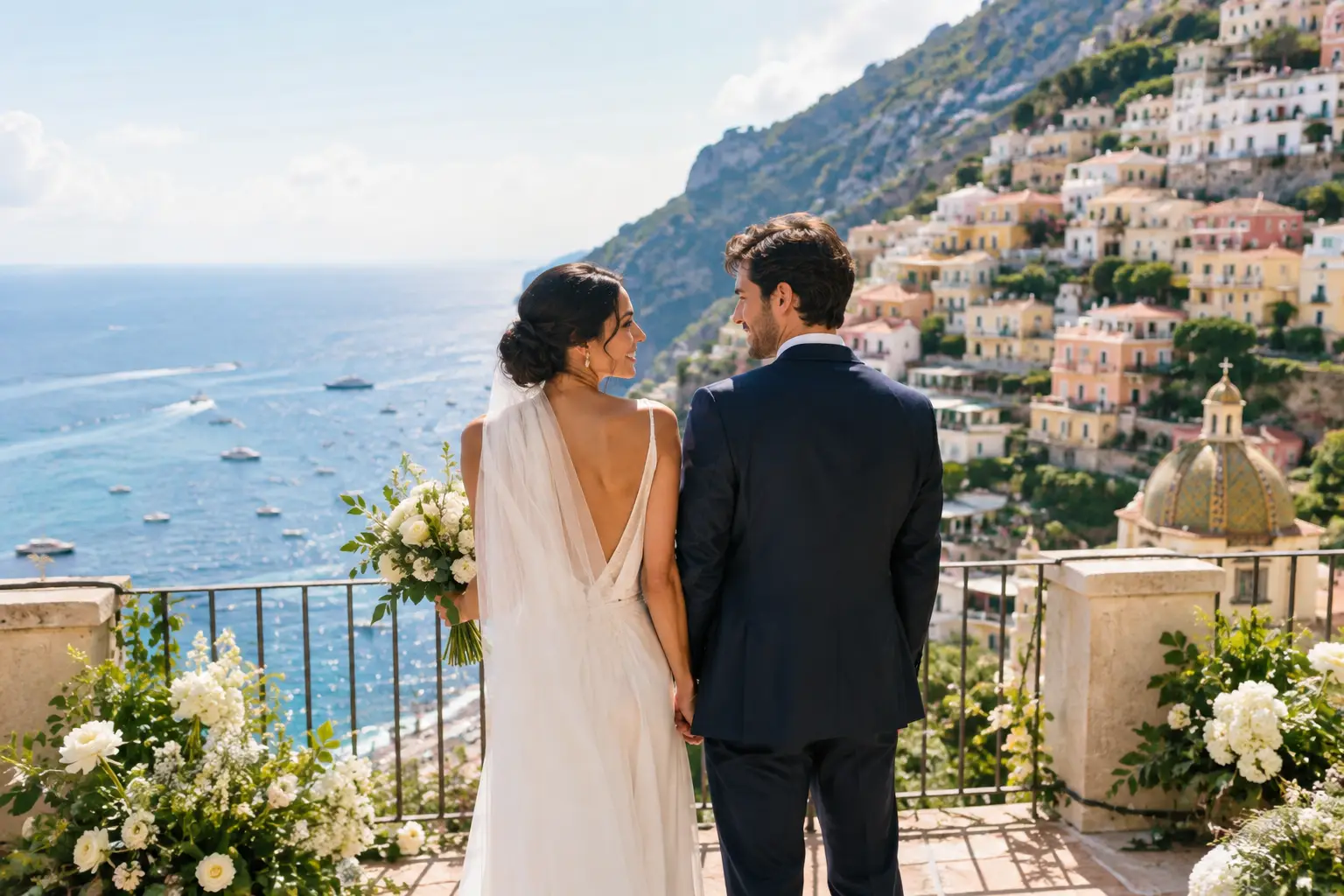
The village is most recognizable when its pastel houses climb the hillside in layers, narrowing toward the beach below. Yet a fully panoramic view is not always the most flattering angle for vows. From some terraces, the buildings can compete with the couple; from others, a small adjustment in placement can frame them beautifully against open water, a weathered stone wall, or the softer geometry of distant cliffs.
I look for depth first. A foreground of flowers, chairs, or a balustrade can lead the eye toward the ceremony. Beyond it, the sea creates openness, while Positano’s architecture adds the unmistakable sense of place. This layering gives photographs a cinematic quality without making them feel staged.
The ceremony view and the photographer’s view are different
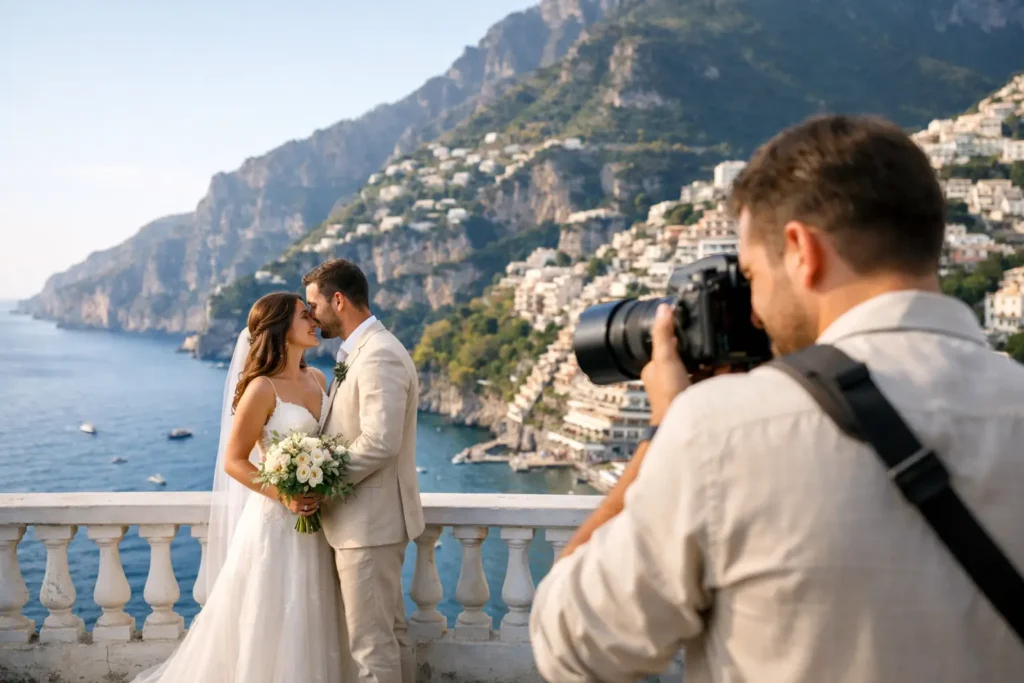
Couples often choose a terrace because of what they will see during the vows. That matters deeply. But the photographic perspective is usually from behind the officiant, along the aisle, or from a side angle that captures both faces. Before finalizing the layout, it is worth standing in each of those positions.
The ideal plan allows the couple to see the coast while the photographer sees their expressions in flattering light. Sometimes that means turning the ceremony arrangement slightly away from the most obvious panorama. The result can still feel entirely Positano, while the images become more intimate and expressive.
Best Positano ceremony photo viewpoints by atmosphere
A high terrace looking across the village
For the iconic Positano composition, a raised terrace overlooking the town is difficult to surpass. From above, the tiled roofs, domes, bougainvillea, and pale façades form a textured amphitheater around the sea. This perspective is particularly effective for a processional, when the scale of the destination can be shown alongside the anticipation of the moment.
The trade-off is visual complexity. A high viewpoint needs restraint in the ceremony design. Low floral arrangements, an aisle with breathing room, and a clean altar area prevent the frame from becoming too busy. It is also wise to consider wind, which can be stronger on exposed upper terraces and can affect veils, candles, and lightweight stationery.
A sea-facing terrace with an open horizon
An open sea view brings a quieter, more editorial mood. Here, the horizon becomes negative space, placing the attention on the couple and the gestures that unfold between them. It is especially beautiful for smaller celebrations and elopements, where a sense of privacy matters as much as spectacle.
This type of viewpoint benefits from thoughtful chair placement. If every guest faces directly into the brightest light, the ceremony may be uncomfortable and photographs can become strained. A slight diagonal orientation often preserves the sea view while giving gentler light across faces.
A hillside garden framed by Mediterranean planting
A garden ceremony can offer a more sheltered interpretation of Positano. Lemon trees, jasmine, climbing vines, and stone paths create a natural frame, with glimpses of sea rather than one uninterrupted panorama. This is a refined choice when the couple wants the coastal setting to feel present but not overpowering.
From a photographic perspective, gardens create wonderful opportunities for layered, documentary images. Guests seen through leaves, a parent’s reaction caught beyond a flowering branch, or hands held beneath dappled shade can carry as much soul as the widest coastal vista. The consideration here is uneven light. A photographer should assess where patches of sun will fall during the ceremony, particularly in late spring and summer.
A historic interior opening toward the coast
Not every meaningful ceremony photograph needs to show the entire landscape. In Positano, an architectural setting with doors, arches, or windows opening toward the light can feel deeply atmospheric. The contrast between cool interior shade and bright Mediterranean daylight creates a sense of intimacy, especially during a civil or symbolic ceremony held in the warmer hours.
These settings require experience with exposure and movement. The goal is to retain the character of the room while allowing the view beyond to remain luminous, not blown out. They also suit couples who prefer a more private, story-driven ceremony where the focus stays close to family, vows, and touch.
Light matters more than the landmark
Positano’s light changes quickly because of the cliffs. A terrace can be in full sun while a neighboring one is already in shade, and the transition may happen during the ceremony itself. The exact date, elevation, and direction of the terrace should shape the timeline.
Midday ceremonies can work, particularly where there is broad open shade or a covered space with a clear view. However, direct overhead sun tends to create strong shadows beneath the eyes and can make guests uncomfortable in warmer months. If the schedule allows, later afternoon often gives a softer result, with warmer tones settling across the façades and a more forgiving quality on skin.
That does not mean every Positano ceremony should be placed at sunset. A late ceremony can compress the time available for family portraits, couple photographs, and the transition to dinner. It depends on the season, the length of the ceremony, and whether the reception space has a strong evening atmosphere. The best plan protects the experience first, then builds portrait time around the light that remains.
Planning the ceremony layout for natural photographs
The viewpoint is only part of the composition. The aisle determines how the entrance feels; the distance between the front row and the couple determines whether guests appear connected or detached; the placement of the officiant can either preserve or block the view.
Keep the altar area open. Large structures may look impressive in person but can obscure the sea, interrupt sightlines, and cast unexpected shadows. A low, considered floral design usually photographs with more ease than a heavily built backdrop, especially when Positano itself is already providing texture and color.
Ask the officiant to stand slightly to one side when appropriate. This small change allows for a clear photograph of the exchange of vows and rings, while keeping the ceremony personal and unforced. It is also helpful to reserve an unobtrusive route along the side or rear of the ceremony area. The strongest documentary photographs often come from a photographer moving quietly between perspectives rather than remaining fixed in one place.
For guest photographs, intimacy matters. A ceremony set too wide can leave empty space between loved ones and the couple. In a smaller gathering, bring the seating close. The atmosphere becomes warmer, and the images hold the glances, tears, laughter, and hand squeezes that give the landscape its emotional meaning.
A realistic approach to Positano logistics
Beauty in Positano comes with practical considerations. Access can involve stairs, narrow pathways, and limited room for equipment or large groups. Build in time for guests to arrive and settle, especially if they are moving between different parts of town. A rushed entrance is rarely the beginning anyone wants for a ceremony.
Weather should be approached calmly, not fearfully. Sea air, wind, and occasional summer heat are part of the coast. A covered alternative, a plan for delicate florals, and a willingness to adjust the ceremony angle can preserve the visual character of the day without forcing the original plan.
The same applies to portrait time. Rather than leaving the ceremony viewpoint in search of every famous angle in town, choose a few locations that fit naturally into the schedule. A short walk after the vows, a quiet terrace at dusk, and the changing blue of early evening can tell a more coherent story than an overpacked route.
Choosing a viewpoint that feels like you
The most memorable Positano ceremony photographs do not simply prove that the wedding took place on the Amalfi Coast. They show what it felt like to stand there together: the salt in the air, the softness in a parent’s face, the breeze catching a veil, and the pause before a promise.
When reviewing a photographer’s Positano portfolio, look beyond the widest landscapes. Notice whether the images hold both the place and the people within it. Then use the inquiry page to share your ceremony time, guest count, and venue setting early. With the right perspective and a measured timeline, Positano can remain grand around you while the photographs stay focused on the two of you.