The difference between editorial vs documentary wedding photos is often felt before it is understood. One image may look as though it belongs on the pages of a fashion publication: composed, luminous, and quietly dramatic. Another may bring you straight back to the second your father saw you in your wedding dress, or the way your partner reached for your hand during dinner. The most memorable wedding photography makes room for both beauty and truth.
For couples planning a celebration in Italy, this distinction matters. A villa terrace in Ravello, the soft grandeur of Lake Como, or a candlelit reception in Tuscany deserves photographs with a sense of place. Yet no setting, however extraordinary, should eclipse the people and emotions at the center of the day. The question is not simply which style looks best. It is which approach will allow you to recognize your wedding, and yourselves, when you return to these images decades from now.
Editorial vs Documentary Wedding Photos: The Difference
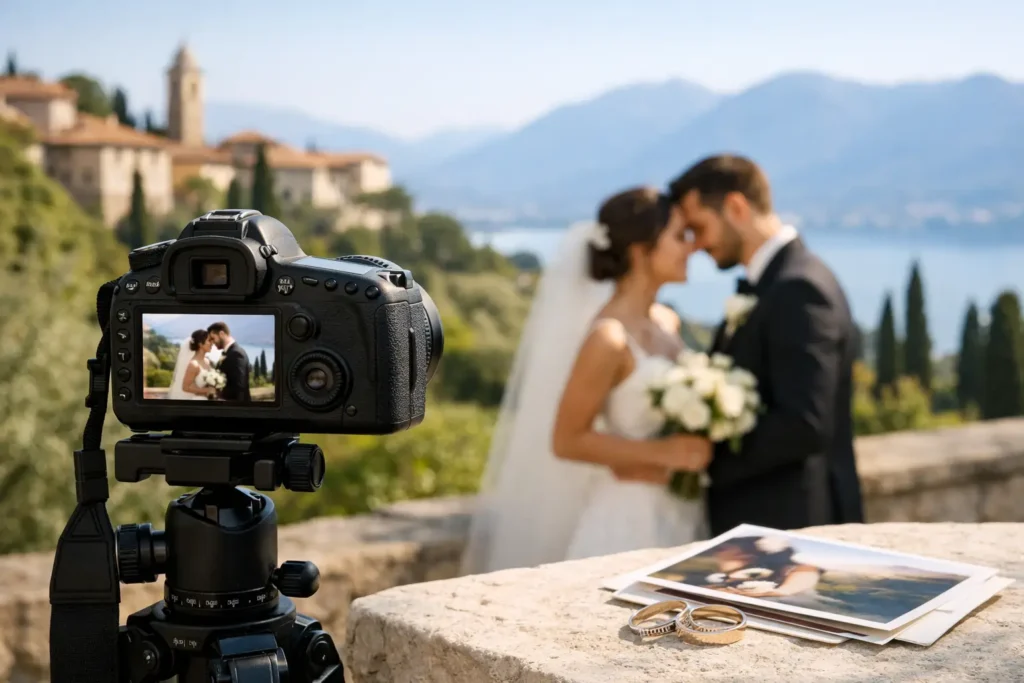
Editorial wedding photography is guided by intention. It draws from fashion, cinema, architecture, and fine art to create images with polish and visual authority. The photographer notices the fall of light across a stone façade, the shape of a gown in movement, the negative space around a couple, and the way a simple turn of the shoulder can transform a portrait. There is direction involved, but at its best, it never feels rigid or overly posed.
Documentary wedding photography is rooted in observation. Rather than arranging a moment, the photographer anticipates it and preserves it as it unfolds. The focus may be a grandmother smoothing a veil, friends erupting with laughter during speeches, or a fleeting glance exchanged just before the ceremony begins. These photographs carry the texture of real time: imperfect, energetic, tender, and often wonderfully unrepeatable.
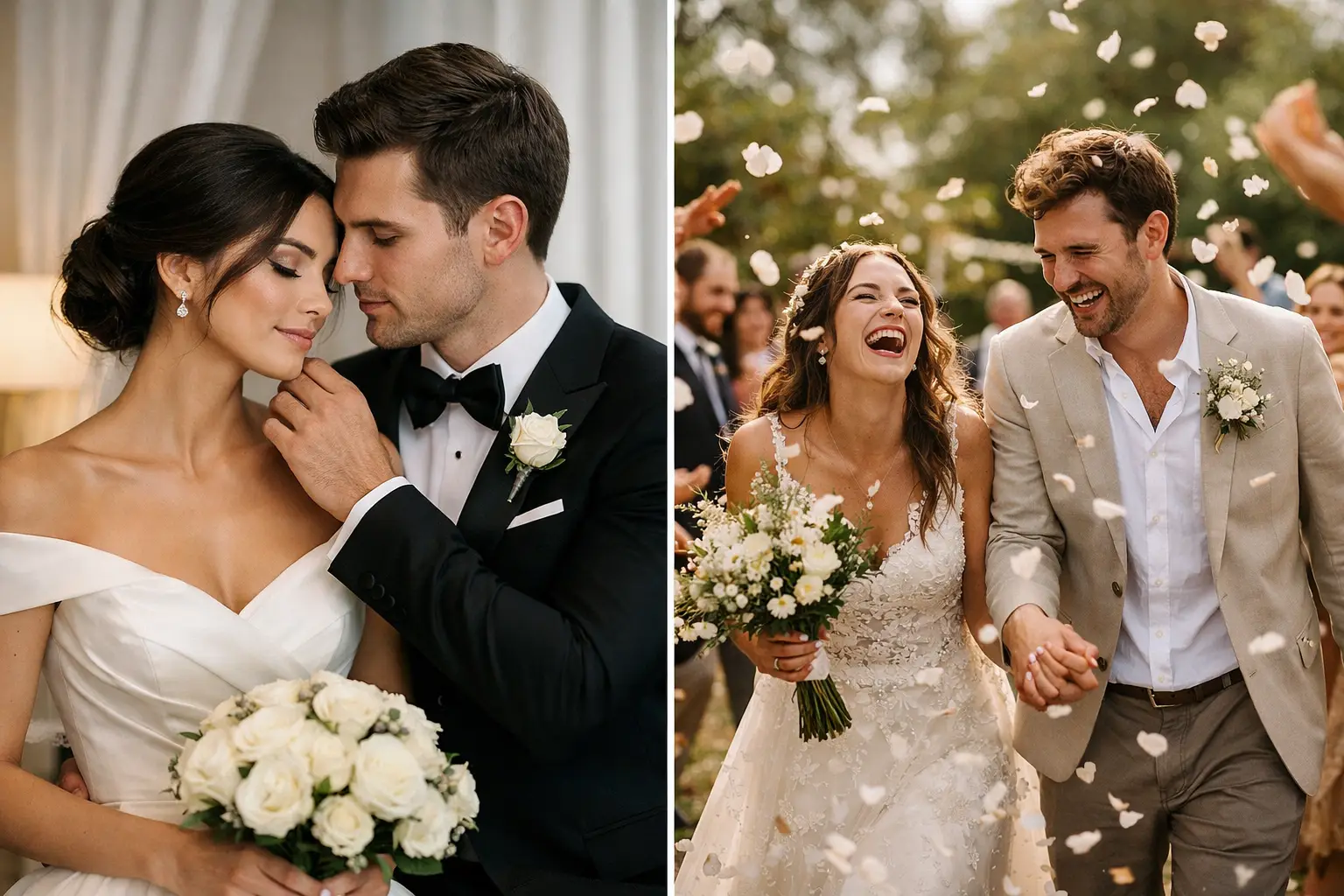
The distinction is useful, though it is not always absolute. Editorial describes how an image is shaped. Documentary describes how a moment is approached. A skilled photographer can create an editorially composed image of a genuine embrace, or document an unscripted scene with the sensitivity and framing of a film still.
What Editorial Wedding Photography Feels Like
Editorial imagery is for couples who care deeply about atmosphere. They may have chosen their venue for its history, planned a wardrobe with care, or imagined wedding photographs that feel at home in a beautifully designed album. They want to look elegant, but not unlike themselves. They value guidance because they do not want to spend their portrait time wondering where to put their hands or how to stand.
A fashion-informed photographer brings calm structure to those moments. During portraits, you may be invited to slow down, walk together, look toward the light, or settle into a natural embrace. The direction is subtle and specific, designed to create flattering lines while preserving the connection between you. Rather than being asked to perform romance, you are given space to experience it.
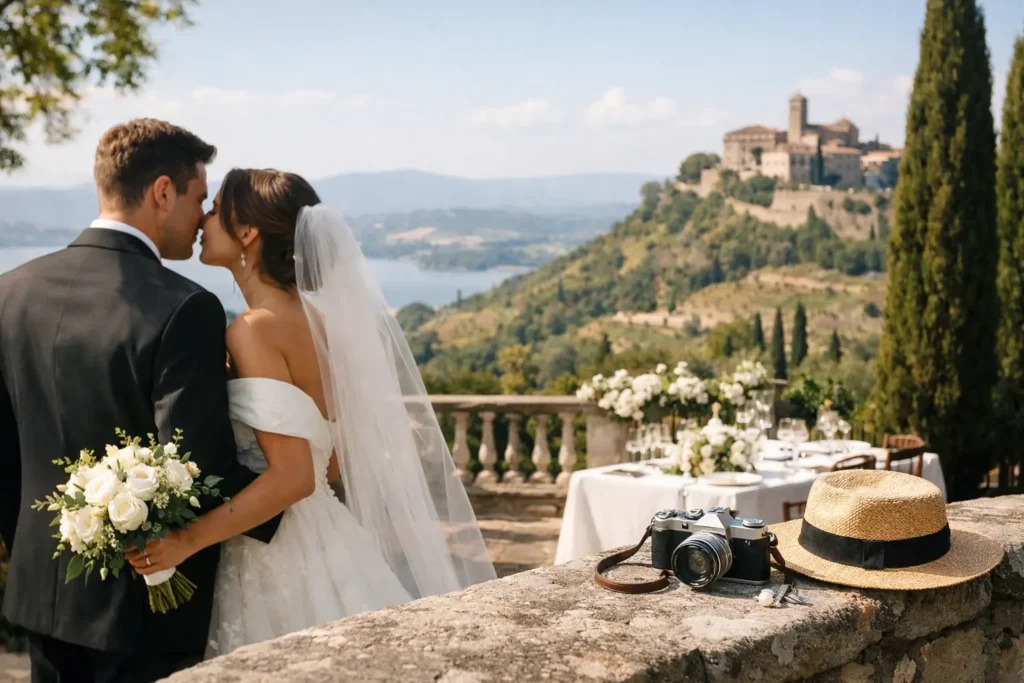
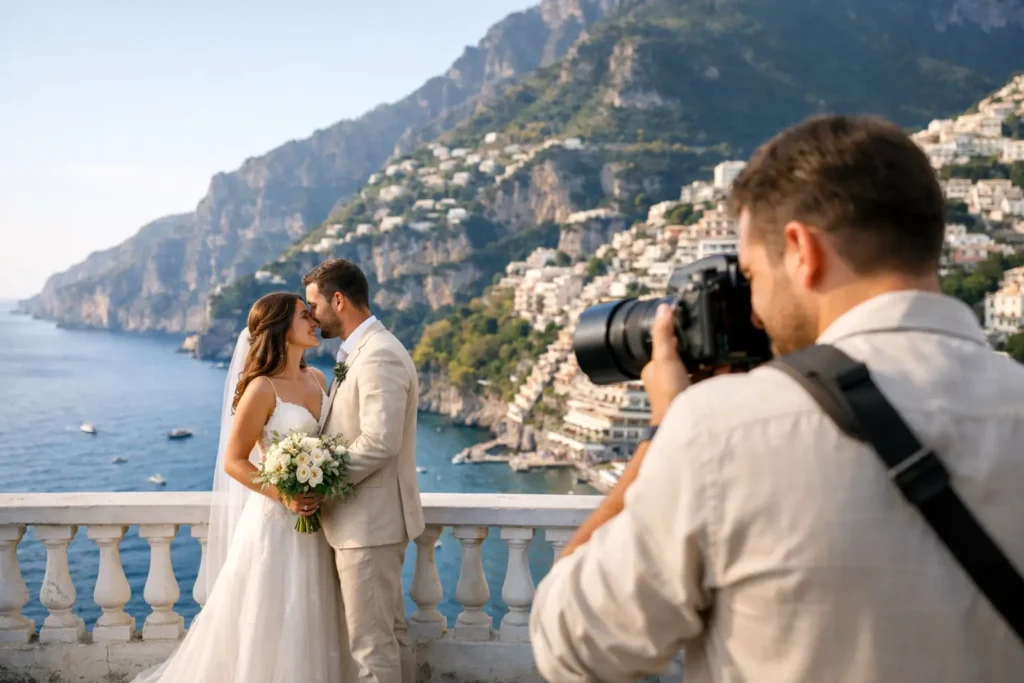
This approach is particularly meaningful in destinations where the surroundings are part of the story. An editorial eye can honor the scale of an Italian palazzo without making the couple feel small within it. It can use a dramatic staircase, a vintage boat, or the last light over the Amalfi Coast as visual language, while keeping your relationship as the emotional focal point.
There is a trade-off to consider. Editorial photographs require a little time, openness to direction, and a willingness to pause. If a wedding timeline is packed tightly from morning through midnight, there may be fewer opportunities to create the layered, intentional portraits that give a gallery its cinematic rhythm. This does not mean sacrificing the celebration for photographs. It means protecting a few unhurried windows where beauty can happen naturally.
What Documentary Wedding Photography Preserves
Documentary work gives lasting weight to the moments couples cannot plan. It is the nervous breath before the ceremony, the flower girl’s unexpected rebellion, the tear that appears during a toast, and the dance floor losing all sense of restraint after midnight. These images become invaluable because they hold the people you love as they truly were, not simply as they looked.
The best documentary photographers are far from passive. They read a room, understand family dynamics, and sense when something meaningful is about to unfold. They know to stay close when your mother is fastening the final button on your dress, then step back when the emotion needs privacy. Their presence is attentive but unobtrusive, allowing life to move without turning every moment into a production.
For a multi-day destination wedding, documentary coverage is especially powerful. Welcome dinners, long-table conversations, boat rides, poolside afternoons, and late-night celebrations often hold the relaxed intimacy that guests remember most. These chapters add soul to a finished collection because they reveal the full experience, not only the formal milestones.
A purely documentary approach may be ideal for couples who dislike being photographed and want as little interruption as possible. Still, it can mean leaving more to chance when it comes to portraits, family groupings, or photographs that fully use the architecture and light of a remarkable location. If you have invested in a setting with strong visual character, it is reasonable to want a few images made with deliberate artistry.
Why the Strongest Galleries Blend Both Approaches
The most complete wedding stories rarely choose between polish and spontaneity. They move gracefully between the two. A photographer might guide you through a quiet portrait session at sunset, then disappear into the rhythm of cocktail hour to capture your guests in their most relaxed, joyful selves. They may refine the composition of a ceremony scene, but wait patiently for the real emotion to arrive within the frame.
This balance creates a gallery with contrast. There are iconic portraits that feel timeless enough to print large and live with for years. There are also small, unscripted frames that may become the ones you return to most often: your best friend fixing your train, your parents dancing, the expression on your face when you realize everyone you love has traveled so far to celebrate you.
At Gennaro Piscopo Photography, the aim is not to impose a style upon a wedding. It is to bring an editorial sensibility to an honest, story-driven record of the day. With more than two decades behind the camera, Gennaro understands that the finest images are not only beautifully composed. They carry a feeling that remains long after the music has ended.
How to Choose the Right Balance for Your Wedding
Begin with the photographs that make you pause. If you are drawn to sculptural portraits, thoughtful composition, refined color, and images where the setting feels almost cinematic, editorial direction should be an important part of your experience. If your favorite images are full of movement, laughter, tears, and the beautifully unguarded reactions of family and friends, documentary observation should be central.
Then consider how you want your day to feel. Couples who enjoy a little privacy and calm amid a lively wedding often treasure a dedicated portrait session. It becomes a chance to be together, breathe, and absorb what is happening. Couples who prefer a fast-moving, highly social day may want portraits kept brief, with the photographer prioritizing candid coverage around them.
Your venue and timeline also shape the answer. A ceremony ending close to sunset may call for careful planning if golden-hour portraits matter to you. A weekend celebration in Capri or Lake Como may offer more flexibility, with an engagement session or post-wedding portrait experience providing time for editorial images without taking you away from guests. Neither choice is more authentic. It simply depends on where you want to place the emphasis.
When speaking with a photographer, look beyond labels. Ask how they direct portraits, how they work during emotional moments, and how they balance a couple’s visual hopes with the natural flow of the celebration. A portfolio should show more than beautiful individual images. It should reveal whether the photographer can hold atmosphere, intimacy, family, fashion, and fleeting human connection in the same story.
The photographs you choose should not ask you to become a different kind of couple. They should let you be fully present in an extraordinary place, while preserving the elegance of how it looked and the deeper truth of how it felt.