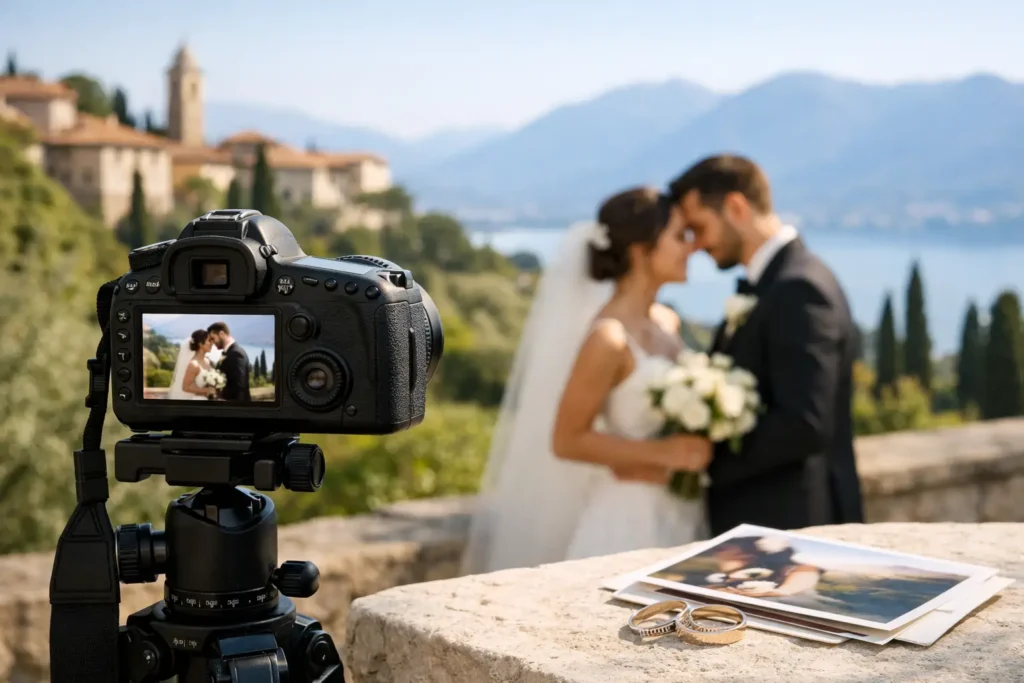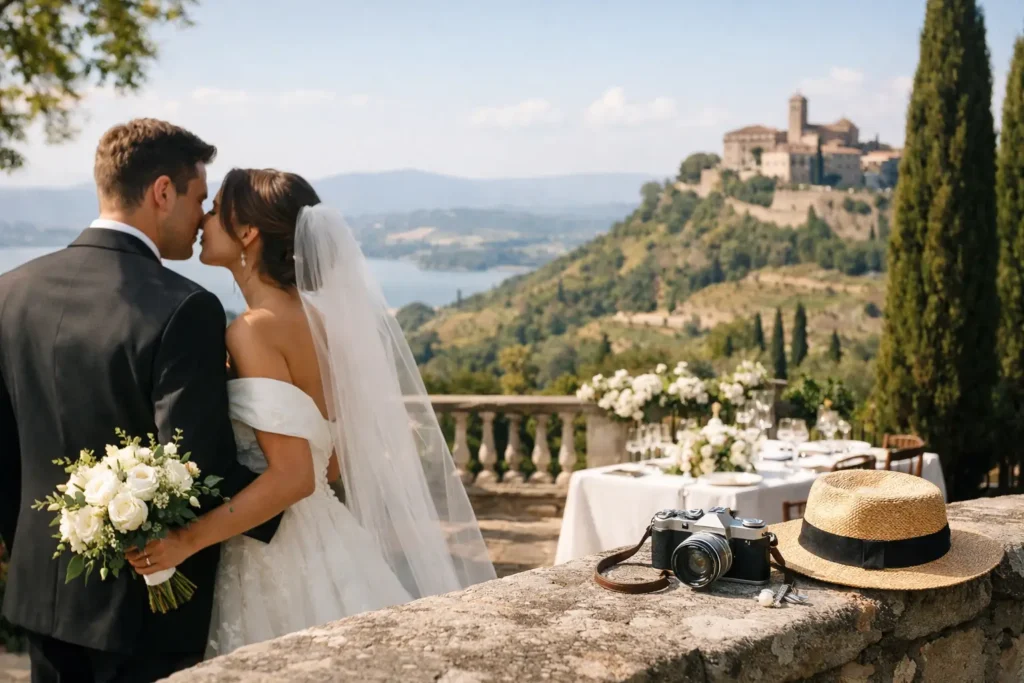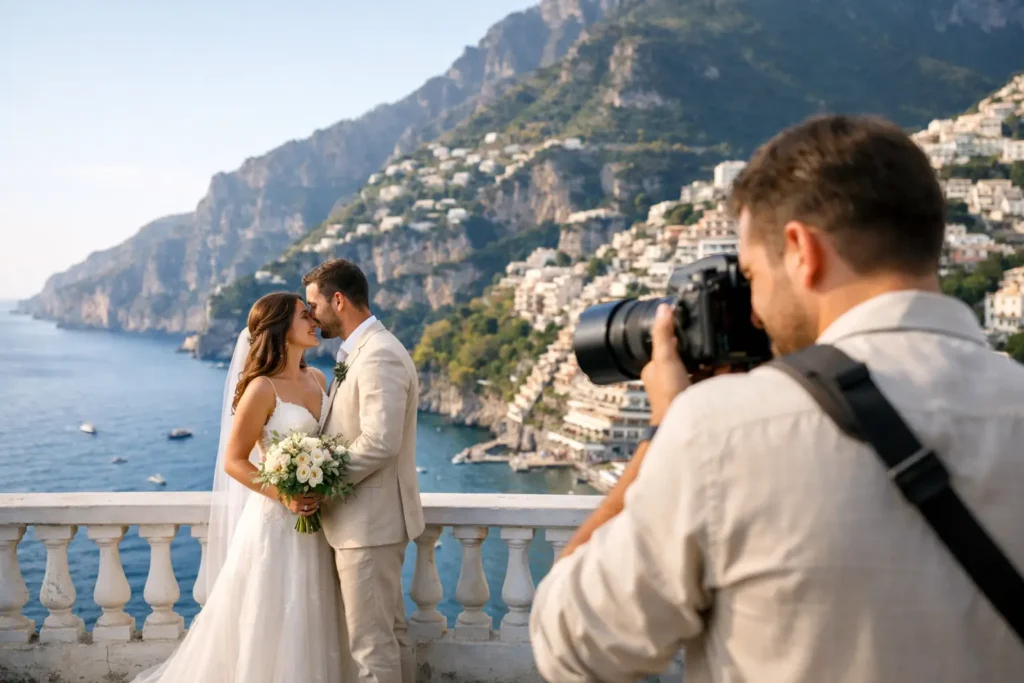
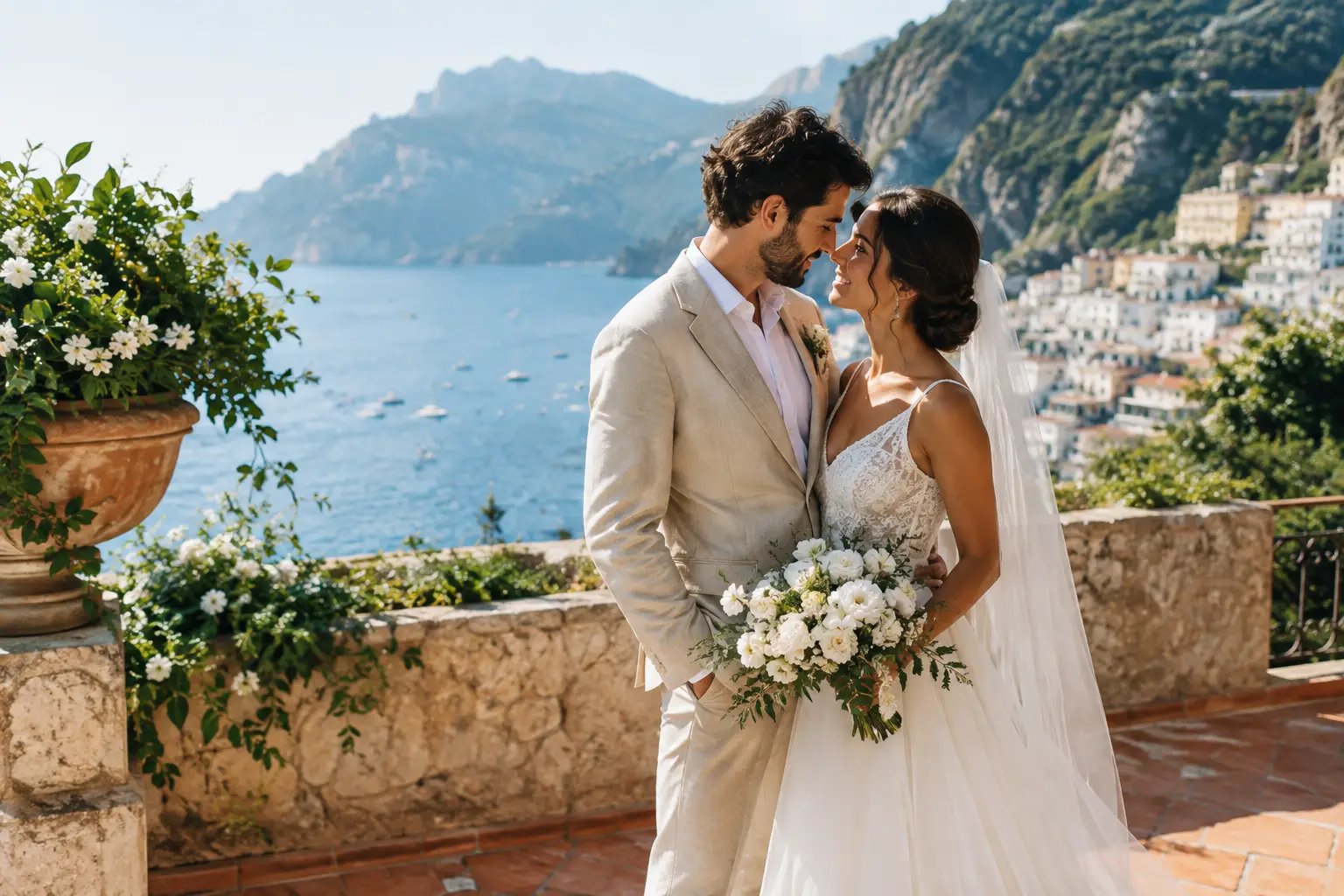
A small ceremony on the Amalfi Coast has its own rhythm: footsteps on worn stone, the hush before a vow, linen moving in the sea air, and the sudden warmth of applause from the few people who matter most. An intimate Amalfi ceremony photo story should preserve that rhythm rather than interrupt it. The strongest images do not simply show where you were. They reveal how the day felt in the moments you were most absorbed in one another.
For couples traveling to Italy for a celebration with a smaller guest count, photography becomes less about documenting a large-scale event and more about noticing nuance. The exchange of a glance as you arrive, a parent’s hand held a little longer than usual, the texture of an old doorway behind an embrace – these details give a concise celebration its depth.
Why an intimate Amalfi ceremony photo story needs a different approach
A wedding with twenty guests does not need twenty times more posing. In fact, its beauty often comes from allowing space for real interaction. There is nowhere to hide within a smaller gathering, which is exactly why the photography should feel calm, observant, and considered.
The Amalfi Coast also asks for a precise way of working. Its architecture is vertical, its lanes are narrow, and its light changes quickly as the sun moves behind the mountains. In Amalfi, the morning can bring bright light across the harbor and deep shadows beneath arcades. Later in the day, walls take on warmer tones and the coastline becomes gentler on camera. Understanding these shifts helps keep a ceremony story elegant without making the schedule feel ruled by photography.
The goal is not to turn a private occasion into an editorial production. It is to bring editorial awareness to what is already there: composition, light, gesture, and the relationship between people and place. A little guidance can create a beautifully composed portrait. The rest depends on being present enough to recognize an unscripted moment before it disappears.
Begin with the atmosphere, not the itinerary
The photographs of an intimate celebration often begin before the ceremony itself. A quiet room while someone finishes getting ready, a handwritten note on a bedside table, or a dress hanging against soft plaster can establish the visual language of the day. These are not props to manufacture a mood. They are fragments of the setting you chose, recorded with restraint.
In Amalfi, that setting may include tiled floors, pale stone, flowering terraces, or the glimpse of water from a window high above the street. The location should be felt, but it should never overwhelm the people in the frame. A wide photograph can show the scale of the coast; a closer one can show the expression that made the place meaningful.
For this reason, getting-ready coverage works best when there is enough time to move slowly. A rushed room, crowded with bags and competing plans, can still be photographed honestly, but it offers less visual calm. If your day permits, allow a small pocket of quiet before leaving for the ceremony. It is often where anticipation becomes visible.
The value of a first look
A first look is not essential, and some couples prefer to meet for the first time at the ceremony. But for an intimate Amalfi celebration, it can create a private emotional chapter before family and friends arrive. It also gives you an opportunity for natural portraits without separating you from your guests after the vows.
The choice depends on what matters most to you. If the ceremony entrance carries particular emotional weight, preserve it. If you value a few uninterrupted minutes together and a more relaxed timeline, a first look may be the better fit. Neither choice is more photogenic by default. The feeling behind it is what gives the photographs their soul.
Let the ceremony remain the center of the story
The most moving ceremony images tend to come from proximity without intrusion. During vows, the photographer must be close enough to see a breath catch or a hand tighten, while remaining discreet enough that you stay connected to the person in front of you.
This is especially relevant in small outdoor ceremonies, where every movement is noticed. An unobtrusive approach allows the exchanges to unfold naturally: a guest wiping away tears, laughter after a familiar phrase, the quiet relief that follows the final words. These moments cannot be directed, and they should not be.
The setting deserves attention as well. On the Amalfi Coast, a ceremony may be framed by historic facades, a secluded terrace, or the layered hills rising beyond the town. The strongest wide images place the landscape in context. They show the intimacy of a few gathered people against the much larger scale of Southern Italy, without treating the couple as scenery.
Portraits should feel like a pause together
After the ceremony, portraits are an opportunity to step away briefly, breathe, and absorb what has just happened. They should not feel like a prolonged photo session. Thoughtful direction is useful here – where to stand for the best light, how to move naturally, when to look at one another rather than the camera – but there is no need to perform every emotion.
Amalfi offers beautiful visual contrasts within a short distance. Sunlit stone can sit beside deep shade. A formal architectural line can lead into an unruly cascade of bougainvillea. The sea may appear as a distant band of blue between buildings rather than as an obvious backdrop. These shifts make portraits feel layered and cinematic, especially when the couple is given room to simply walk, talk, and settle into the day.
Timing matters more than chasing every possible location. A five-minute walk through a quiet lane at the right moment can be more meaningful than a complicated route across the coast. The best choice is usually the one that protects your experience while giving the photographs a sense of place.
Working with the coastal light
Midday light in Amalfi can be strong, particularly from late spring through early fall. This does not mean portraits must wait until sunset, but it does mean that shade and orientation matter. Arcades, garden edges, and narrow streets can offer flattering light with rich texture, while a short pause indoors may create an elegant, quieter set of images.
As afternoon progresses, the light becomes more forgiving. If your schedule includes an aperitivo or dinner, a brief return outdoors near sunset can add another visual chapter: softer skin tones, long shadows, and a more reflective atmosphere. Weather can shift quickly along the coast, too. A professional plan leaves room to adapt rather than forcing the day to follow a rigid sequence.
Photograph the people who made the journey
Smaller weddings create a rare closeness between the couple and their guests. Each person has usually traveled far and holds a meaningful place in the story. This is why candid guest photography matters as much as couple portraits.
Look for the conversations around the edges of the celebration: siblings leaning together during dinner, a grandparent taking in the view, friends laughing before a toast. These images bring dimension to an album because they hold the relationships surrounding the ceremony, not only the ceremony itself.
Formal family photographs still have value, particularly when relatives have come from different countries to be together. With a simple plan made in advance, these can be completed efficiently and with a relaxed, polished result. The aim is to give you the classic images you will want without turning the gathering into a series of instructions.
Give the story a lasting form
An intimate wedding may unfold in a few hours, but its photographs should feel complete. The final gallery needs variation: establishing frames, honest documentary moments, portraits with intention, and the small visual details that return you to the atmosphere years later.
A handcrafted fine-art album is especially suited to this kind of celebration. Unlike a gallery viewed quickly on a screen, an album allows the sequence to breathe. The opening images can hold anticipation; the center can belong to the ceremony and your people; the final pages can settle into evening, conversation, and the afterglow of the day. It becomes less like a collection of favorite photographs and more like a considered record of how it all unfolded.
If you are planning a ceremony in Amalfi, begin by considering the experience you want to protect: time together, time with guests, and enough stillness to notice the place you came so far to share. Explore Gennaro Piscopo Photography’s Amalfi Coast portfolio stories for a sense of the visual approach, then send an inquiry with your date, plans, and the atmosphere you hope to create.