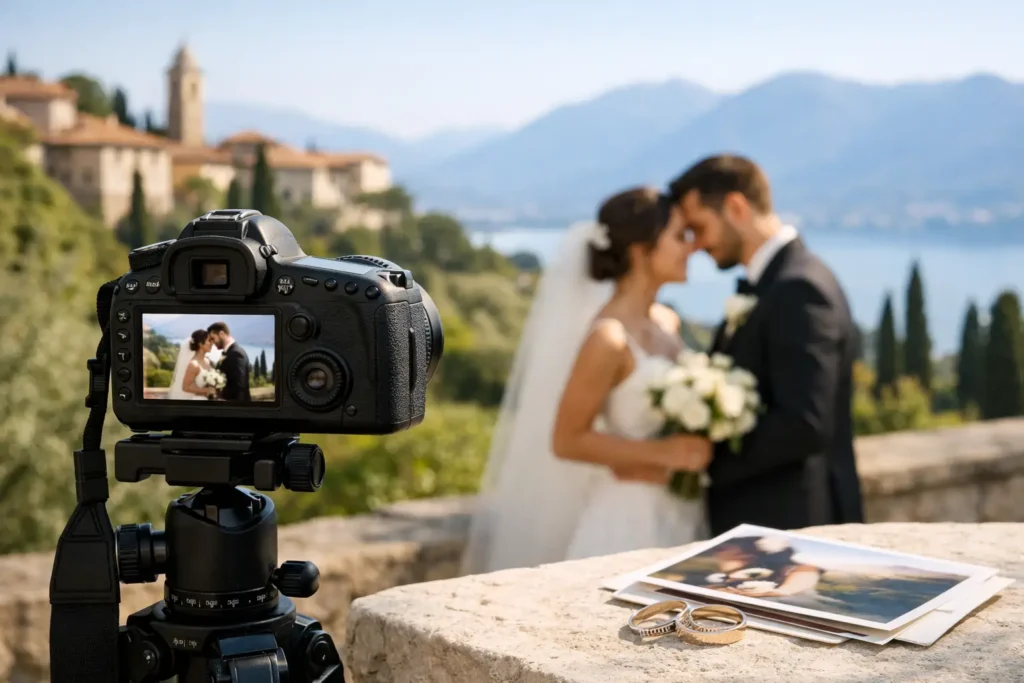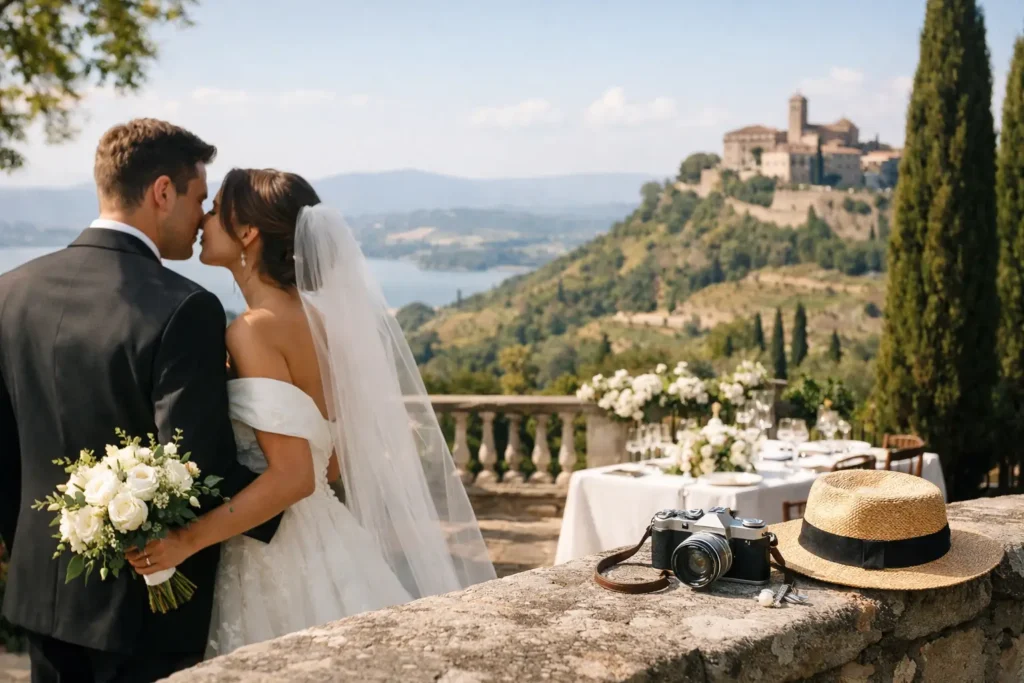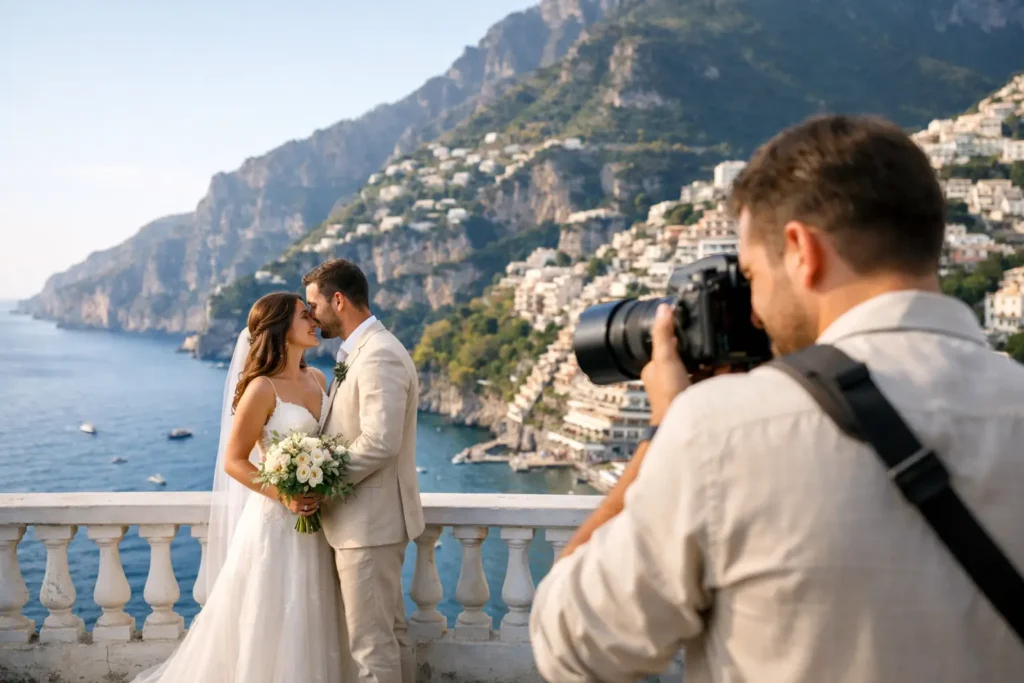
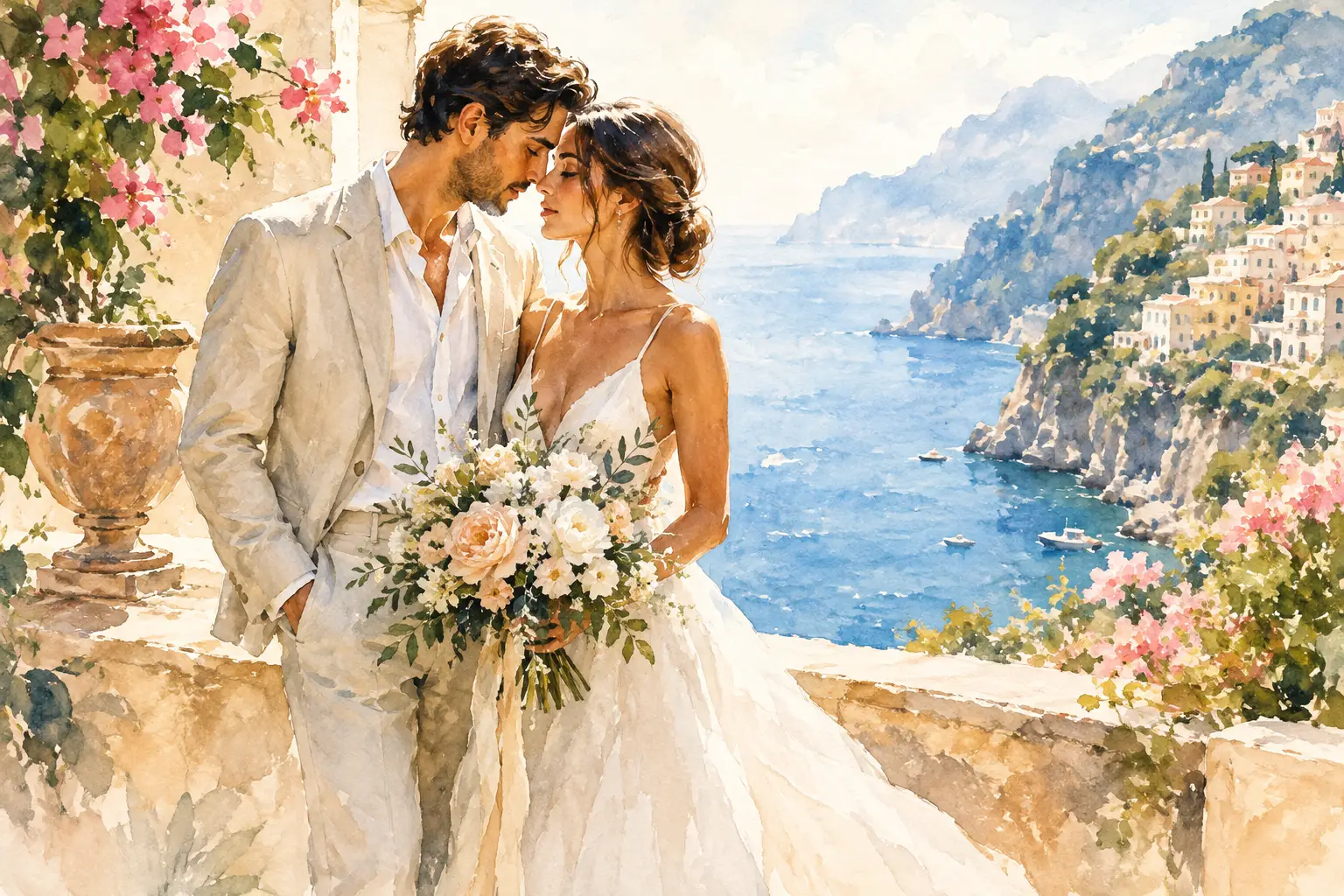
The most memorable portraits rarely begin with a pose. They begin in the quiet minute after a ceremony, with a hand reaching for another hand, a veil catching the coastal air, or the softened expression that arrives when a couple finally has a moment alone. This guide to editorial wedding portraits is for couples who want images with fashion-led polish, while still recognizing themselves in every frame.
Editorial wedding photography is not about performing for the camera all day. It is about creating a considered visual language around a real celebration: the architecture, the changing light, the clothes you chose so carefully, and most of all, the connection between you. The work should feel cinematic and refined, but never detached from the life of the wedding.
What Makes a Wedding Portrait Feel Editorial?
An editorial portrait has intention. Composition is deliberate, light is shaped or observed carefully, and every element within the frame has a reason to be there. That might mean placing you against the faded plaster and geometric shadows of an Amalfi Coast palazzo, allowing a clean expanse of sea to surround you, or using a doorway to frame a private exchange.
Yet editorial does not have to mean stiff. The strongest images hold a little tension between direction and spontaneity. You may be asked to stand in a particular pool of light, turn toward a window, or walk slowly along a terrace. Once the composition is in place, the important part is what happens between those instructions: the glance, the laughter, the breath before a kiss.
This balance matters particularly for destination weddings. You have not traveled to Positano, Ravello, or the quieter Cilento Coast to spend hours moving through a production line of poses. Portrait time should be focused enough to make beautiful work, and relaxed enough that you return to your guests feeling present rather than managed.
Begin With the Right Kind of Direction
Many couples say they are not natural in front of the camera. Usually, this means they have been given vague instructions before, then left to wonder what to do with their hands. Good direction is specific, discreet, and responsive to the people in front of the lens.
Rather than asking you to pose, an experienced photographer may give you a simple action: walk toward each other, pause with your foreheads close, look out toward the water, or adjust a sleeve while your partner watches. These small prompts create shape and movement without forcing a manufactured expression.
Your posture affects the final image, but comfort comes first. A straightened spine and relaxed shoulders can transform a portrait, as can a slight shift of weight or an unhurried turn toward the light. You do not need to memorize angles. You only need to trust the process and stay connected to one another.
There is also value in silence. Not every frame needs a prompt. After a little direction, the camera can step back and observe. This is where documentary instinct becomes essential: noticing the way a dress moves on a staircase, a groom’s expression while waiting for his partner, or the tenderness of a hand held just out of view of everyone else.
Movement Keeps the Images Alive
Still portraits have their place, especially when the setting calls for a strong architectural composition. But movement brings air into a wedding gallery. A short walk across a terrace, descending a staircase, or stepping through the narrow lanes above Positano can create a sequence that feels effortless rather than arranged.
The pace should suit the setting and your clothing. A dramatic train may need a calmer movement and a careful pause. A short dress or tailored suit can allow for something more energetic. Wind can be beautiful along the coast, but it is not always predictable, so the best approach is to work with it rather than fight it.
Light Is the Real Styling Tool
The same location can photograph very differently from one hour to the next. On the Amalfi Coast, bright Mediterranean sun can be sharp by late morning, bouncing from pale stone, water, and terraces. It is beautiful, but it asks for thoughtful positioning.
Soft window light is flattering while you are getting ready, giving skin a natural glow and preserving the details of a gown, stationery, or jewelry. Later in the day, shaded courtyards and covered passages offer a gentler alternative to open sun. As the afternoon settles, the warmth of the light begins to change, often creating the most flattering conditions for couple portraits.
Golden hour is valuable, but it should not become a rule that overrides the rhythm of the wedding. In Ravello, for example, a terrace may hold the last light beautifully while another part of the property is already in shadow. In Positano, the surrounding cliffs can shorten the available window. A photographer who understands these patterns can plan efficiently, then adapt when the weather or schedule shifts.
After dark, editorial portraits can become more intimate. Candlelight, a pool of warm interior light, or the glow from a reception space can create images with depth and atmosphere. Night portraits should feel like a natural extension of the celebration, not a lengthy interruption. Often, ten quiet minutes are enough.
Build Portrait Time Into the Day Without Losing the Day
Editorial portraits need time, but they do not need to dominate the schedule. For most weddings, it is better to create two or three short portrait windows than one long session. A few minutes after the first look or ceremony, a brief moment near sunset, and perhaps a final nighttime frame can give the gallery variety while protecting the energy of the day.
The exact approach depends on your priorities. If seeing each other before the ceremony feels right, a first look can provide a private, emotional space and make more time available afterward. If you prefer to wait until the aisle, portraits can be shaped around cocktail hour with a clear plan and thoughtful locations nearby.
Travel is often the hidden factor on the coast. A viewpoint that appears close on a map may involve steep steps, narrow roads, pedestrian traffic, or a longer walk in formal attire. The most effective portraits are not necessarily made at the most distant location. They are made where the light, surroundings, timing, and your state of mind come together.
For celebrations in Castellabate or elsewhere along the Cilento Coast, the quieter pace can allow more room for unhurried observation. Even there, however, the principle remains the same: protect the moments that matter and avoid overcomplicating the route simply for another backdrop.
Choose Settings That Support Your Story
A beautiful location is only useful when it suits the feeling you want to preserve. Some couples are drawn to grand stone staircases and formal symmetry. Others prefer an intimate balcony, a shaded garden, or an open coastal horizon. The best settings have texture and character, but they should not overwhelm you.
Consider the visual conversation between your attire and the environment. A sculptural gown may sit beautifully against clean architecture or a wide sea view. Softer fabrics often come alive in movement, especially in a breezy garden or along a waterfront path. A black-tie look can carry a more formal portrait, while still leaving space for warmth and playfulness.
Avoid choosing every location only for its recognizability. A quiet patch of shadow, a weathered wall, or the corner of a terrace may produce a more lasting image than a crowded landmark. Editorial photography is often less about spectacle than selection.
How to Prepare Without Overpreparing
The practical details influence how relaxed you feel. Try on your complete look before the wedding, including shoes and any veil or jacket, so you understand how it moves. Keep a few minutes in the getting-ready schedule for portraits of the finished details, rather than photographing everything while the room is still busy.
If you are planning hair and makeup, consider timing as well as style. A polished look can be photographed at any point in the day, but allowing a little buffer before portraits prevents the feeling of being rushed from one task to the next. It also gives space for the natural anticipation that makes those early images so expressive.
Most importantly, do not treat portrait time as another obligation to complete. Let it be a pause. You have gathered people from different parts of the world, made promises, and arrived at the point where the day begins to move quickly. A few minutes together can become one of the rare moments when you take it all in.
For a clearer sense of how editorial direction and documentary observation live together, spend time with the portfolio stories before planning your timeline. When you are ready to discuss your celebration, the enquiry page is the right place to share the atmosphere, schedule, and setting you have in mind. The best portraits begin not with a perfect pose, but with enough calm to notice that you are there together.