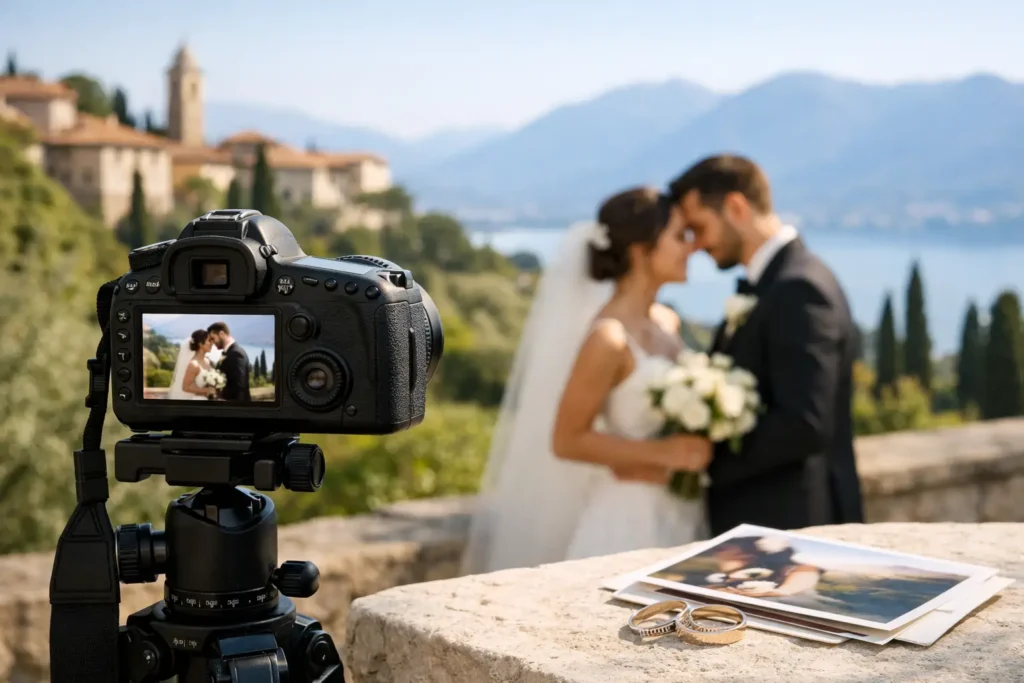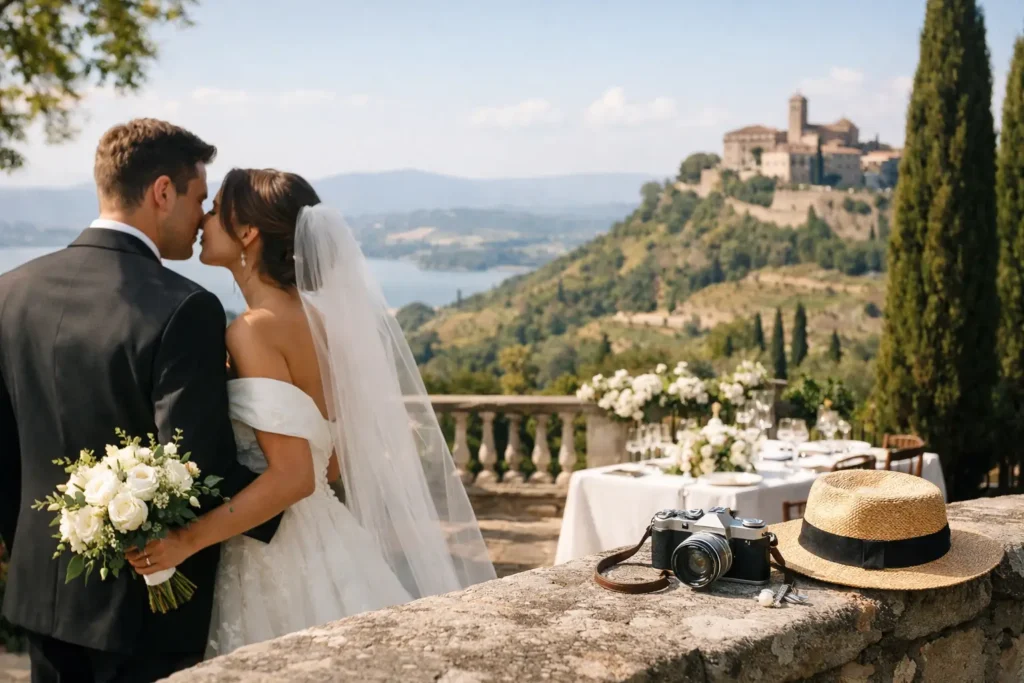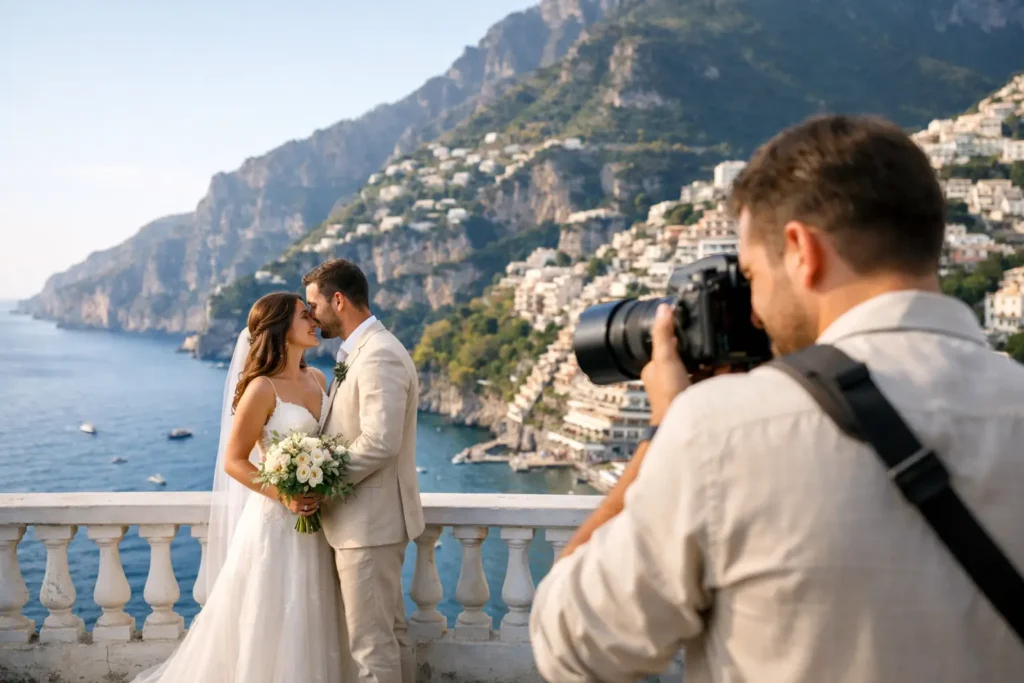
A wedding photograph becomes meaningful when it returns you to the feeling, not simply the appearance, of a moment. Learning how to preserve natural wedding moments is less about asking everyone to forget the camera exists and more about creating enough ease, space, and trust for real emotion to remain visible.
On the Amalfi Coast, that might be a father pausing at the doorway before the ceremony, guests gathering on a sun-warmed terrace in Ravello, or the quiet change in a couple’s expression as they step away from dinner for a few minutes beneath the evening sky. These images cannot be forced. They can, however, be anticipated, protected, and photographed with intention.
Natural Does Not Mean Unplanned
The most relaxed wedding photographs are often supported by careful planning. A wedding day moves quickly, particularly in places such as Positano, Amalfi, and Sorrento, where narrow streets, vertical landscapes, summer heat, and shifting coastal light all influence the rhythm of the day.
A considered timeline gives emotion room to unfold. When every minute is tightly scheduled, the day can become a sequence of arrivals and departures, leaving little space for a private breath, an unhurried embrace, or the spontaneous laughter that happens between formal events. Building in modest pauses is one of the most effective ways to protect the atmosphere you want to remember.
This does not mean extending the day without purpose. It means allowing enough time for getting ready, travel, greetings after the ceremony, and portraits so that nobody feels pulled away just as they have settled into a meaningful conversation. Good photography works best when it follows the energy of the day rather than constantly interrupting it.
Choose a Photographer Who Watches Closely
Documentary photographs depend on attention. The gestures that stay with you are usually small: a hand resting briefly on a shoulder, a mother smoothing a veil, friends reacting before the couple has even turned to face them. They happen in seconds and are rarely repeated in the same way.
An experienced photographer learns the patterns around a wedding. During preparations, they notice who is most emotionally present in the room. Before the ceremony, they read the movement of family members and the changing light at the entrance. During dinner, they remain alert to glances across the table and the reactions that matter as much as the speech itself.
Discretion is central here. Being unobtrusive does not mean being passive or standing far away with a long lens all day. It means moving with purpose, understanding when to come closer, and knowing when a quiet moment needs privacy. The camera should feel like a calm presence, not another demand on your attention.
Let People Be Themselves
Couples often worry that they are not naturally comfortable in photographs. In practice, comfort rarely comes from being told to “act natural.” It comes from knowing what is expected and being guided clearly, without being over-directed.
For couple portraits, gentle prompts are usually more effective than rigid poses. A photographer may suggest where the best light falls, offer a simple adjustment to posture, or invite you to walk together through a quieter corner of the venue. From there, the connection is yours. The strongest frames often appear just after the formal direction has ended: a shared look, an inside joke, a moment of relief.
There is a trade-off. Editorial portraits require a degree of structure, especially when working with architecture, dramatic views, or a carefully chosen outfit. But structure and spontaneity are not opposites. A thoughtful portrait session can be brief, beautifully composed, and still feel entirely like you.
Protect the Light Without Chasing It All Day
Light shapes the mood of a photograph, but it should not take over the wedding. Along the coast, bright midday sun can be intense, reflecting from pale stone, sea, and terraces. Later in the day, it softens into a warmer, more flattering quality that is especially beautiful for portraits.
If your ceremony takes place earlier, a short portrait session near sunset can give you a different visual language without separating you from your guests for too long. In Positano, the light can disappear quickly behind the mountains. In Ravello, garden walls and terraces can create pockets of shade long before sunset. In the Cilento Coast, where the landscape often feels more open and unhurried, evening light can linger differently across the sea.
This is why local experience matters. Knowing how the sun moves through a setting allows a photographer to make quiet, practical suggestions before the wedding, then respond calmly when weather, traffic, or timing changes. The aim is not to manufacture a perfect scene. It is to make the most of the scene you actually have.
Make Space for the People You Love
Natural wedding moments are rarely only about the couple. They live in the relationships surrounding you: grandparents watching the ceremony, childhood friends arriving with full hearts, siblings taking a breath before a toast, and parents seeing their child dressed for the day.
You can help preserve these connections by identifying the people and relationships that matter most. This is not a request for a rigid shot list of every guest. Instead, share the emotional context. Let your photographer know if a grandparent’s presence is especially significant, if two friends have traveled from opposite sides of the world, or if a family tradition will take place during the reception.
That knowledge changes what a photographer looks for. It gives meaning to the quiet seconds between the larger events and makes the final gallery feel more personal than a record of beautiful details alone.
Keep Formal Photography Focused
Family portraits are valuable, especially at a destination wedding where loved ones have traveled far to be together. They also work best when organized with care. Keep the groupings purposeful, appoint someone who knows the family to help gather people, and schedule them at a moment when guests are not already being drawn toward cocktails or dinner.
A focused approach protects the rest of the celebration. Once the essential portraits are complete, everyone can return to the party, and the camera can return to observing the unrepeatable interactions happening around it.
Put the Phones Away for the Ceremony
Few things change the feeling of a ceremony more quickly than a row of raised phones. Guests mean well, but screens can block faces, pull attention away from the vows, and leave the aisle visually crowded at the exact moment you want to see the people closest to you.
An unplugged ceremony is not about controlling your guests. It is an invitation to be present. When people are looking directly at you rather than through a screen, their reactions become part of the photographs: tears, smiles, hands held tightly, and the collective warmth of the room or terrace.
If a fully unplugged ceremony does not suit your group, a simple request for guests to keep the aisle clear can make a meaningful difference. The best choice depends on the atmosphere you want, but it is worth discussing before the day.
Trust the In-Between Moments
Some of the most memorable images happen after the planned portrait, after the ceremony procession, and after the speech has ended. They occur in the small transitions: the walk back to your table, the moment before you enter the reception, the gentle chaos of guests finding their places, or the two of you standing together for a few seconds while music carries across the terrace.
Do not feel that you must perform happiness continuously. A wedding contains anticipation, nerves, stillness, tenderness, and exuberance. A story-driven collection should hold all of it. The images gain depth when they make room for quieter expressions as well as celebration.
When reviewing a photographer’s portfolio, look beyond the grand views and polished portraits. Notice whether you can feel the relationships in the frame, whether people appear at ease, and whether the photographs carry the pace of a real day. That is often the clearest sign that natural moments have been preserved rather than arranged.
The most lasting wedding photographs ask very little of you. Be present with one another, allow the day to breathe, and choose a photographer whose direction feels calm and whose observation feels instinctive. Everything else can unfold in its own time.