Rain rarely arrives as part of a couple’s vision for an Italian wedding, yet some of the best rainy day wedding photos begin with precisely that shift in the weather. On the Amalfi Coast, rain softens the bright Mediterranean palette, deepens the color of old stone, and brings a beautiful stillness to streets and terraces that are usually filled with movement. With the right preparation and a calm photographic approach, a wet forecast does not diminish the story. It gives it another layer.
For couples planning celebrations in Positano, Ravello, Sorrento, or along the quieter Cilento Coast, the aim is not to pretend rain never happened. It is to photograph the day with elegance, sensitivity, and a clear eye for what the conditions offer.
Why Rain Can Make Wedding Photographs More Beautiful
A clear summer afternoon has its own appeal, but coastal sunlight can be uncompromising. Rainclouds act as a vast natural diffuser, creating soft, even light that is especially flattering for portraits. Skin tones appear gentle and luminous, formalwear holds its detail, and the shadows across faces become less severe.
The landscape changes, too. Positano’s painted façades become richer after rain. Ravello’s garden paths and weathered walls take on saturated greens and ochres. In Sorrento, reflective paving stones can hold fragments of architecture, candlelight, and passing umbrellas. These are not substitutes for sunshine. They are visual elements with a cinematic character of their own.
There is also an emotional effect. Rain asks everyone to slow down and come closer. A groom adjusting an umbrella over his partner, parents gathering beneath an archway, friends laughing as they hurry between the ceremony and reception – these unscripted gestures often become the photographs a couple returns to years later. Documentary wedding photography is at its strongest when it leaves room for life as it actually unfolds.
The Best Rainy Day Wedding Photos Start Before the Rain
Great results do not rely on optimism alone. They come from a thoughtful plan that gives the day flexibility without making it feel overmanaged. The most useful conversations happen well before the wedding: which covered areas have the best light, how much time the schedule can absorb, and when portraits can be moved if a shower arrives at an inconvenient moment.
On the Amalfi Coast, conditions can differ dramatically between one hillside and the next. A passing shower may clear quickly, while heavier weather can settle over the sea and change the available light for several hours. A photographer who understands the rhythm of these locations can make quick, informed decisions without creating unnecessary pressure for the couple.
For the getting-ready photographs, choose a room with generous window light and enough open space to move naturally. An elegant suite, a terrace with a covered edge, or a room with pale walls can all work beautifully. The goal is not a perfectly empty room. It is a setting where the anticipation of the morning can be photographed with calm, flattering light.
Build a Timeline With Breathing Room
A wedding schedule that runs minute by minute leaves little room for weather. Allowing a modest window around the ceremony, couple portraits, and transitions gives everyone more choices if rain moves through. Often, the most striking portraits are made in a brief pause between showers, when the air is clear and the coast has a silvery glow.
This does not mean spending the day watching a forecast. It means having permission to respond to the day. A skilled photographer can use a quiet ten minutes after the ceremony, a covered loggia before dinner, or the first evening lights in a village lane to create images that feel considered rather than hurried.
Choose Accessories That Belong in the Photographs
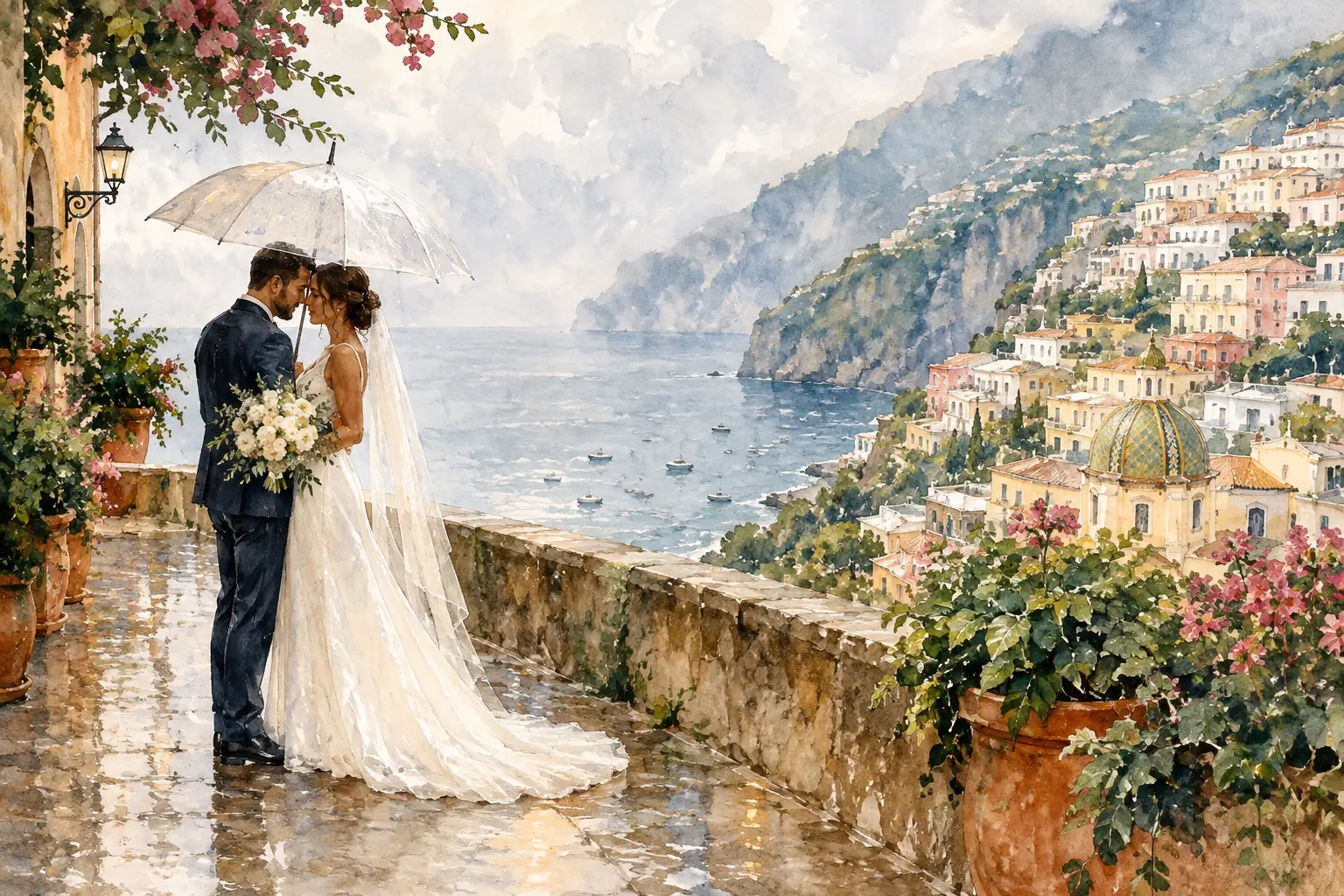
A few well-chosen umbrellas can be genuinely useful. Clear umbrellas preserve light and allow the architecture behind you to remain visible. A classic white or neutral umbrella can work beautifully with formal attire, while black umbrellas bring a more editorial graphic quality. What matters most is having enough for the couple and key family members, rather than relying on a mismatched collection at the last moment.
Avoid treating umbrellas as a prop that must appear in every frame. They are most effective when they serve the moment: walking from the car, waiting outside a church, sharing a private exchange, or moving through rain-slicked streets. Once under cover, photographs can become more intimate and less visibly weather-dependent.
Finding Shelter Without Losing the Sense of Place
Rain plans sometimes lead couples to imagine a dim ballroom and a loss of all connection to Italy. In reality, many of the coast’s most compelling spaces are covered or partially protected: stone arches, cloisters, verandas, historic interiors, colonnades, and terraces with deep overhangs. The key is to use these spaces as part of the visual narrative rather than as a compromise.
An arch can frame a couple against a misty view. A doorway can create a quiet, painterly portrait, with rain falling beyond the threshold. A covered terrace retains the scale of sea and sky while offering enough protection for relaxed photographs. In a historic setting, the texture of plaster, wood, tile, and stone gives an image depth that a blank backup room cannot provide.
Indoor photographs matter just as much. A candlelit dinner, the closeness of a speech, hands reaching across a table, and the expression on a bride’s face during a parent’s toast are not secondary material. They are the soul of the celebration. When rain changes the pace outdoors, it can make those interior moments feel even more immediate.
How to Look Natural in Rainy Wedding Portraits
The concern many couples share is simple: will we look cold, awkward, or overly posed? The answer depends far more on direction than on weather. Rainy-day portraits should be brief, purposeful, and paced around comfort. There is no benefit in keeping a couple outside until they are shivering or distracted.
The strongest approach is movement and connection. Walk slowly together beneath one umbrella. Pause under a covered passage. Stand close enough that the photograph feels like a private moment rather than a performance. A photographer may offer small adjustments to posture, hands, and where to look, then step back so the expressions remain your own.
Wind is often part of a coastal rain day, particularly in exposed areas of Positano and Ravello. Instead of fighting every strand of hair or every moving veil, embrace a degree of motion. The result can feel alive and editorial, provided the photographer knows when to use the wind and when to find shelter from it.
Your attire deserves practical consideration, too. Keep a towel close for shoes and hems, and assign one trusted person to help with an umbrella or train during transitions. These small details protect time and comfort, allowing the photographs to remain focused on the two of you rather than on logistics.
Let the Evening Tell a Different Story
Rain after dark can be exceptionally atmospheric. Streetlamps, window light, and reception candles reflect on wet stone, creating depth and warmth within the frame. In coastal towns, this can turn a short walk between spaces into a scene with genuine Italian character.
Night portraits should never interrupt the celebration for too long. Usually, a few minutes is enough. After dinner or during a natural pause in the dancing, step outside with your photographer for one quiet frame under an umbrella or beside a lit entrance. The image may be elegant and cinematic, but the experience should still feel easy.
Trust the Story More Than the Forecast
The weather is one detail in a wedding day, not its definition. Some couples will have a bright, cloudless evening; others will remember the sound of rain against a terrace roof and the way their guests drew closer together. Both can be beautiful when photographed with attention and restraint.
If rain is possible, choose a photographer whose portfolio shows a confident command of changing light, genuine human connection, and the distinctive architecture of Southern Italy. When reviewing wedding stories, look beyond the weather itself. Notice whether people appear relaxed, whether the images hold atmosphere without becoming gloomy, and whether the photographs still feel like the place.
At Gennaro Piscopo Photography, the approach is to protect the rhythm of your celebration while noticing the details no weather plan can script. Explore the portfolio for a sense of that story-driven perspective, then use the inquiry page to discuss your celebration, your location, and the kind of images you want to carry forward.