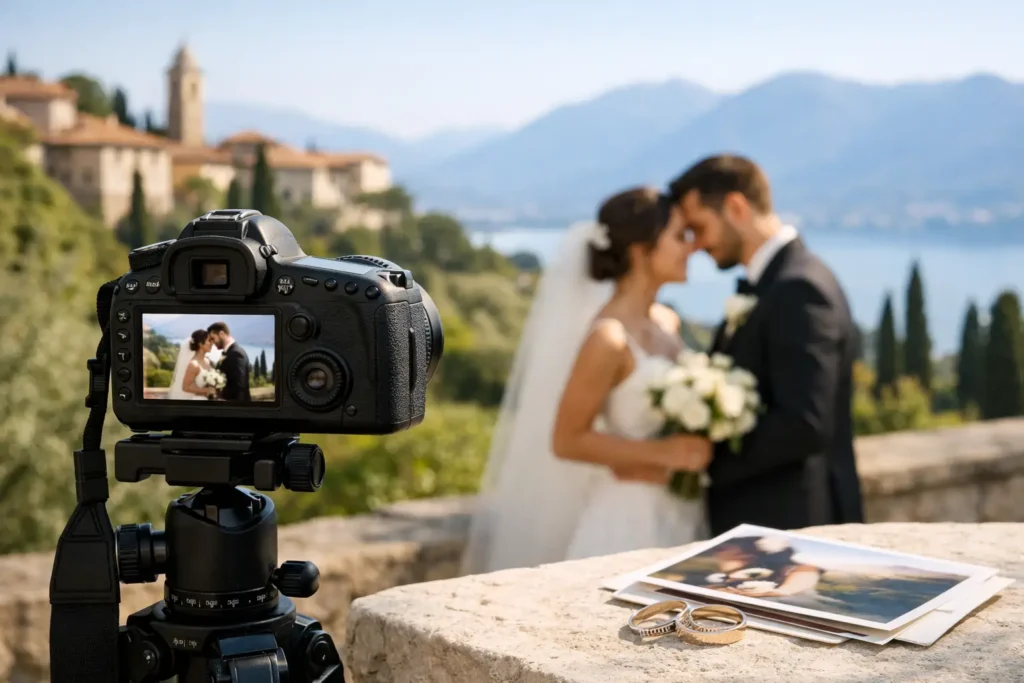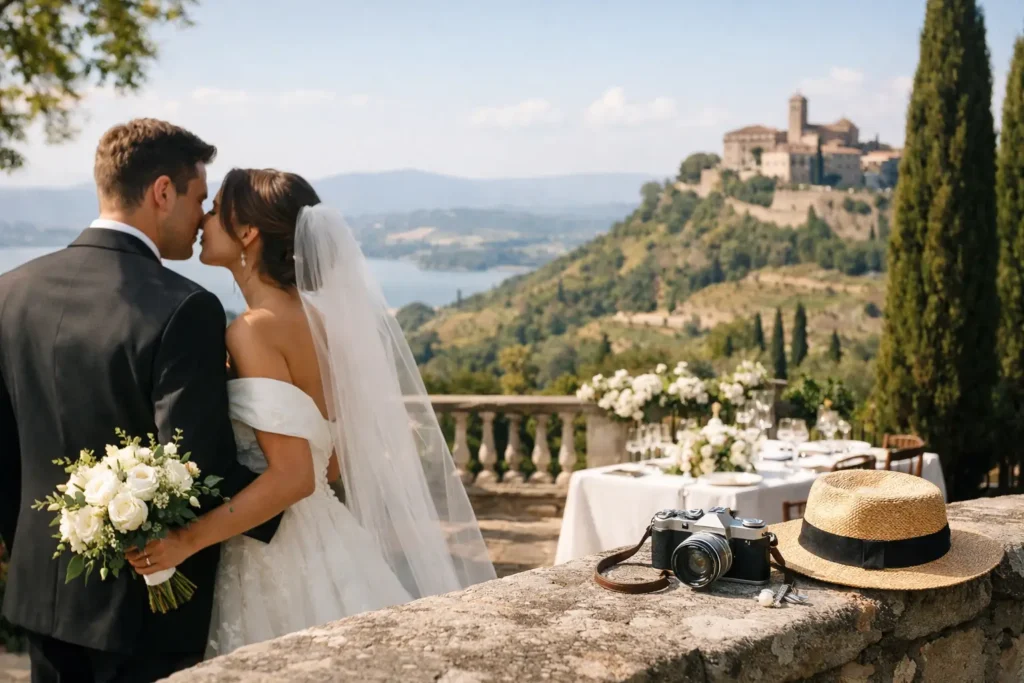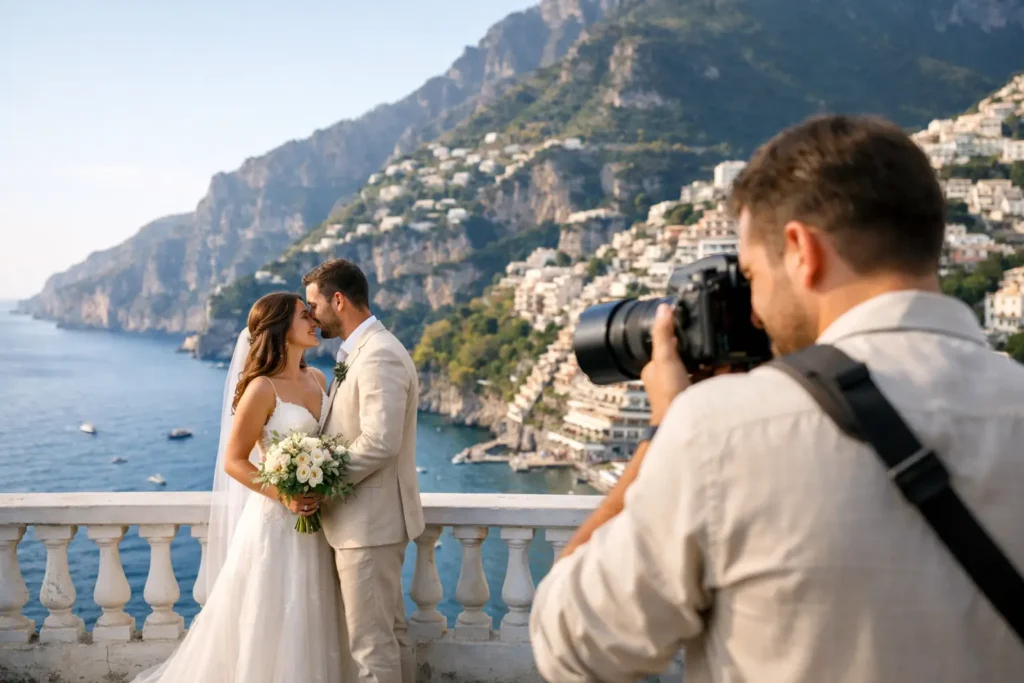
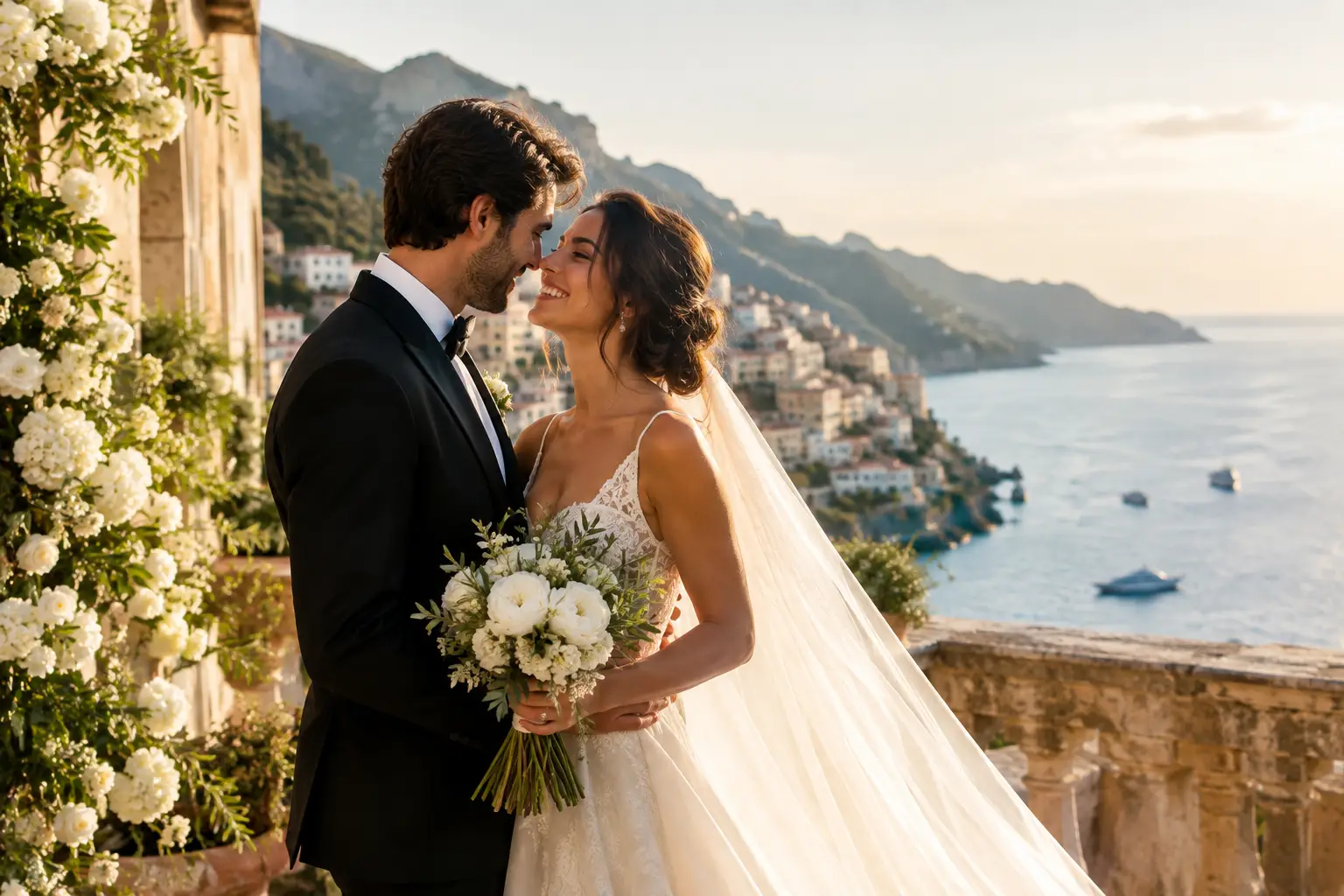
A ceremony ending as the bells carry across Ravello, a dinner table catching the last amber light above Positano, a bride stepping from a quiet hotel corridor into the heat of a Southern Italian afternoon: Italian weddings are remembered through these transitions. They are not only celebrations held in beautiful places. They are experiences shaped by movement, architecture, family, weather, and the particular quality of light that changes from one hour to the next.
For couples traveling from abroad, the attraction is often immediate. Italy offers history, generosity, and a sense of occasion that needs very little embellishment. Yet the photographs that endure rarely come from scenery alone. They come from the way a place allows people to feel present with one another.
Italian Weddings Begin With a Sense of Place
A wedding in Italy should not feel as though it could have happened anywhere else. The strongest visual stories allow the setting to influence the rhythm of the day without letting it overpower the people at its center.
On the Amalfi Coast, that might mean embracing the scale and texture of the landscape: steep terraces, faded plaster, polished stone, and the sea appearing unexpectedly beyond an archway. In Positano, a walk between locations may be part of the story itself, with narrow lanes, hand-painted tiles, and the energy of the town around you. In Ravello, gardens and elevated terraces create a quieter, more composed atmosphere, particularly as the afternoon softens.
Further south, the Cilento Coast has a different pace. Castellabate and Santa Maria di Castellabate offer a more understated Mediterranean setting, where the coastline feels less hurried and the old town retains its lived-in character. It can be an especially meaningful choice for couples who want refinement alongside privacy and a genuine connection to Southern Italy.
The location matters, but it should serve the wedding rather than dictate it. A grand terrace is compelling when it frames a father seeing his daughter before the ceremony. A small piazza becomes unforgettable when guests spill out after dinner, laughing beneath the warm streetlights. Place becomes powerful in photographs when it holds human feeling.
The Light Shapes the Story
Italy’s light is one of the reasons couples are drawn here, but it is not uniformly soft or simple. Coastal summer light can be bright, high, and reflective. Stone courtyards bounce warmth upward. The sea can add a surprising coolness to skin tones. A ceremony scheduled in full midday sun requires a different photographic approach from one held in the gentle light before sunset.
This is where experience is quietly valuable. Good planning is not about controlling every second. It is about understanding what can be guided. If portraits are important, a short window later in the day often gives far more depth than trying to create everything immediately after the ceremony. The sky cools, the color of the architecture becomes richer, and couples have had time to exhale.
That does not mean every wedding needs an extended sunset session. It depends on the schedule, the season, the distance between events, and the couple themselves. Some prefer to stay fully immersed in cocktails with their guests. In that case, a few concise, well-directed portraits can be enough. Others welcome a private walk away from the reception, and those minutes can become a natural pause in an otherwise full day.
The aim is never to make the day feel like a production. It is to work with the light so the images feel cinematic, elegant, and emotionally true.
Weather Is Part of the Mediterranean Experience
Coastal conditions can change quickly. Wind may arrive across a terrace just as guests are seated. Summer heat can call for a slower start. A brief rain shower can transform the color of a garden or lead to a wonderfully intimate indoor moment.
The most relaxed couples are not those who expect a perfect forecast. They are those with a thoughtful plan and a team able to respond calmly. From a photographic perspective, weather is rarely a reason to lose the story. It simply changes the visual language: closer frames, softer reflections, more texture, and a greater focus on the people gathering together.
Why Unscripted Moments Matter Most
There is room for beautiful editorial portraiture at Italian weddings. A considered composition against a historic façade, a veil caught in a coastal breeze, or a quiet embrace in a garden can become a defining image. But the images with the deepest soul often happen between the planned moments.
It may be a grandmother adjusting a cufflink, friends leaning over a balcony before the ceremony, or a bride holding still for one breath before entering the aisle. These are not interruptions to the wedding narrative. They are the narrative.
A documentary approach requires more than staying out of the way. It means anticipating the moments that matter and being close enough to recognize them without making people self-conscious. For international couples, this discretion is especially reassuring. They have brought family and friends across borders to be together. The celebration should feel lived, not constantly directed.
The balance is essential. During portraits, clear and calm direction helps couples look natural rather than uncertain. During the ceremony and reception, space allows genuine expression to emerge. The result should feel polished enough for an editorial page and personal enough to bring a couple back to the feeling of the day years later.
The Day Needs Room to Breathe
One of the most common challenges with destination celebrations is an overly ambitious timeline. On the map, locations may seem close. In reality, coastal roads, pedestrian lanes, guests in formal attire, and the simple desire to linger can make every transition longer than expected.
A well-paced wedding day gives each part of the celebration its own atmosphere. The morning can remain calm rather than becoming a rush of preparations. The ceremony can begin when the light is more flattering and the heat less intense. Aperitivo can unfold without immediately pulling everyone away for photographs. Dinner can begin with the sky still luminous, then evolve naturally into an evening of candlelight and music.
This breathing room benefits everyone, but it is particularly important in photographs. Emotion becomes more visible when people are not watching the clock. A couple does not need to perform their happiness when they are genuinely enjoying the people around them.
For multi-day celebrations, an engagement session or pre-wedding portrait session can also be a thoughtful addition. It offers a chance to become comfortable in front of the camera before the wedding and creates images with a different, more relaxed energy. A morning in Sorrento, a walk through an old coastal town, or a quiet session by the water can introduce the visual world of the celebration without repeating the wedding day itself.
Details Should Feel Personal, Not Overstaged
Italian craftsmanship naturally lends itself to wedding photography: silk ribbon, handwritten stationery, textured linens, sculptural florals, and the small gestures of a table prepared for a long dinner. These details deserve attention, especially when they reflect a couple’s taste or family history.
Still, details are most meaningful when they remain connected to the wider story. A close photograph of a place setting has more resonance when it sits beside the image of guests arriving, the shared toast, or hands reaching across the table. A dress is not only a dress. It is part of the moment a mother fastens the final button, or the moment a bride walks through a sunlit doorway toward the person waiting for her.
This is the difference between a gallery of attractive elements and a complete wedding story. Every photograph should have its own strength, while also contributing to the emotional sequence of the day.
Choosing Images That Will Last
Trends change quickly, especially in wedding imagery. What remains is honest expression, confident composition, and a sensitive use of color and light. Couples planning Italian weddings often want photographs that feel current without being tied to a single visual fashion. That is a wise instinct.
Timeless work does not mean formal or static work. It can be full of movement, joy, and unexpected gestures. It simply avoids asking a photograph to be louder than the memory it holds. The best images allow the setting to be unmistakably Italian while keeping the couple and their relationships at the heart of every frame.
When you begin shaping your celebration, spend time with full portfolio stories rather than isolated highlight images. Look for consistency across changing light, busy receptions, quiet preparations, and the fleeting exchanges that cannot be recreated. Then choose a photographer whose way of seeing feels close to your own. Gennaro Piscopo Photography approaches each celebration with that balance of editorial intention, documentary sensitivity, and local understanding. The most lasting photographs will not merely show where you were. They will return you to how it felt to be there, surrounded by the people you chose to bring with you.