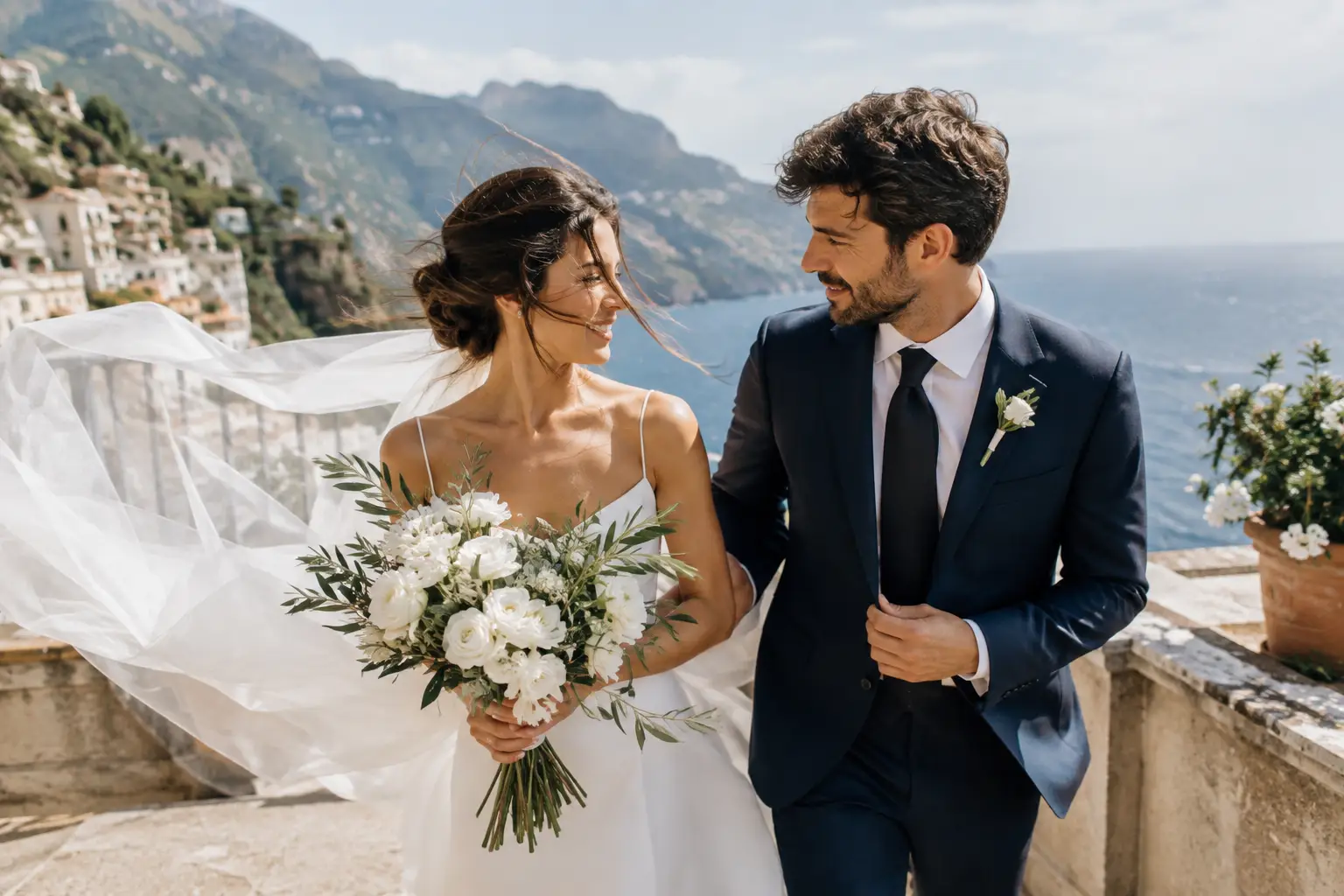
A sudden sea breeze can turn a still terrace into a scene full of movement in seconds: a veil lifts, candle flames bend, and the sound of the water rises behind the vows. Knowing how to manage windy ceremonies is part of planning well on the Amalfi Coast, where the landscape is inseparable from the celebration. The aim is not to fight the elements, but to shape the day around them with confidence and a little foresight.
For photography, wind can be extraordinarily beautiful. It brings life to fabric, hair, florals, and the wide Mediterranean views that drew you to Italy in the first place. Yet it also asks for thoughtful decisions about timing, ceremony design, and the people who will quietly guide the moments that matter.
Why Coastal Wind Deserves a Place in Your Plan
On the Amalfi Coast, wind is rarely an all-day certainty. It can arrive as a gentle afternoon breeze, move through in stronger bursts, or change direction as the sun drops behind the mountains. Ravello’s elevated terraces, Positano’s open views, and waterfront settings around Sorrento each experience it differently. A ceremony that feels sheltered during setup may be more exposed by the time guests take their seats.
That is not a reason to avoid an outdoor ceremony. It is a reason to choose a venue layout and timeline that respect the setting. Your planner and venue team will understand the practical character of the space, while an experienced photographer can anticipate where the light, wind, and background will work together most elegantly.
The best plans preserve a sense of ease. Guests should remember the emotion of your vows and the feeling of the coast around them, not the effort happening quietly behind the scenes.
How to Manage Windy Ceremonies Without Losing the Atmosphere
Begin with the ceremony position
The direction of the ceremony changes almost everything. Before deciding where to stand, look beyond the view itself. Consider the protection offered by a wall, garden, pergola, or architectural corner, and ask whether the altar can be turned slightly without compromising the setting.
A small adjustment can keep papers from lifting, prevent hair from blowing across your faces during the vows, and make it easier for guests to hear. It can also create a more flattering photographic angle. Rather than placing the couple against harsh direct light or an overly busy horizon, a considered position can frame the sea, cliffs, or old stone naturally while allowing everyone to remain comfortable.
If the location is especially exposed, reserve a nearby sheltered option from the beginning. This does not have to feel like a lesser alternative. An inner courtyard, covered loggia, or garden-facing space often has its own intimacy, particularly when softened with candles, floral texture, and the sound of the breeze beyond the walls.
Choose styling that moves well
Wind reveals the difference between decorative detail and thoughtful design. Low, weighty floral arrangements tend to hold their shape better than tall, delicate installations placed in an open position. Ceremony arrangements should be properly secured, with a team member ready to make discreet adjustments just before guests arrive.
For candles, enclosed lanterns or substantial glass hurricanes are usually more reliable than exposed tapers. Stationery needs weight, clips, or a covered surface. Welcome signs, menus, seating charts, and ceremony programs should be secured with the same care as the larger design elements.
Fabrics deserve special attention. A light aisle runner can become difficult in a strong gust, while a generously weighted material can still give the soft, flowing effect many couples love. Floral meadows, ground arrangements, and textured stone underfoot often create a more grounded visual language than structures dependent on tall, lightweight elements.
Consider the veil, dress, and hair together
A cathedral veil on a cliffside terrace can look cinematic, but it needs handling. Ask one or two trusted members of your wedding party to help place it for the entrance and step in again when needed. They should know when to release it, when to gather it, and when to leave it alone. The most graceful photographs come from movement that feels natural, not from a veil being repeatedly wrestled into position.
The same principle applies to hair. A soft updo, a half-up style with discreet anchoring, or hair worn down with enough structure to hold its shape can all work beautifully. The choice depends on your personal style and the forecast, but it is worth discussing with your hair artist before the wedding day. A few loose strands can look romantic in photographs. Constantly brushing hair from your face during the ceremony is less enjoyable.
For dresses, a long train and lightweight layers can be wonderful in the wind, provided the bustle and hem are planned carefully. The fabric will catch the air during portraits, creating shape and movement that a still room cannot offer. What matters is having enough time, and the right assistance, to let that happen without rushing.
Build a Calm Weather Backup
A backup plan is not a sign that you expect poor weather. It is a sign that you value the experience enough to protect it. The strongest version is specific: identify the alternative space, decide what décor can move, confirm who makes the final timing call, and agree on the moment when that decision must be made.
For a short, passing gust, it may be enough to delay the processional by ten minutes or shift the ceremony a few meters into shelter. For sustained wind, moving to the prepared alternative may offer a far more relaxed and polished experience. The decision depends on the venue, the safety of the installation, guest comfort, and whether the setting can still support the intimacy you want.
Avoid making the call based only on a weather app. Coastal forecasts are useful, but the conditions in a particular garden or terrace can be more nuanced. Your local team can assess the real atmosphere on the day, and a clear decision-maker prevents last-minute confusion.
Photographing the Wind With Intention
Wind changes the visual rhythm of a wedding. It can make a walk down a terrace feel more alive, bring depth to a dress, and add a quiet sense of scale to a portrait against the coastline. It can also create fleeting, unscripted gestures: a hand reaching for a partner’s sleeve, a laugh as the veil catches the air, parents leaning close during the ceremony.
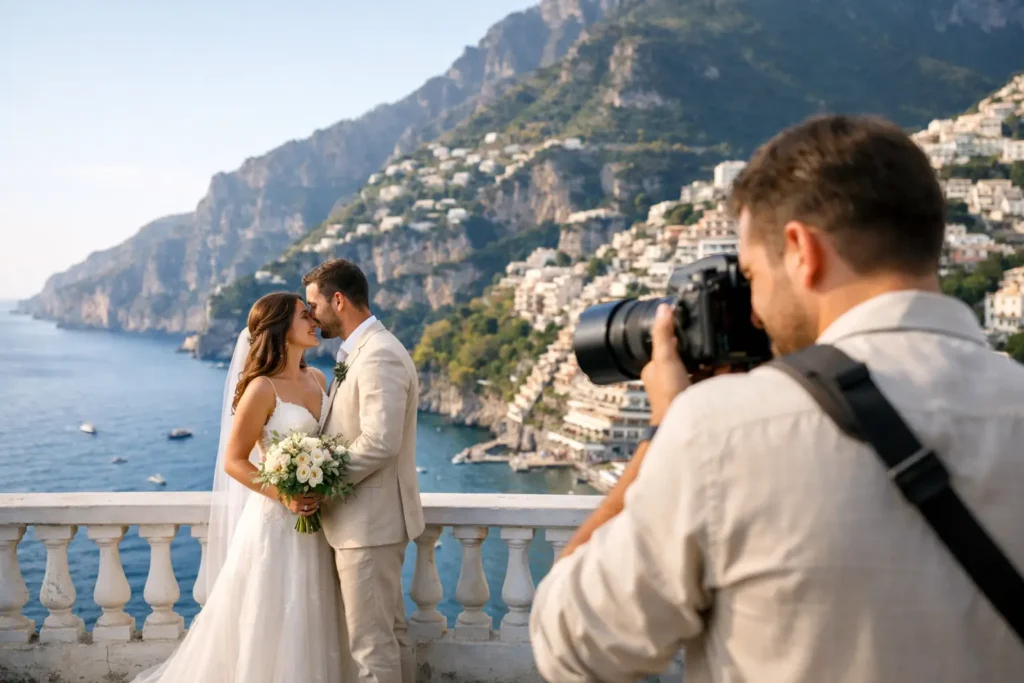
That is why a documentary approach is particularly valuable in coastal conditions. The photographer watches for what is already happening rather than asking you to hold a pose against the wind. At the same time, subtle editorial direction matters. A small shift of the shoulders, a turn toward the light, or a pause beside a sheltered wall can transform a windy moment into an intentional image.
For portraits, it is often better to work in short intervals rather than attempt a long outdoor session in an exposed position. A few minutes when the breeze softens can be enough. Then, when the wind returns, the architecture of a Ravello terrace, a Positano passageway, or a covered balcony can offer a refined counterpoint to the open sea.
Give the Ceremony Team Simple Roles
The most effective support is rarely dramatic. Assign a small number of people clear, quiet responsibilities: someone to hold the veil before the entrance, someone to secure a reading or vow book, and someone from the planning or venue team to monitor florals and candles. If you are using a celebrant, ask whether they are comfortable with a discreet microphone and a protected copy of the ceremony text.
It also helps to keep the first row free of loose programs, light wraps, or decorative items that might blow into the aisle. These details sound minor, but they protect the visual calm of the ceremony and allow you to remain present.
When you speak with Gennaro Piscopo Photography about coverage, share the ceremony location, timing, and any weather plan early. That information helps shape a photographic approach that feels unobtrusive while leaving room for the coast to do what it does best: bring movement, light, and soul to the story.
A little wind does not diminish the tenderness of the ceremony. With a considered setting, well-secured details, and a team prepared to adapt, it becomes part of the memory: salt in the air, fabric in motion, and the two of you standing close as the coastline opens around you.