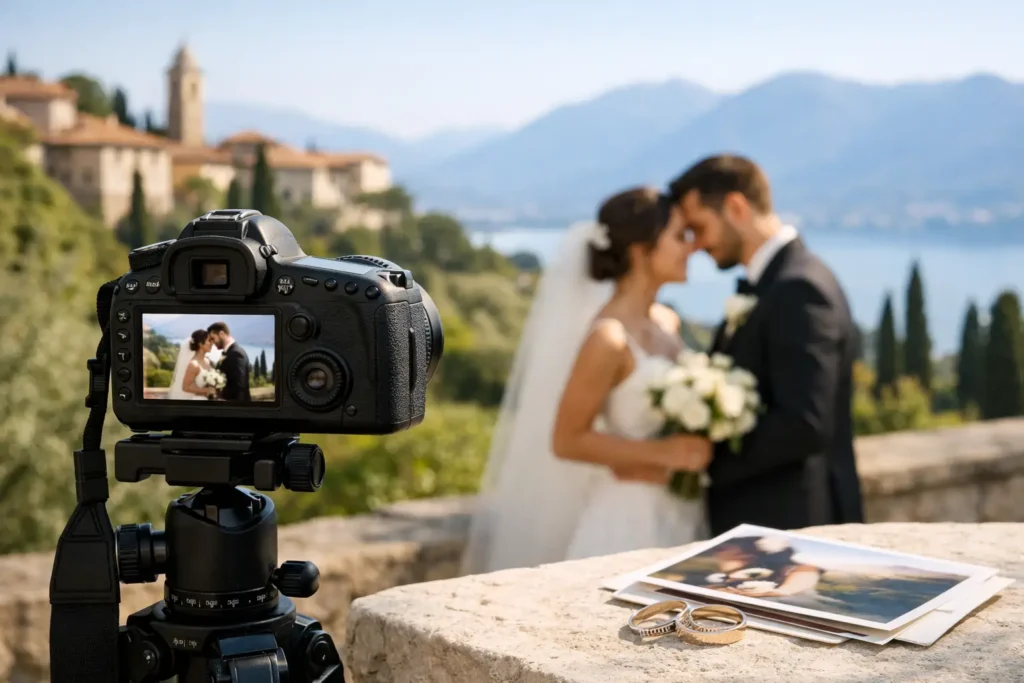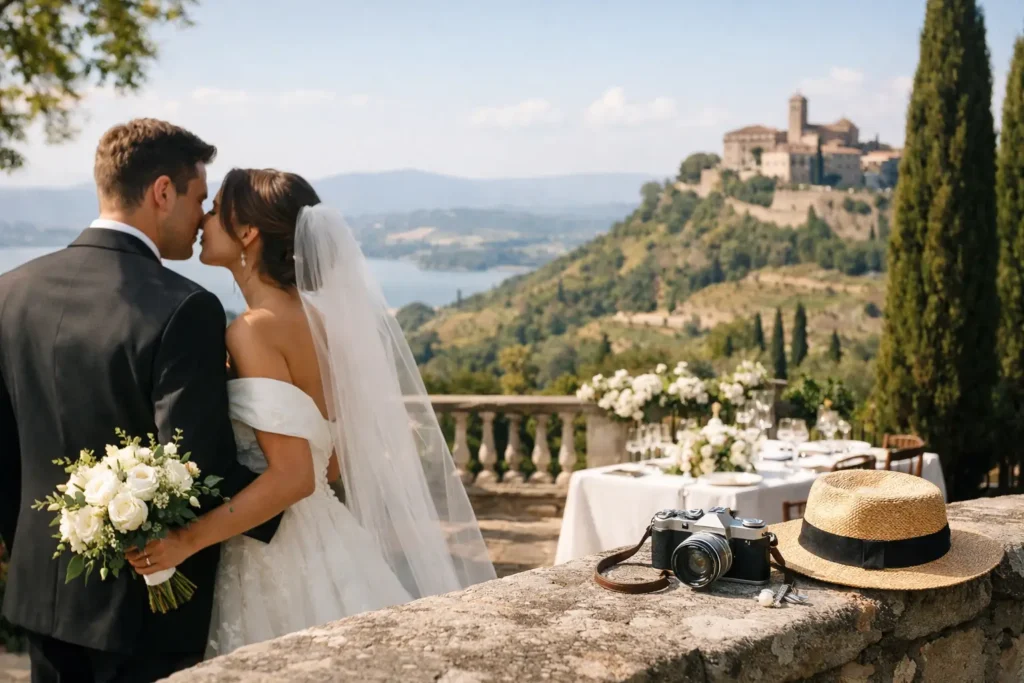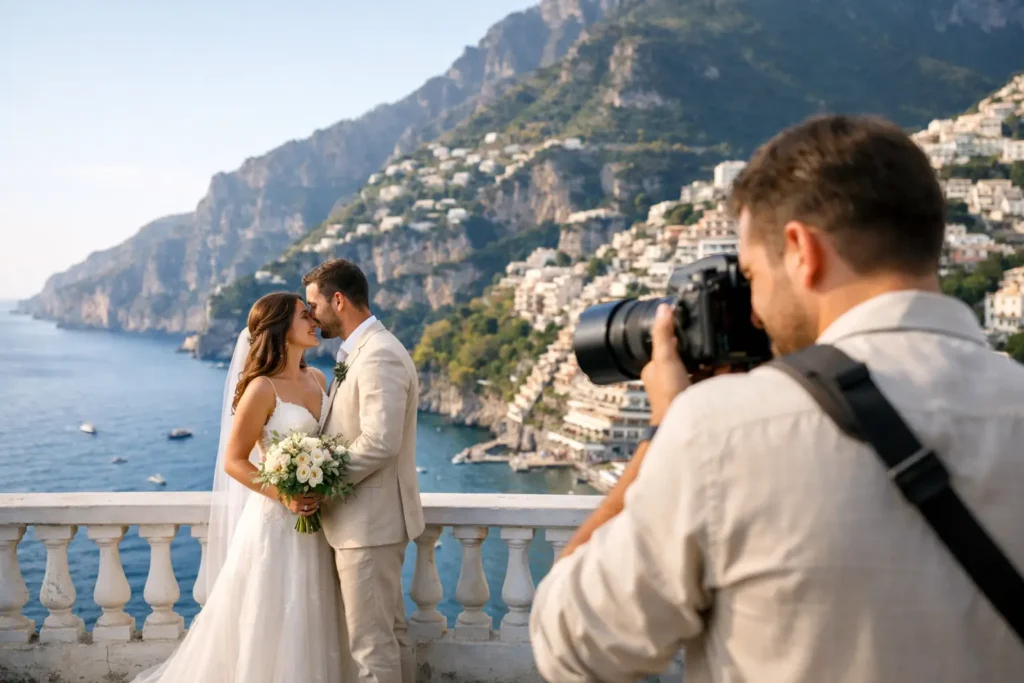
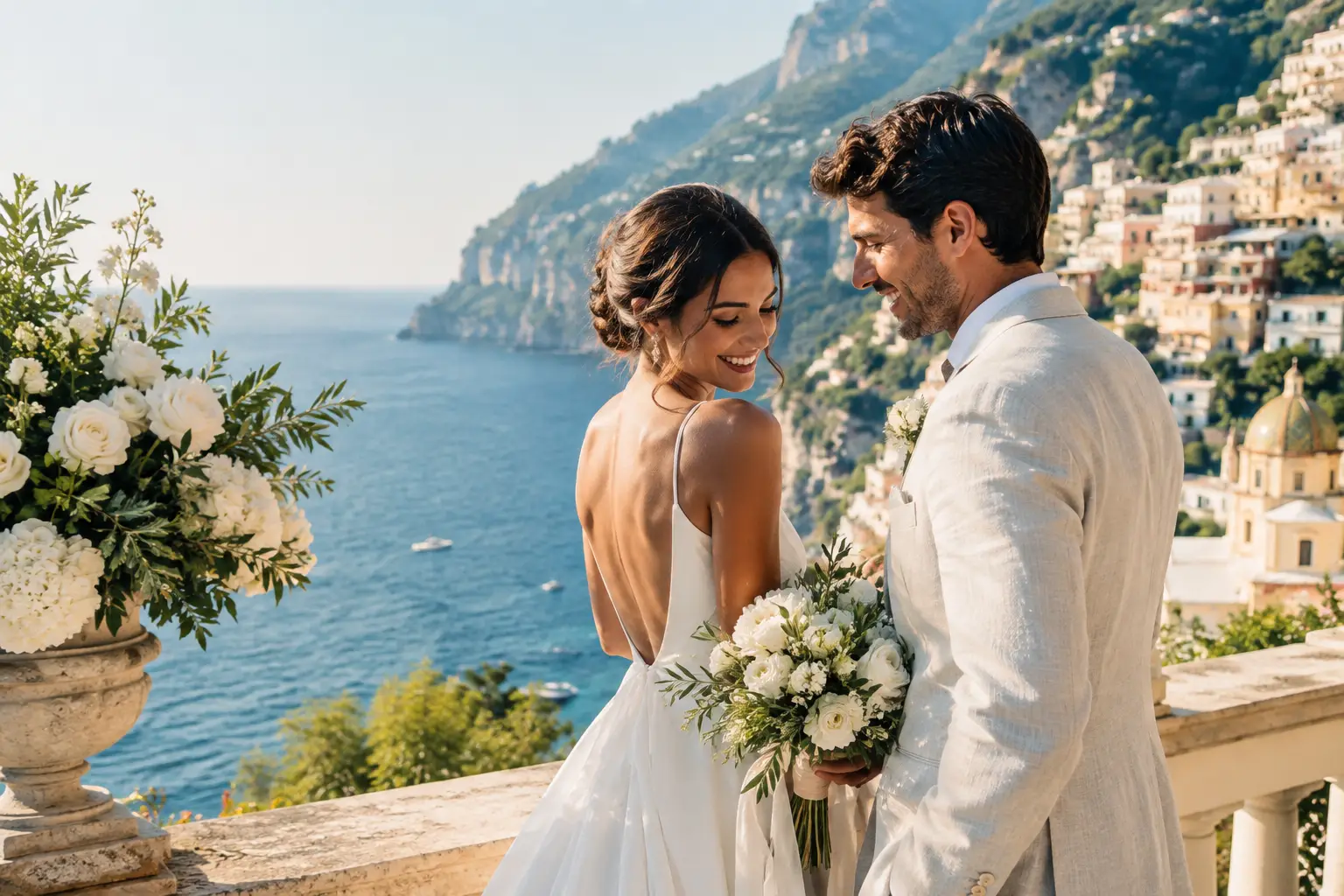
A terrace may be glowing in clean Mediterranean sun at noon, then softened by sea haze or a passing cloud half an hour later. That is the character of the coast, and it is one reason photographs here feel alive rather than overly controlled. Coastal wedding weather is not simply a forecast to check the week before. It should shape the rhythm of the day, from ceremony timing and guest comfort to where portraits are made and how a reception looks after dark.
For couples planning celebrations in Positano, Ravello, Amalfi, or further south along the Cilento Coast, the most successful approach is not to expect perfect weather. It is to plan with enough sensitivity that every condition can be used beautifully.
What Coastal Wedding Weather Means for Your Day
The Amalfi Coast is dramatic because it rises directly from the sea. That landscape creates changing pockets of light, wind, humidity, and shade. A venue high above Ravello may feel cooler and breezier than a terrace near the water in Amalfi. Positano’s steep geography means sections of town can fall into shadow earlier than couples expect, while the sky above remains bright.
For photography, these variations are not a problem when the timeline respects them. Hard midday light can be elegant against pale stucco, stone, and deep blue water, but it is rarely the most comfortable time for a long outdoor portrait session. Later in the afternoon, light becomes more dimensional. The cliffs take on warmer tones, skin appears softer, and the coastline begins to recede into layers.
The key is to protect a little flexibility. A wedding schedule built to the minute leaves little room for a brief shower, a delayed boat, or the slow arrival of evening light. A schedule with intention has space to breathe.
Sun Is Not the Only Consideration
Bright sunshine is often what couples imagine when they picture a wedding on the Italian coast. Yet a thin veil of cloud can be extraordinarily flattering. It diffuses the sun, preserves detail in a white gown and light-colored suit, and allows portraits to happen comfortably in open spaces.
Even overcast conditions retain a particular coastal luminosity. The sea reflects light upward, architecture provides texture, and the landscape remains present. Rather than forcing a version of the day that depends on uninterrupted blue sky, I photograph the atmosphere that is actually there: the wind catching a veil, guests gathering beneath a covered loggia, candlelight becoming visible earlier in the evening.
Choosing the Right Season for Coastal Wedding Weather
There is no single best month for every celebration. The right season depends on whether you value long sunlit evenings, gentler temperatures, quieter streets, or the possibility of cooler air.
Spring: Fresh Light and Changeable Skies
From April into early June, the coast is green, fragrant, and full of freshness. The light is often clear, and the evenings are comfortable for an outdoor dinner. Spring can also bring variable weather, particularly earlier in the season. A sunny morning may give way to cloud or rain, then clear again before sunset.
For a spring wedding, a covered ceremony option is not a compromise. It is intelligent planning. It also gives a photographer opportunities for intimate frames – hands gathering fabric beneath an archway, family members watching the rain beyond a terrace, a quiet walk between scenes of the day.
Summer: Long Days, Strong Sun, and Late Evenings
June through September brings the most reliably warm coastal conditions. It also brings intense midday heat, especially in July and August. The visual advantage is immense: saturated sea color, long dinner evenings, and a cinematic transition from sun to twilight. The practical consideration is comfort.
An early or later ceremony often works best in high summer. It avoids asking guests to sit in direct sun at the hottest point of the day and creates more forgiving conditions for portraits. A shaded aperitivo, water available throughout the afternoon, and time indoors to reset before dinner make a real difference.
On particularly warm days, I keep portrait direction calm and economical. The aim is never to turn a wedding into a photo shoot. A few well-chosen locations, short intervals, and attention to the best available shade produce images with ease and soul.
Early Fall: Warm Water and Softer Contrast
September and early October can be especially appealing for couples who want warmth without the sharpest intensity of midsummer. The sea retains heat, daylight becomes gentler, and evening receptions often feel beautifully relaxed. It is a season with depth: amber-toned façades, richer shadows, and the first hint of autumn in the air.
Rain remains possible, as it does in every season on the coast. But a thoughtful plan makes this manageable. An elegant interior, a covered terrace, or a sheltered transition route can preserve the guest experience while giving the photography a more editorial sense of place.
Timing Light Around the Coastline
The most photogenic part of a wedding day is often not a single scheduled portrait session. It is the sequence of small changes in light: getting ready by a window, the ceremony just before the sun turns warm, an embrace during aperitivo, the first few minutes after dinner when candles and ambient light begin to balance.
In Positano, the valley and surrounding cliffs influence where the sun falls. In Ravello, elevated gardens and terraces can remain luminous later, but wind should be considered for veils, ceremony papers, and floral installations. Along the Cilento Coast, including Castellabate and Santa Maria di Castellabate, the horizon opens more generously toward the water, allowing sunset to become a stronger part of the visual story.
A local photographer studies the venue not only for its iconic view, but also for its quiet corners: the stairway that is protected from wind, the shaded courtyard at noon, the window with soft directional light, and the terrace that becomes most beautiful ten minutes after sunset.
Plan for Wind With Elegance
Wind is common by the sea and can be welcome in warm weather. It gives movement to a dress and creates a sense of place in photographs. It can also make a long veil difficult, lift place cards, affect candles, and challenge an outdoor ceremony setup.
If you are wearing a veil, consider how it will be secured and choose a moment for portraits when the breeze feels expressive rather than disruptive. For dinner tables, low and protected candle arrangements are often more practical than relying on exposed tapers. These details allow the visual language of the celebration to remain refined without fighting the setting.
A Rain Plan That Still Feels Like Your Wedding
A rain plan should not feel like an emergency version of the day. It should be a considered second setting that you would genuinely be happy to use. Before the wedding, understand where the ceremony could move, how guests will transition, and whether the alternate space has enough natural light and visual character for photography.
Clear umbrellas in a limited number can be useful, but the larger priority is atmosphere. A historic salon, a covered cloister, or a terrace protected by an awning can feel deeply Italian and wonderfully intimate. Rain often encourages guests to gather closer, which can create some of the most emotionally resonant images of the day.
The same applies to portraits. There is no need to spend long periods outside in poor conditions. I work quickly when a window opens, use architectural shelter intelligently, and look for soft interior light. The photographs should feel truthful to the day, never like evidence of a contingency plan.
Build Flexibility Into the Photography Timeline
The most reliable way to photograph coastal conditions well is to give them room. I recommend allowing a short window around the couple portraits rather than fixing every frame to one exact time. If the light is exceptional after the ceremony, we use it. If a summer afternoon is too bright, we make a few quiet images in shade and return for ten minutes near sunset.
This flexibility is especially valuable when travel is involved. Coastal roads, boats, stairways, and guest movement rarely operate with the precision of a city ballroom. A relaxed buffer protects both the experience and the images.
When reviewing a photographer’s portfolio, look for work made in more than one kind of light. You should see sun, shadow, interiors, twilight, and weather with a real sense of place. Then, when you are ready, share your date, location, and plans through the enquiry page so the photography timeline can be shaped around the coast as it truly is – changeable, luminous, and unforgettable.