A beautiful engagement photograph rarely begins with a pose. It begins with the small adjustment that makes you forget the camera is there: a hand finding a waist, a private comment, the pause before a kiss. The best engagement photo poses create space for those real gestures while giving the image shape, elegance, and a sense of place.
For couples traveling to Southern Italy, the setting already brings texture to the frame. Positano’s vertical lanes, Ravello’s stone terraces, and the quiet shoreline around Castellabate each ask for a slightly different pace. The aim is never to place you stiffly in front of a view. It is to create portraits that feel composed but lived-in, cinematic but entirely yours.
What Makes an Engagement Pose Feel Effortless?
The difference is direction rather than performance. Most people are not professional models, nor should they need to be. A photographer should offer clear, minimal guidance: where to stand for the light, what to do with your hands, and how to move together. Then the couple needs room to react naturally.
A flattering pose also depends on proportion. Standing slightly apart from the camera rather than square-on lengthens the body and creates a more relaxed line through the shoulders. A gentle bend in one knee, a hand with a purpose, and a shift of attention toward your partner can transform a formal portrait into something intimate.
Light matters just as much. Along the Amalfi Coast, direct afternoon sun can be intense, especially on pale stone terraces and bright facades. I often look for open shade, reflected light from the sea, or the softer hour before sunset. A pose that feels perfect in soft light may look strained when a couple is squinting into midday sun.
15 Best Engagement Photo Poses for Editorial Portraits
1. The Close Walk
Walk toward the camera slowly, close enough that your shoulders occasionally touch. Do not look at the lens at first. Talk to each other, look down, or let one person lead the other by the hand. This creates movement in clothing and brings an unforced rhythm to the photographs.
2. The Pause Mid-Walk
After a few steps, stop naturally and turn toward one another. One partner can remain slightly ahead, looking back over a shoulder. It works particularly well on a narrow Positano lane or a path where the architecture frames the couple without competing for attention.
3. The Forehead Touch
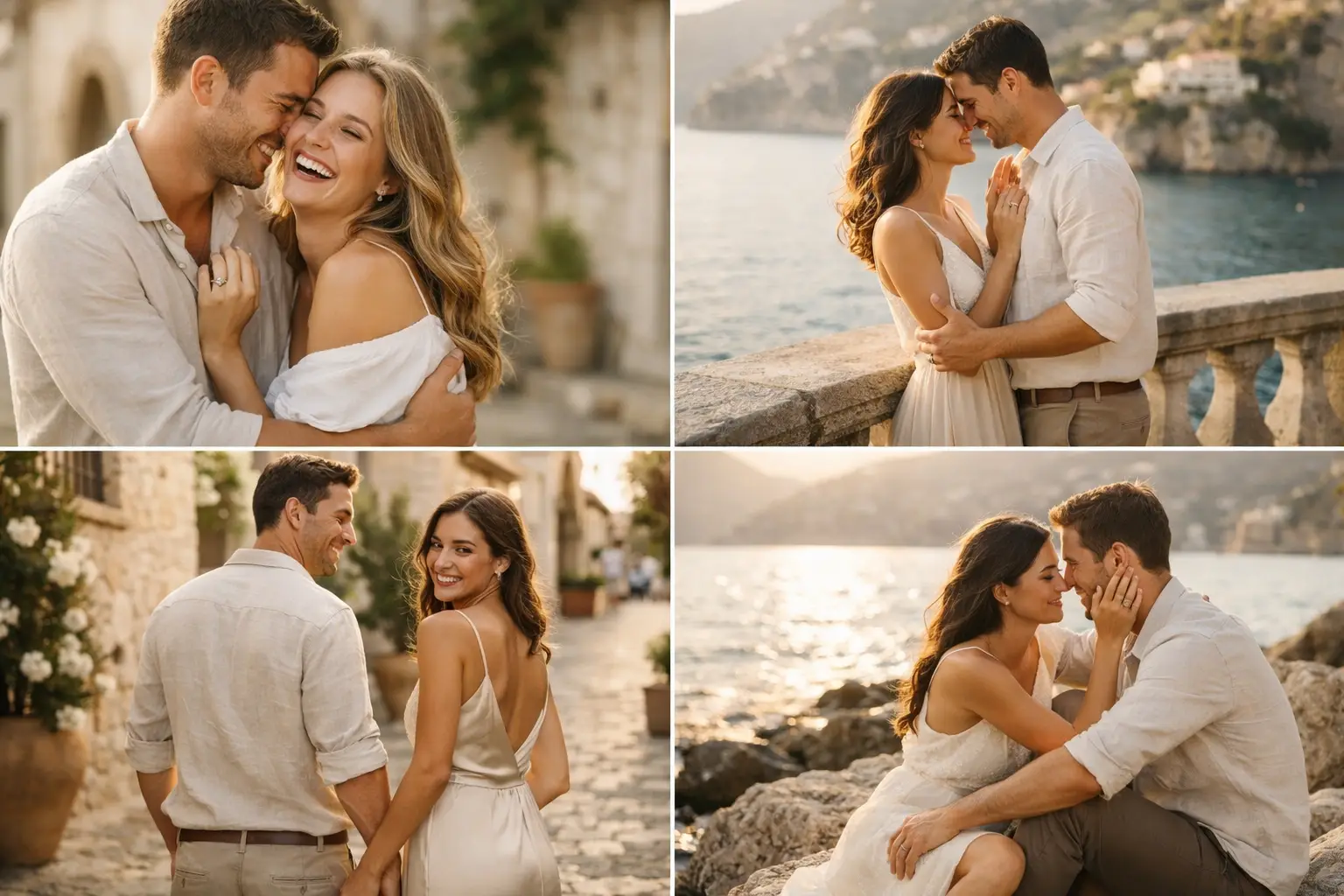
Stand close, soften your shoulders, and bring your foreheads together for just a moment. Rather than holding a dramatic expression, breathe, smile, or close your eyes. It is a simple pose, but it photographs with quiet tenderness when the hands are relaxed and the faces remain slightly angled toward the light.
4. The Looking-Away Portrait
Not every image needs eye contact. Stand beside each other, with one person looking toward the sea or landscape and the other looking at them. This gives the portrait a more editorial feeling and is especially effective when the surroundings are expansive, such as a Ravello terrace at late afternoon.
5. The Embrace From Behind
One partner stands just behind the other and wraps their arms loosely around the waist. Keep the embrace low and gentle rather than tightly held. The person in front can rest their hands over their partner’s or turn their face slightly toward them. The result feels protective, warm, and natural.
6. The Hand-in-Hand Lead
Let one person lead the other around a corner, down a staircase, or along the water’s edge. The leading partner should move slowly and avoid pulling. This is less about a dramatic running shot and more about creating connection, a sense of discovery, and a beautiful line through the arms.
7. The Jacket or Dress Adjustment
Small acts of care photograph beautifully. Adjusting a jacket lapel, smoothing a sleeve, fastening a button, or lifting the hem of a dress before walking creates a close, tactile image. These gestures are particularly useful at the beginning of a session, when couples may still be settling into the experience.
8. The Side-by-Side Seat
Sit next to each other on a low wall, broad stone step, or quiet bench, angled inward rather than facing directly forward. Let your knees touch or cross slightly toward one another. Begin with conversation, then allow a hand to rest on a knee or shoulder. The photograph gains intimacy without feeling posed.
9. The Standing Lean
Place one partner lightly against a wall, doorway, or balustrade while the other steps close. The person leaning should keep weight in one leg, not press flat against the surface. In historic coastal towns, weathered doors, limestone walls, and textured arches provide a restrained architectural frame.
10. The Almost-Kiss
Bring your faces close enough that the moment feels anticipatory, then pause before kissing. This creates more tension and emotion than a long kiss held for the camera. It also gives your photographer room to capture the curve of the profile, hands at the waist, and the changing expressions just before contact.
11. The Full Embrace
For a more intimate frame, hold each other with your bodies close and your faces turned away from the camera. This is often most flattering when photographed from slightly behind or from the side. It lets the image focus on gesture, fabric, light, and atmosphere rather than asking either person to perform.
12. The Laughing Reset
After a more composed portrait, step apart, look at each other, and let the moment become light. A whispered comment or an intentionally silly prompt can release tension quickly. Genuine laughter brings energy into a gallery and prevents the session from becoming overly polished or serious.
13. The Slow Turn
Stand holding hands, then have one person turn slowly beneath the other person’s raised arm. Keep the movement restrained, particularly in a long dress or tailored outfit. The turn adds motion and can catch a breeze in the fabric, but it should feel like a private dance rather than a choreographed performance.
14. The Window or Doorway Frame
Use a doorway, window, or passage as a frame within the frame. One partner can stand just inside the light while the other remains close behind. This works best when there is enough depth to separate the couple from the background, creating a portrait that feels both intimate and distinctly Italian.
15. The Walk Away Together
End with your backs to the camera as you walk toward the next part of the location. Hold hands, lean in, or let one person glance back briefly. These photographs often become favorites because they feel less like a portrait and more like a fragment of the day, held quietly in motion.
How to Look Natural When You Feel Camera-Shy
The most useful preparation is not practicing poses in a mirror. It is choosing clothing that lets you move and planning enough time that you never feel rushed. A fitted suit, flowing dress, or refined separates can all work beautifully, but you should be able to walk, sit, embrace, and climb the occasional coastal step comfortably.
During the session, avoid checking each photograph or asking whether you are doing it correctly. Trust the direction, keep your attention on each other, and let imperfect moments happen. A strand of hair moving in the sea air or an unexpected laugh can give an image more soul than a perfectly controlled expression.
There are practical variables, too. In Positano, a location may involve stairs and changing pockets of shade. In Ravello, the light can remain open and luminous later in the day. Along the Cilento Coast, the pace can feel quieter, allowing more time for unhurried movement near the water or through historic streets. The right poses should respond to those conditions rather than follow a fixed formula.
A Session Should Feel Like Time Together
Engagement portraits are not a test of how well you pose. They are an opportunity to become comfortable with the person documenting your wedding, to see how gentle direction feels, and to make images that carry the atmosphere of this chapter of your life.
At Gennaro Piscopo Photography, the approach is observant and quietly guided: enough structure for refined, editorial images, with enough freedom for the connection between you to remain visible. You can explore the portfolio’s engagement and couple portraits, then make an inquiry with the place and feeling you imagine for your session.