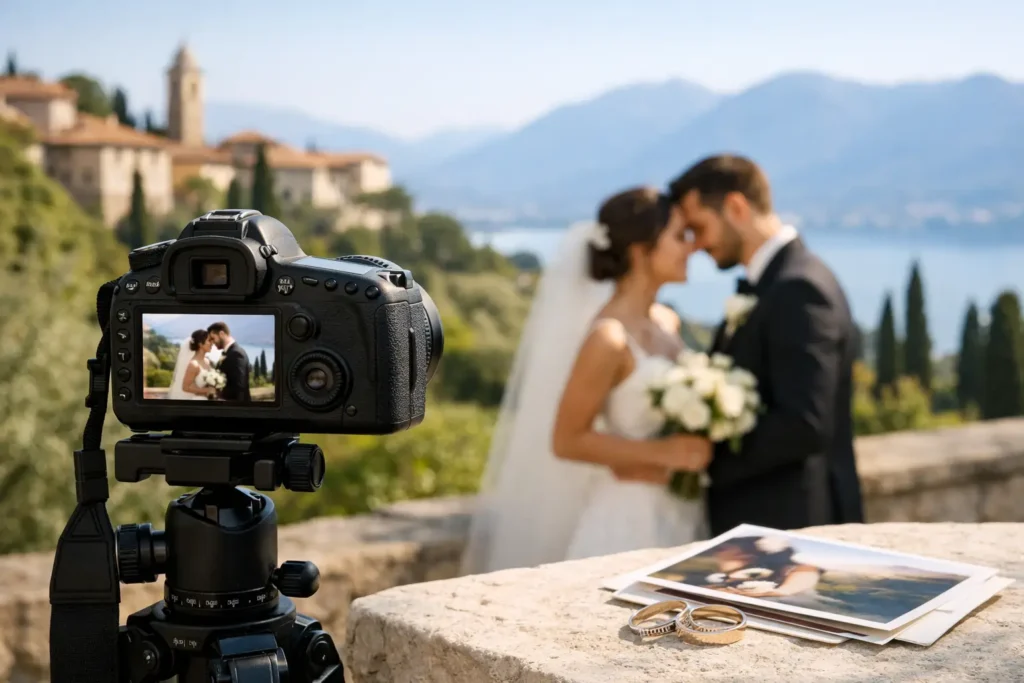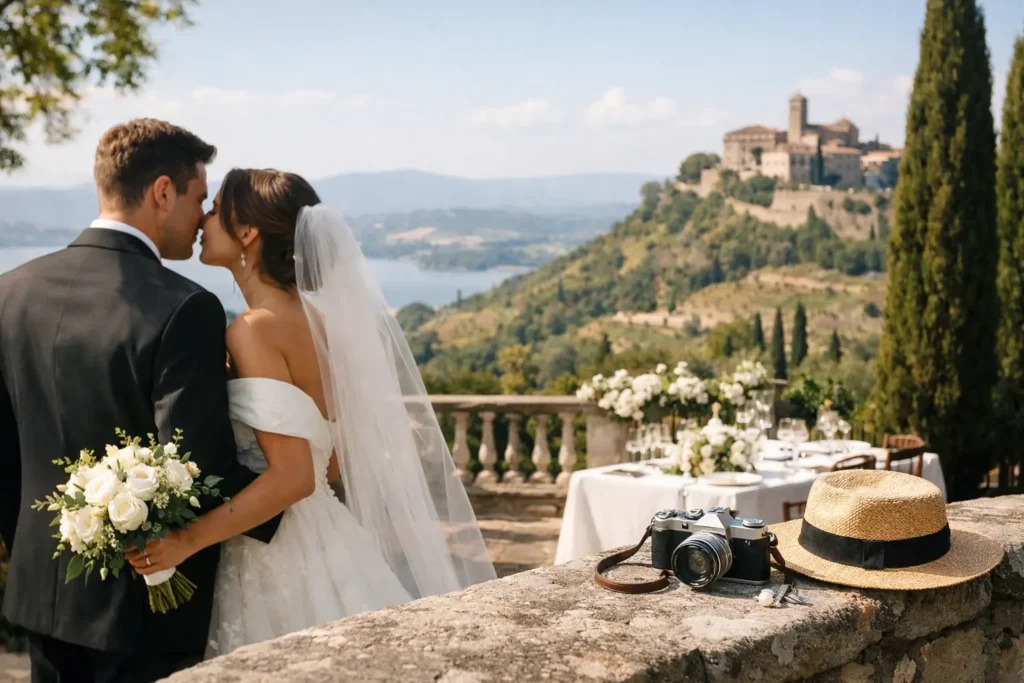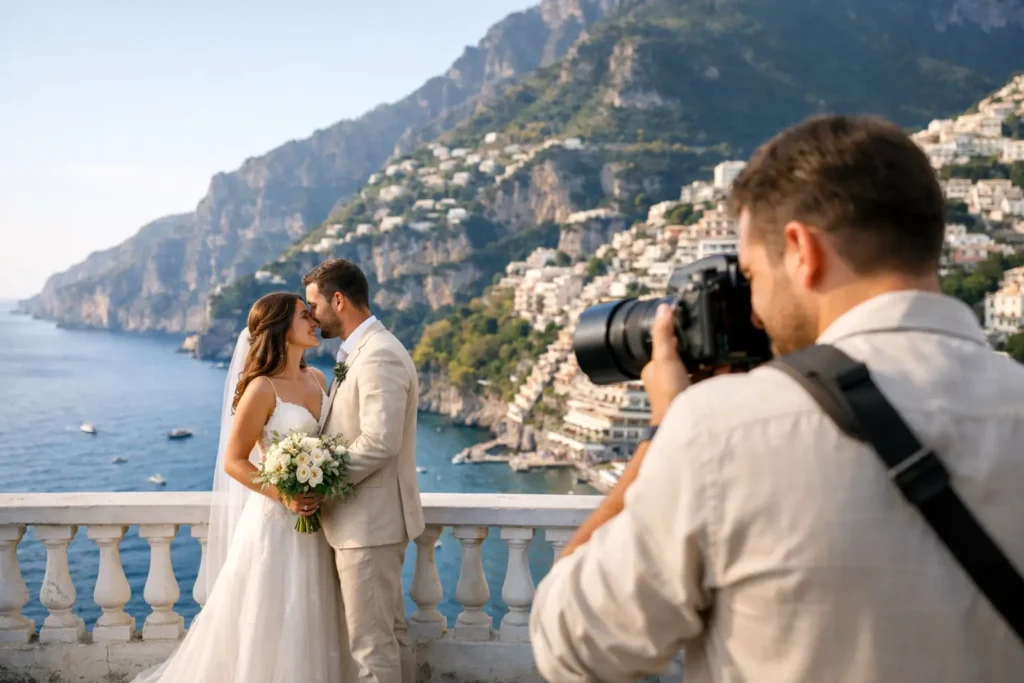
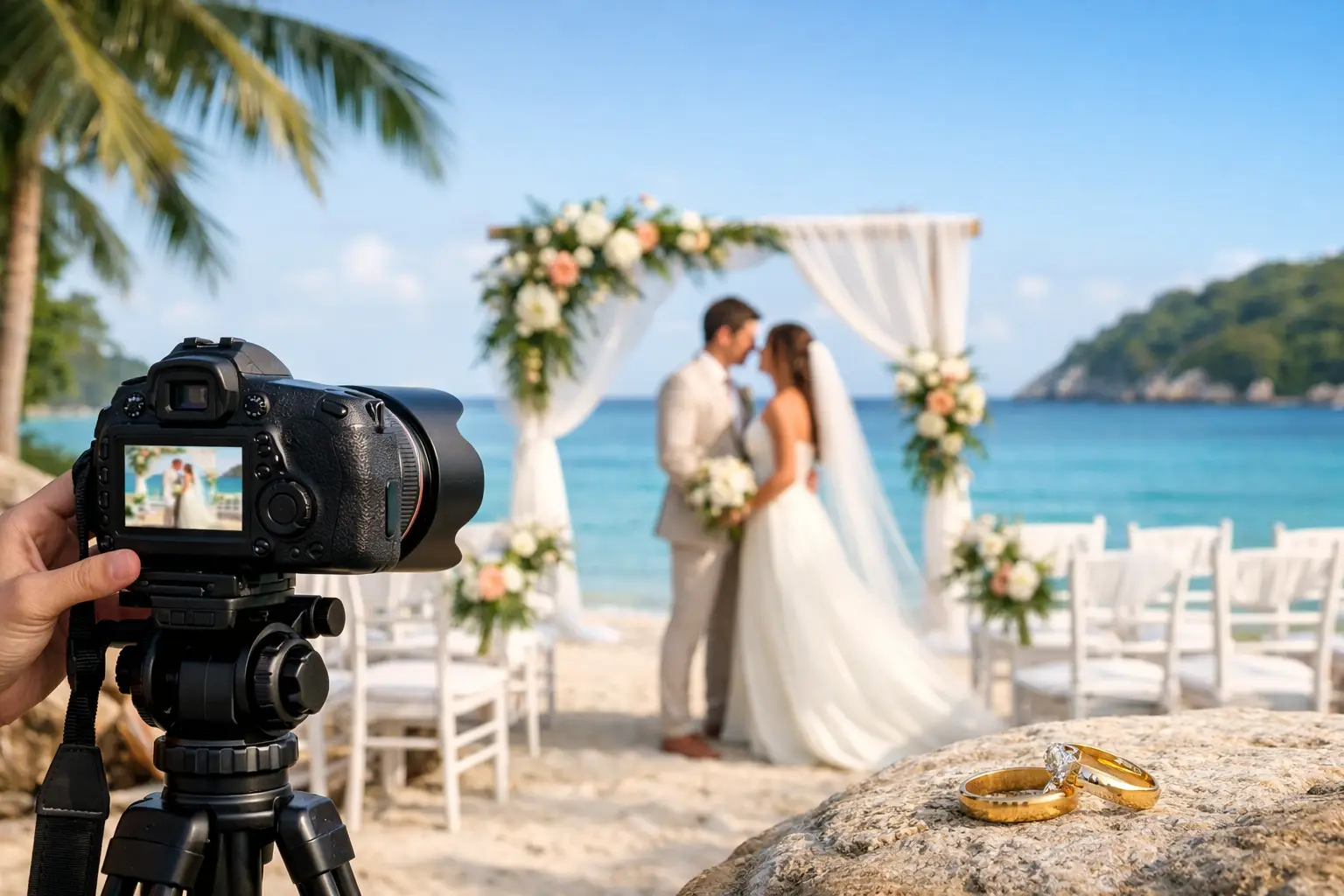
A destination wedding rarely begins at the ceremony. It begins with a suitcase on the bed, a first glimpse of the coastline, and the people you love arriving from different corners of the world. This guide to destination wedding coverage is for couples who want those layers preserved, not simply the formal milestones. The photographs should hold the beauty of the place, certainly, but also the feeling of being there together.
For a celebration in Italy, that may mean the salt air drifting through a Positano terrace, an unhurried aperitivo in a Tuscan courtyard, or the hush of a boat crossing Lake Como before dinner. These are not filler moments between the important photographs. They are part of the story.
What Destination Wedding Coverage Should Hold
Thoughtful destination coverage is less about counting hours and more about understanding the rhythm of an experience. A wedding day has its own pulse, particularly when guests have traveled far and the setting invites everyone to slow down. The strongest visual story makes room for anticipation, atmosphere, connection, and celebration.
Of course, the essential moments matter: getting ready, the ceremony, family portraits, couple portraits, speeches, first dances, and the energy of the party. Yet a more complete record also notices the handwritten note before the dress is fastened, a parent watching quietly from across the room, friends taking in the view at sunset, and the expressive details that reveal your taste without turning the day into a catalog of objects.
Editorial imagery and honest observation work beautifully together here. You may be gently directed into flattering light or guided through a portrait with a more cinematic composition. Then, as the day unfolds, the camera steps back to make space for genuine emotion. The result should feel polished enough for the pages of a magazine, while still carrying the soul of your particular celebration.
Guide to Destination Wedding Coverage: Begin Before the Wedding Day
When guests are traveling internationally, the wedding often becomes a multi-day gathering rather than a single event. This is where coverage can become deeply personal. A welcome dinner, an intimate rehearsal, or a relaxed gathering by the sea gives everyone time to settle into the destination and gives your photographs a sense of beginning.
Pre-wedding coverage is especially meaningful when the main celebration has a full schedule. It offers a quieter setting for candid reunions and unscripted laughter, without the pressure of a ceremony timeline. It can also be the occasion to photograph fashion, tablescapes, and the destination itself in a way that feels natural rather than rushed.
An engagement session can serve a different purpose. For couples who feel uncertain in front of the camera, it is a chance to experience a photographer’s direction before the wedding. You learn that you do not need to perform or hold a pose for too long. A small adjustment of posture, a walk together, or a moment of conversation is often all that is needed to create images that feel elegant and entirely like you.
The right additional event depends on the shape of your weekend. A small wedding may benefit from documenting the welcome evening because it introduces the people at the heart of the day. A larger celebration might call for a focused wedding-day story, with time reserved for a post-wedding portrait session when the schedule is more forgiving.
Build a Timeline That Protects the Light and the Feeling
Italy’s most beautiful venues can be visually dramatic, but they also bring practical realities. Summer ceremonies may take place under strong midday sun. Historic villas can have long walks between suites, gardens, ceremony spaces, and dinner terraces. On the Amalfi Coast, traffic and narrow roads can turn a short distance into an unpredictable journey.
This is why photography coverage should be considered while the timeline is still taking shape, not after every other decision has been made. A well-paced day protects the experience as much as the images. It creates breathing room after getting ready, allows family portraits to be efficient, and gives you time together before the evening gathers momentum.
For portraits, the most beautiful light often arrives later in the day. That does not mean disappearing from your guests for hours. It means creating a thoughtful window, perhaps during cocktail hour or just before dinner, when you can step away for a few minutes and return feeling present rather than pulled apart by logistics.
If sunset comes late, consider a short set of portraits in softer early-evening light, then a second, very brief moment after dinner. The latter can feel particularly cinematic: candlelight, architecture, a terrace after dark, and the sense that the day has become something almost dreamlike. It is an option, not an obligation. The best approach is always the one that feels true to how you want to spend your wedding.
Consider the Place as a Character in Your Story
A destination should be visible in the imagery, but it should never overshadow the people. The aim is not simply to prove that you were in Capri, Ravello, or Tuscany. It is to show how that setting shaped the atmosphere of your celebration.
A grand lakefront villa may call for composed, architectural frames that honor its scale. A countryside estate may invite photographs filled with movement, warm stone, olive trees, and the easy intimacy of dinner outdoors. A coastal setting can hold both drama and tenderness: a sweeping view one moment, a close portrait with wind catching a veil the next.
Experienced destination photography also means knowing when to work with a location rather than against it. A busy terrace may require a discreet shift in angle. A sudden rain shower may transform a planned outdoor moment into something more intimate. A late-running boat or a crowded town square does not have to flatten the story when the photographer remains calm, observant, and prepared.
Choose Coverage That Feels Like You
Some couples want every entrance, every toast, and the last song on the dance floor. Others value a more intimate record, with special attention given to the quiet intervals that happen between the expected events. Neither approach is more meaningful. What matters is being clear about the memories you want to return to years from now.
When speaking with your photographer, share more than your schedule. Talk about the people who matter most to you, family dynamics, meaningful heirlooms, the atmosphere you hope guests will feel, and the images that have stayed with you. If you are planning a refined but relaxed celebration, say so. If you want fashion-forward portraits but dislike anything overly posed, that is useful guidance too.
A photographer with a fashion background and a photojournalistic instinct can move between these needs with ease: giving confident direction when a portrait calls for it, then allowing life to unfold without interruption. That balance is particularly valuable at destination weddings, where the day is both carefully designed and full of surprises.
Preserve the Story Beyond the Gallery
Digital photographs make it easy to revisit a wedding instantly, but a handcrafted fine-art album creates a different kind of experience. It gives the story a physical form, inviting you to sit together, turn pages slowly, and notice details that can disappear on a screen.
The most enduring albums are not built only around the obvious highlights. They include transitions: the empty ceremony space before guests arrive, hands reaching across a dinner table, the landscape beyond a window, and a final photograph that lets the day exhale. These images create pacing and emotional depth.
For destination celebrations, an album can become a beautiful bridge between memory and place. It preserves not only what you wore or where you stood, but the atmosphere your loved ones traveled so far to share.
The finest coverage gives you permission to be fully inside your wedding rather than managing it from the outside. Choose a photographer and a plan that make you feel understood, then let the destination, the light, and the people you love do what they do best: turn one extraordinary day into a story you will keep finding new ways to feel.