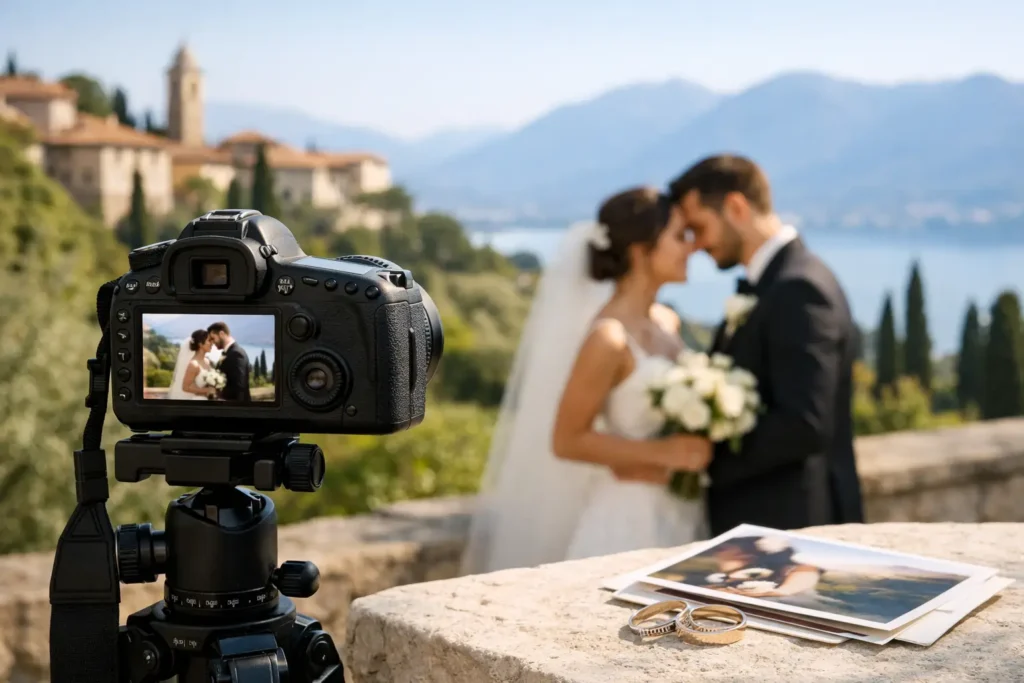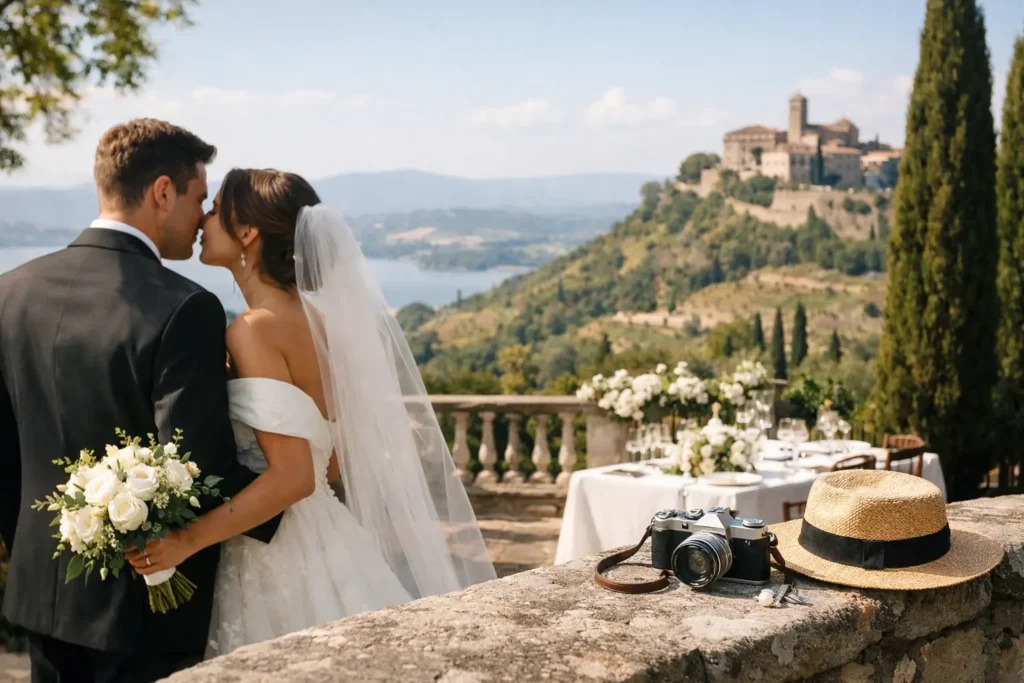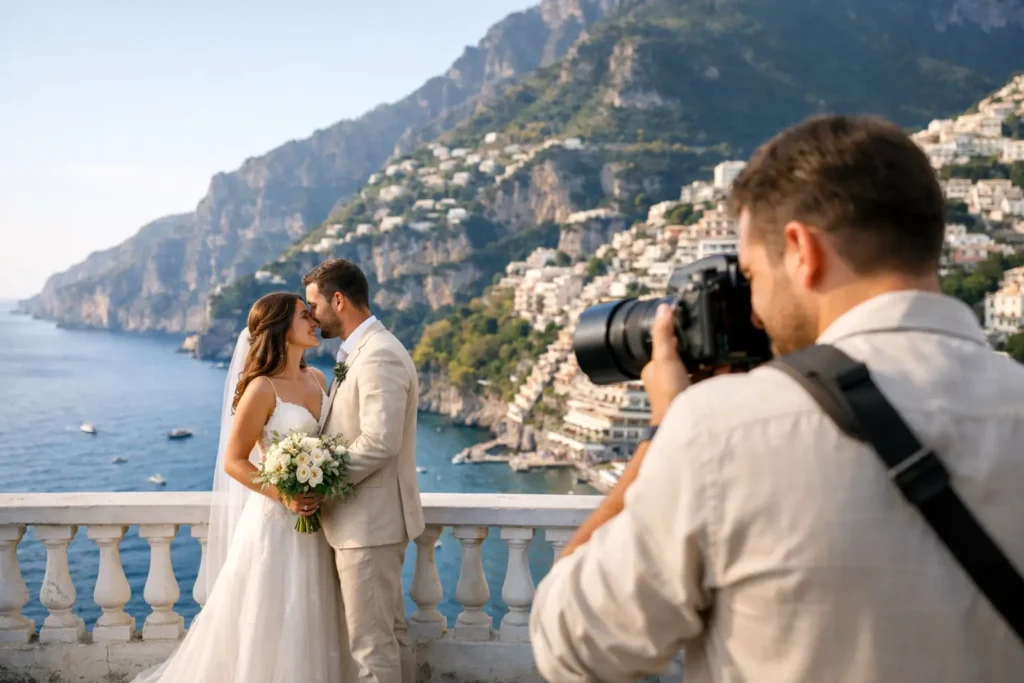
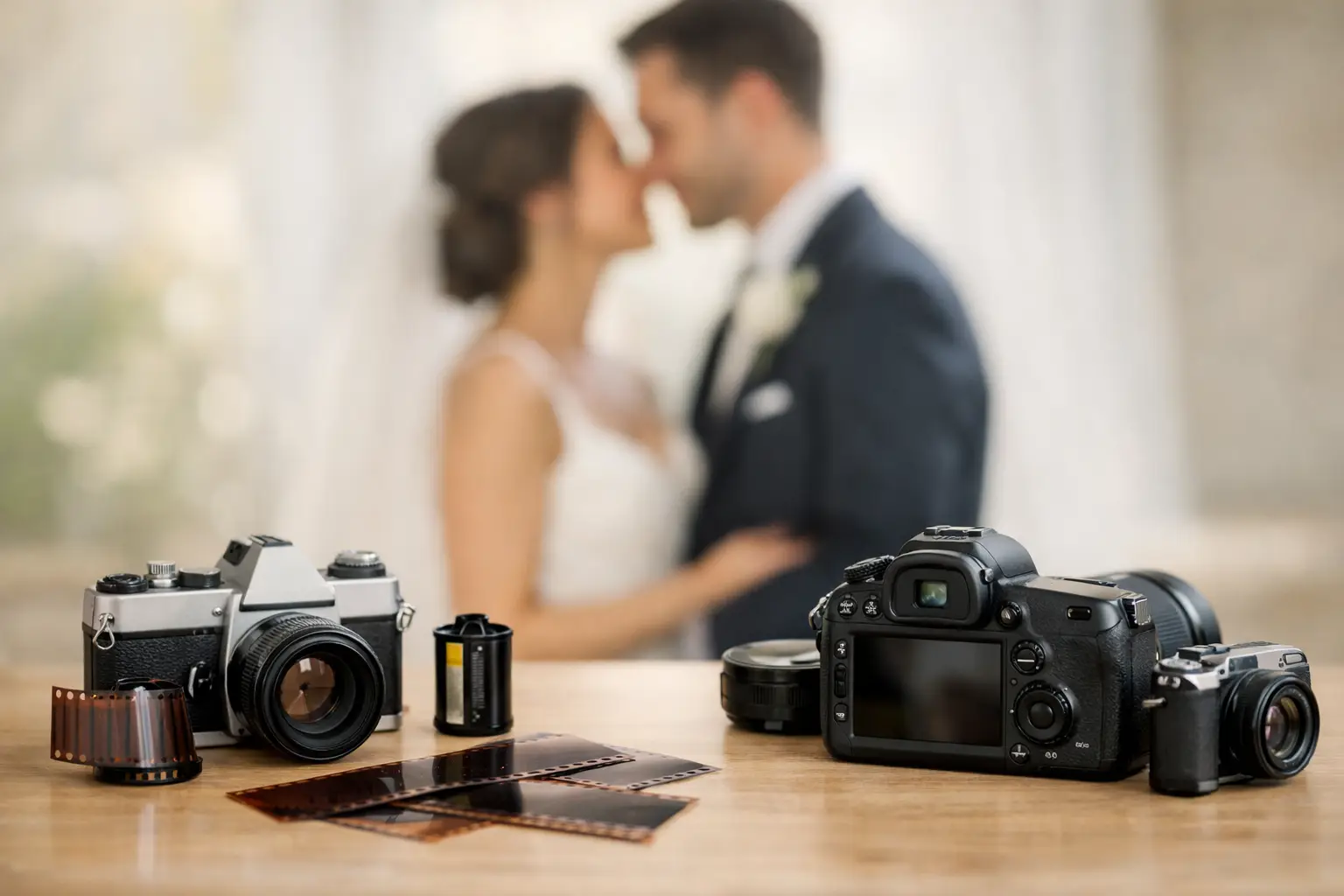
The first light over Lake Como, a silk veil moving in the breeze, the quiet pause before a ceremony in Ravello – these are not moments that need a label. Yet film vs digital wedding photography is a meaningful decision because each medium responds to light, movement, and emotion in its own distinct way. The right choice is less about following an aesthetic trend and more about choosing how you want the feeling of your celebration to live on.
For couples drawn to editorial beauty but unwilling to sacrifice genuine connection, the question deserves a more considered answer than simply “film is timeless” or “digital is practical.” Both can be extraordinarily beautiful in the hands of an experienced photographer. What changes is the rhythm of the day, the character of the image, and the creative possibilities available when life moves quickly around you.
What Film Brings to a Wedding Story
Film has a physical and emotional presence that is difficult to imitate. Its grain is not a filter, and its color is not simply muted. It has a softness in highlights, a generosity in skin tones, and an organic texture that can make an image feel as though it was discovered in a treasured family album, even when the styling is entirely contemporary.
In Italy, this can be especially compelling. The limestone terraces of the Amalfi Coast, the faded patina of a Tuscan villa, or candlelight against antique walls often suit film’s gentle rendering. Bright sun is handled with a graceful roll-off, while delicate tonal transitions can lend portraits a romantic, painterly quality. For a celebration built around timeless romance, this visual language has real allure.
Film also asks for intention. Each frame is considered before the shutter is released. That pace can encourage a beautifully focused portrait experience: a little more stillness, more attention to posture and light, and a sense that the image being made matters. For couples who appreciate craftsmanship, this is part of the pleasure.
But intention should never be confused with stiffness. The best film photographs still hold laughter, wind, tears, and those small glances that happen when no one believes they are being watched. A photographer with a photojournalistic instinct can create images that feel polished without making the day feel posed.
The Trade-Offs of Film
Film has limits, and those limits are part of its character. It is less forgiving in very low light, particularly during a fast-moving reception where candlelight, colored DJ lighting, and dancing create constantly changing conditions. It also offers fewer opportunities to review and adjust in the moment.
That does not mean film cannot document an evening with beauty. It means that a film-first approach requires thoughtful planning, a deep knowledge of exposure, and an honest conversation about expectations. If your wedding includes a late-night celebration you want captured with every spontaneous expression intact, digital photography may offer greater freedom after dark.
There is also the matter of unpredictability. Film is processed after the wedding, and while a skilled photographer works with trusted professional labs and precise methods, it retains a small element of surprise. For some couples, that imperfection feels soulful. For others, especially those who want complete consistency across an elaborate multi-day celebration, it may feel less reassuring.
Film vs Digital Wedding Photography in Real Conditions
Digital photography is not the colder, more clinical alternative it is sometimes made out to be. Used with sensitivity, it can be luminous, cinematic, and deeply emotive. Its greatest strength is responsiveness: the ability to adapt immediately to a sudden rain shower in Positano, a dark chapel ceremony, a sunset that arrives ten minutes earlier than expected, or an exuberant dance floor that refuses to slow down.
A digital camera allows a photographer to work discreetly and quickly, capturing many fleeting transitions without interrupting them. During the ceremony, it is invaluable for documenting the emotion of both partners, their families, and the atmosphere around them. During portraits, it provides room to experiment with movement and composition, especially when the light is changing by the second.
Digital files also offer remarkable latitude in post-production. This is not about over-editing or chasing a passing look. It is about refining an image with care: protecting the detail in a white dress beneath Mediterranean sun, balancing the warm glow of dinner candles, and ensuring a collection feels coherent from morning preparations to the final embrace.
Why Digital Can Still Feel Timeless
Timelessness is not inherent to a camera format. It comes from light, composition, restraint, and an understanding of people. A digital image can feel as elegant and enduring as a film photograph when it is made with an editorial eye and edited with a refined hand.
For many destination weddings, digital offers a reassuring versatility. It performs beautifully across long days and varied locations, from a bright seaside welcome party to a shadowed historic interior. It also supports the kind of unobtrusive documentary coverage that lets you remain present with your guests rather than continually stopping to recreate moments.
That flexibility matters when a wedding has many layers. Perhaps you have planned an engagement session before the wedding, portraits on the water the following morning, or an intimate dinner in a location where light is scarce. Digital creates consistency without asking the experience to bend around the equipment.
The Most Beautiful Choice Is Often a Blend
Many couples find that the answer is not film or digital, but a thoughtful combination of both. A hybrid approach can bring the tactile romance of film to key portraits and considered details while relying on digital for the pace, volume, and changing light of the full wedding day.
This is not about separating the day into “artistic” and “practical” images. It is about allowing each medium to do what it does best. Film may be perfect for the quiet anticipation of getting ready, a fashion-inspired portrait in a villa garden, or the stillness after the ceremony. Digital can carry the momentum of family groupings, documentary moments, ceremony coverage, and an energetic reception.
The collection should still feel like one story. That depends on the photographer’s visual consistency more than the format itself. Color, composition, direction, and emotional sensitivity should create a unified experience, even if the images were made with different tools.
How to Decide What Fits Your Wedding
Begin with the way you want your photographs to feel when you return to them decades from now. If you are captivated by visible grain, softened highlights, and a slightly unpredictable, heirloom quality, film may speak to you. If you value adaptability, rich detail in every lighting condition, and comprehensive coverage of spontaneous moments, digital may be the stronger choice.
Then consider the actual shape of your wedding. A short daytime ceremony and elegant al fresco dinner may naturally welcome more film. A winter celebration, a cathedral with very limited light, or a reception designed to continue well into the night may call for the confidence of digital. Neither choice is more sophisticated. The thoughtful choice is the one that protects the experience you have planned.
It is also worth looking beyond individual images when reviewing a photographer’s work. Ask whether an entire wedding gallery holds your attention. Do the portraits feel natural? Does the ceremony carry emotion? Are the family moments handled with grace? Can you sense the atmosphere of the evening? A beautiful single frame matters, but a wedding story asks for more than one perfect photograph.
Let the Medium Serve the Memory
The camera should never become the center of your wedding day. Whether your story is captured on film, digitally, or through a considered blend of both, what matters most is the person behind it: someone who recognizes beautiful light, understands how to guide without over-directing, and knows when to step back so the real moment can unfold.
Choose the medium that resonates with your eye, then choose the photographer whose work makes you feel something. Years from now, you will not remember the technical decision. You will remember the warmth in a hand, the sound of laughter across a terrace, and the way the images brought you back to it all.