A beautiful wedding day rarely feels rushed when the photography timeline has been considered with care. The most successful wedding photography timeline guide is not built around rigid rules, but around light, emotion, movement, and the way your day is meant to feel. For couples planning a destination celebration or a refined event with many moving parts, this timing shapes far more than logistics. It shapes the atmosphere in your photographs.
A well-designed timeline gives your images room to breathe. It protects the quiet anticipation before the ceremony, the natural flow of portraits, and the unscripted moments that often become the most treasured. It also allows you to stay present, which is where the strongest photographs always begin.
Why timing matters more than most couples expect
Photography is deeply connected to rhythm. Light changes, people move, emotions rise and soften through the day. When a schedule is too compressed, even the most elegant setting can feel tense on camera. When the pace is thoughtful, the images gain depth, grace, and a sense of calm luxury.
This does not mean every wedding needs a long, sprawling schedule. It means each part of the day should be given the time it deserves. A lakeside ceremony, for instance, may call for a different photographic rhythm than a celebration in a historic villa where movement between spaces takes longer. The ideal timeline always depends on the setting, the season, the guest experience, and how much of the day you want documented with intention.
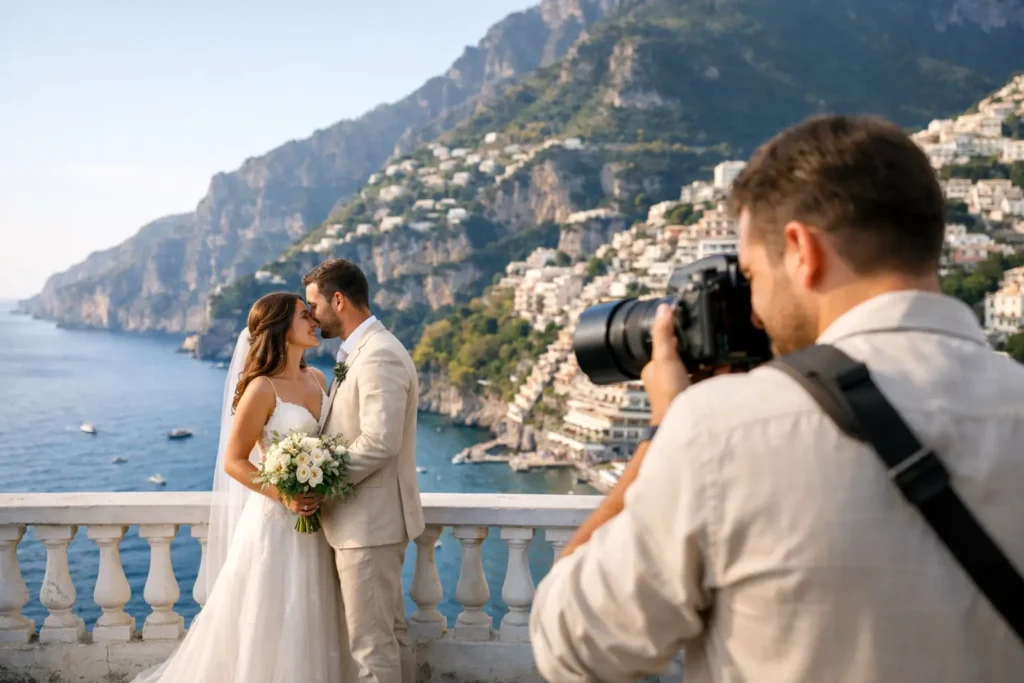
For destination weddings in Italy especially, timing often needs even greater refinement. Travel between venues, summer heat, narrow village streets, or sunset over the coastline can all influence when certain photographs should happen. These details matter because they affect not only efficiency, but beauty.
A wedding photography timeline guide for each part of the day
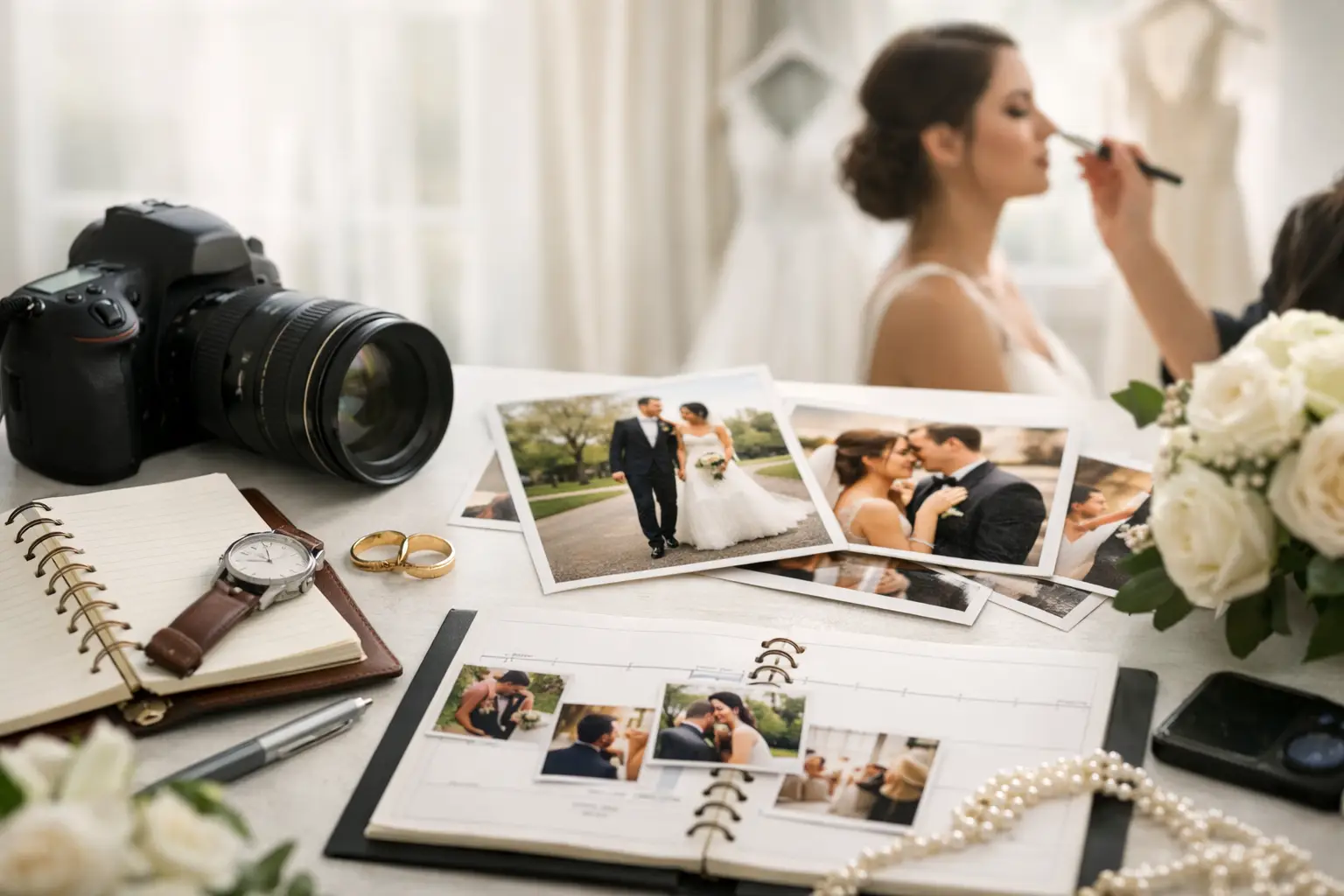
The morning sets the visual and emotional tone of the story. Preparation coverage is not simply about details laid out neatly on a chair. It is about atmosphere – the silk of the dress catching morning light, a handwritten note being opened, the energy in the room before everything changes.
Getting ready
For most weddings, one to one and a half hours of photographic coverage during preparations creates enough time to capture details, candid interactions, finishing touches, and a few elegant portraits without pressure. If both partners are getting ready in the same property or nearby, additional time may be needed for movement between locations.
The room itself matters. Large windows, soft neutral tones, and visual calm make a noticeable difference. If the suite is crowded, cluttered, or dark, photographs can quickly lose the refined feeling couples are hoping for. This is one of the reasons thoughtful planning is so valuable. Sometimes a small adjustment, like moving hair and makeup near a window or keeping one area of the room clear, changes everything.
First look or separate arrivals
Whether to do a first look is a personal decision, not a rule. Some couples want that private moment before the ceremony. Others want to preserve the anticipation of seeing each other for the first time at the aisle. Both approaches can be beautiful.
A first look creates space. It often allows for couple portraits and some family photographs earlier in the day, which can make the post-ceremony schedule feel more relaxed. Separate arrivals keep the structure more traditional and emotionally heightened, but they usually require more portrait time later. The trade-off is not about which option is better. It is about which experience feels truest to you.
The ceremony
Ceremonies are often shorter than couples expect, especially symbolic or civil ceremonies. From a photography perspective, this part of the day benefits from quiet awareness rather than intervention. The timeline question here is less about length and more about transitions.
You will want enough buffer before the ceremony for guests to be seated, final touches to happen calmly, and your arrival to feel unhurried. Ten to fifteen minutes of margin before the official start can make the entire event feel more graceful.
Family portraits
Family photographs are most efficient when planned with precision. Without a clear sequence, this section can expand quickly and affect the tone of the cocktail hour. In most cases, 20 to 30 minutes is appropriate for immediate family combinations, though larger families or complex groupings may require more.
The key is to keep this list focused. Not every possible arrangement needs to be documented. The strongest family portraits tend to be the ones that matter emotionally, not the ones created out of obligation.
Couple portraits
This is often the part of the day couples worry about most, especially if they want images that feel natural rather than posed. In reality, the issue is rarely posing. It is usually timing.
When portraits are squeezed into ten minutes under harsh afternoon light, they can feel hurried and overly directed. When they are given space, the result is entirely different. Around 20 to 40 minutes is ideal for most couple portrait sessions, depending on the property, available light, and how much movement between locations is involved.
For editorial yet emotionally grounded portraits, the best approach is often to divide this time into two smaller sessions. One can happen earlier if you choose a first look, and another can take place near sunset. This keeps the day flowing while giving you two distinct moods in the gallery.
The importance of light in your wedding photography timeline guide
Light is not a detail. It is one of the main elements shaping the atmosphere of your images. Midday light can be bright, glamorous, and architectural, but it is rarely the most flattering for intimate portraits. Late afternoon and sunset bring softness, dimension, and that cinematic warmth many couples are drawn to.
If your reception is designed around a spectacular golden-hour setting, protecting 10 to 15 minutes at that time is often one of the most worthwhile choices in the entire schedule. On the Amalfi Coast or in Tuscany, for example, sunset can transform the landscape into something almost painterly. That short window can produce some of the most moving imagery of the day.
Of course, weather and season always influence this. A summer wedding may have very late sunset light, while spring or autumn celebrations require a different plan. This is why a timeline should never be copied from another wedding. It should be designed around your date and location.
How to keep the day elegant, not rushed
The most refined timelines include breathing room. Not empty time, but intentional margins between moments. A delayed hair and makeup schedule, slow transportation, or an overlong receiving line can create pressure that shows in your expressions later. Once the day starts feeling behind, it becomes difficult to recover that sense of ease.
A good rule is to build buffer into every transition. Add extra minutes for getting dressed. Allow more travel time than the map suggests. Assume family members may take a little longer to gather. These are not glamorous details, but they protect the emotional tone of the day.
It also helps to decide what matters most. If cocktail hour with your guests is a priority, the timeline should support that. If expansive portraits in multiple locations matter more, that needs to be protected earlier. There is always a balance. The point is to make those decisions consciously rather than discovering the trade-offs on the day itself.
Sample flow for a refined wedding day
A classic full-day structure often begins with late-morning or early-afternoon preparations, followed by either a first look or direct lead-in to the ceremony. Family portraits usually happen immediately after, then couple portraits, cocktail hour, reception entrance, dinner, sunset portraits, speeches, cake cutting, and dancing.
But elegant weddings rarely follow a formula exactly. A multi-day celebration in Lake Como may include a boat transfer that requires very specific timing. A Capri wedding may need extra margin because movement through the town is slower than expected. A villa wedding with expansive grounds may benefit from portraits in several short sections rather than one long block. This is where experience matters. The best timeline is always tailored, never generic.
What couples should share with their photographer early
The earlier your photographer understands the structure of the celebration, the stronger the advice will be. Ceremony time, venue layout, travel logistics, season, family dynamics, and whether privacy or guest time matters more for portraits all influence the schedule.
This collaboration is part of the service, not an afterthought. An experienced photographer does more than arrive with a camera. He helps shape conditions where beautiful images can happen naturally. For destination couples especially, that guidance can be as valuable as the photographs themselves.
At Gennaro Piscopo Photography, timeline planning is approached as part of the visual storytelling process – not merely coordination, but the quiet architecture behind images that feel effortless, intimate, and elevated.
The best wedding photography timeline guide leaves room for both artistry and real life. It protects the beauty you have planned while allowing the day to unfold with soul. When timing is handled well, you are free to do the only thing that truly matters: live it fully, and let the story be captured with grace.