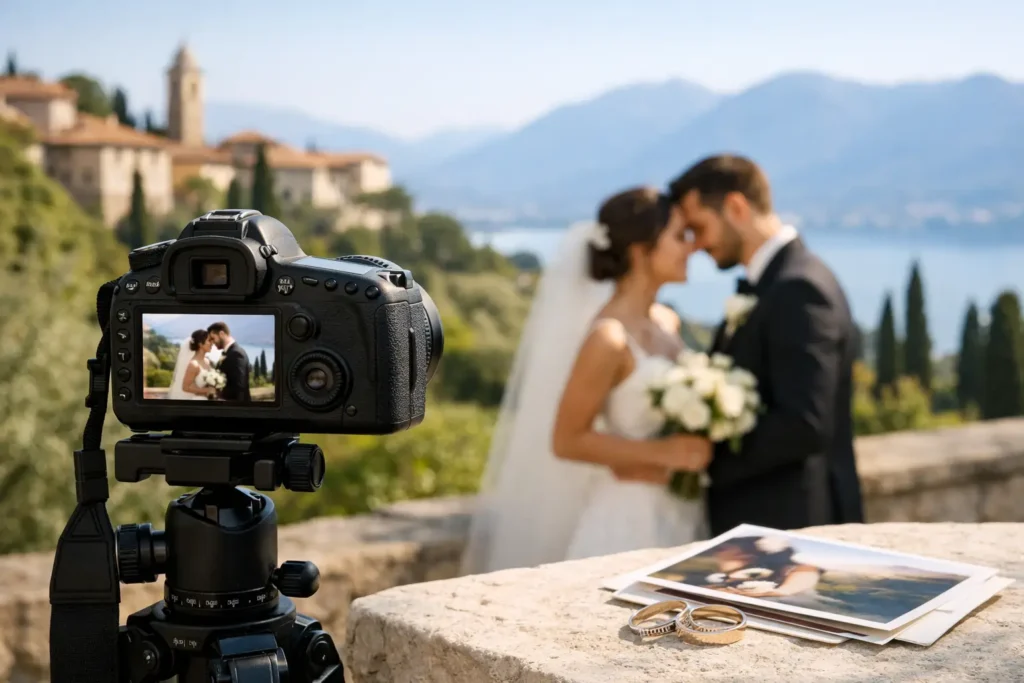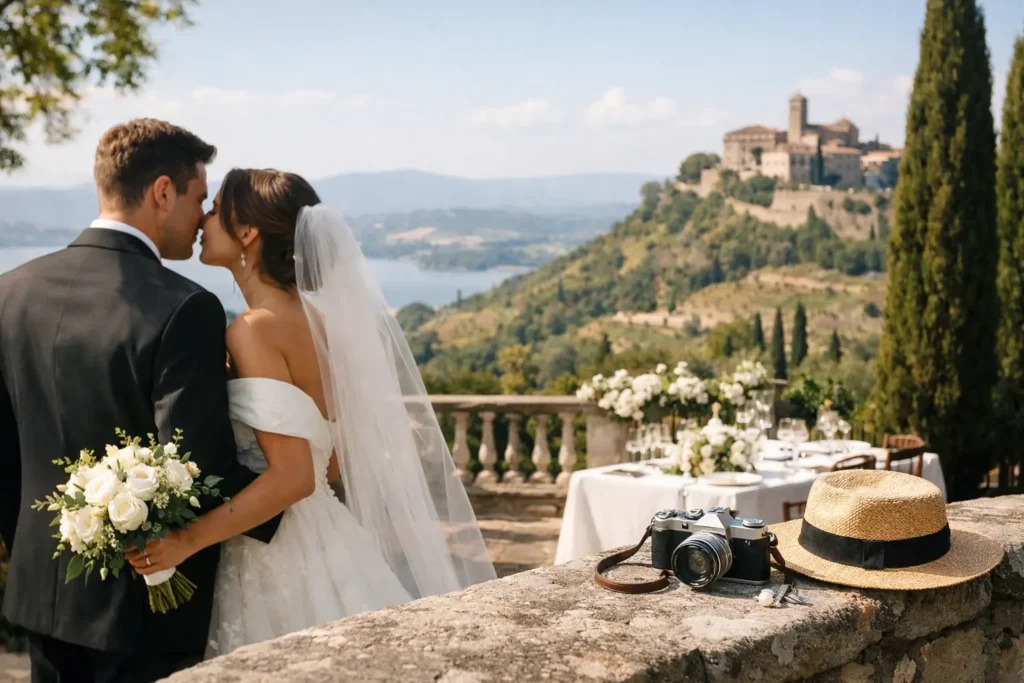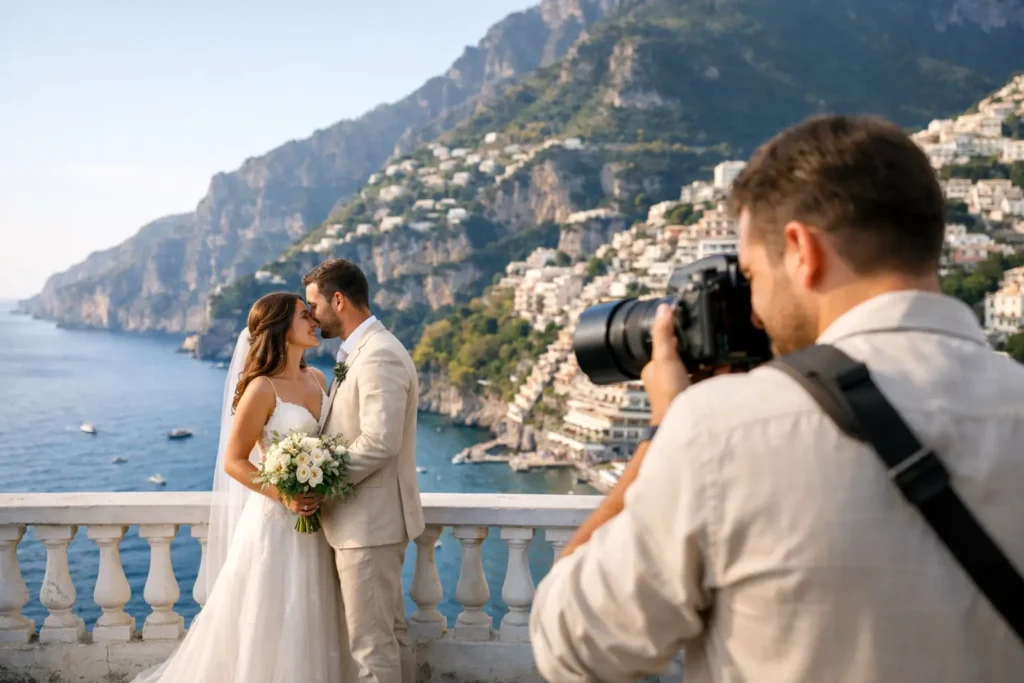
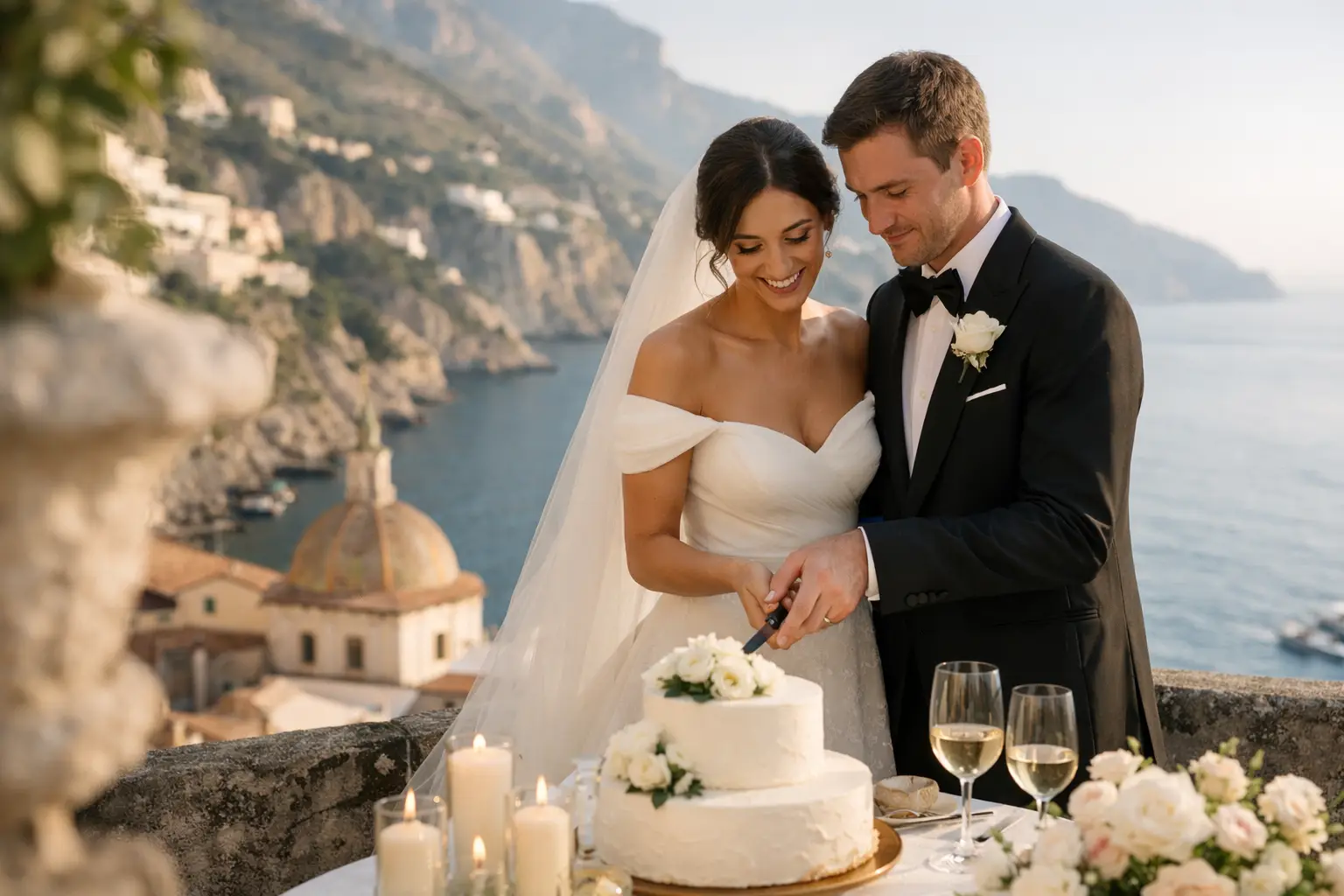
A compelling Italian wedding editorial is not created by placing a couple in front of a beautiful view and asking them to smile. It is built through observation: the way late-afternoon light settles on Ravello stone, the salt air lifting a veil above Positano, the quiet pause before a ceremony, and the lively disorder of a dinner that has fully come to life.
For couples drawn to Italy, editorial photography often means images with polish, intention, and a distinct point of view. But the photographs that endure need more than an elegant composition. They need feeling. The aim is to create work that could belong in the pages of a magazine while remaining unmistakably personal to the people within it.
An Italian Wedding Editorial Is Not a Set of Poses
Editorial does not mean rigid. It means considered.
A fashion-informed eye can recognize the effect of clean lines, beautiful movement, controlled light, and strong styling. Yet a wedding is not a campaign shoot. There is no reason to interrupt the momentum of a father seeing his daughter before the ceremony, a bride taking a quiet breath at the window, or friends leaning across the table in laughter simply to achieve a more symmetrical frame.
The best editorial wedding photographs hold two qualities at once: visual clarity and emotional truth. A portrait may be gently directed so that the couple is placed in the best available light, with the architecture giving the frame structure. The expression, however, should never feel manufactured. A hand held tightly, a glance that arrives unexpectedly, or the ease that returns when the camera steps back often carries more weight than a perfect pose.
This balance matters particularly for international couples who want refined imagery without feeling as though their wedding has become a production. Direction should be calm, brief, and purposeful. A photographer may suggest where to stand, how to move through a terrace, or when to take five minutes away from the reception. Then there must be room for the real interaction to unfold.
Let Southern Italy Shape the Visual Story
Italy offers no shortage of beauty, but the setting should do more than serve as a backdrop. A meaningful editorial approach lets the location influence the rhythm, palette, and atmosphere of the photographs.
On the Amalfi Coast, there is an inherent contrast between grandeur and intimacy. Steep hillsides, tiled domes, limestone facades, and the changing surface of the Tyrrhenian Sea create frames that are dramatic without needing embellishment. In Positano, narrow passages and layered terraces can turn a short walk into a sequence of cinematic images. In Ravello, gardens and historic architecture often invite a quieter, more composed visual language.
The Cilento Coast offers a different sensibility. Around Castellabate, Santa Maria di Castellabate, Acciaroli, and Paestum, the pace can feel less compressed. There are softer horizons, older textures, and a strong sense of everyday Southern Italian life continuing around the celebration. This can suit couples who want editorial photographs with depth and atmosphere rather than constant spectacle.
Neither setting is automatically better. It depends on the feeling a couple wants their photographs to hold. A wedding with a highly tailored aesthetic may lean into architectural lines and precise portraiture. A relaxed multi-day gathering may be better served by looser observation, sun-warmed color, and images that allow conversations and gestures to lead.
Light Is the First Creative Decision
Coastal light is generous, but it is not always gentle. At midday, the sun can be direct and reflective, especially on pale stone terraces and near the water. This is not a problem to fear. It simply requires experience, timing, and a willingness to work with the day rather than against it.
Soft morning light can be ideal for a pre-wedding walk through quieter streets or a first look before guests arrive. Later in the day, shade from a covered loggia, garden trees, or an interior doorway can create elegant portraits with depth. As the sun lowers, the coast becomes warmer and more dimensional. This is often the moment for a brief couple session, when the formal obligations have eased and the landscape begins to glow.
An editorial image does not have to be bright to be beautiful. Shadow can add intimacy. A dimly lit dining room, candles against weathered stone, or the blue transition after sunset may tell the truth of the evening more vividly than a fully illuminated scene. The key is preserving the atmosphere without losing the people at its center.
Pacing Creates More Natural Photographs
Many of the most beautiful images are not the result of a longer portrait session. They come from a well-paced day.
When a timeline leaves no space between the ceremony, family photographs, aperitivo, and dinner, couples can feel rushed before the camera is even raised. A more thoughtful rhythm allows portraits to happen in short, unrushed intervals. Ten minutes after the ceremony, a few minutes before dinner, or a quiet return outside after the first courses can be enough.
This approach also protects the experience of the wedding. Guests should not spend an hour waiting while the couple disappears. Equally, the couple deserves a little time to absorb what is happening. Those small pauses are often where the more intimate photographs are made.
For a full wedding day, it helps to think in chapters rather than a list of photo requests. The anticipation of getting ready has a different emotional texture from the energy of the ceremony. Aperitivo is social and fluid. Dinner becomes richer as daylight fades. Dancing has its own visual language of movement, flash, shadow, and abandon. Each chapter benefits from a photographer who can shift between quiet observation and clear creative direction.
Details Matter When They Belong to the Story
An editorial eye notices details, but not every detail deserves equal attention. The silk of a dress, handwritten stationery, an heirloom ring, the color of citrus on a table, and the texture of local ceramics can enrich a gallery because they reveal choices made by the couple.
Details become less meaningful when they are photographed as isolated decoration. A place setting is more alive when a guest reaches for a glass beside it. Flowers become part of the story when they frame a greeting, a toast, or a dance. Rather than treating the design as separate from the celebration, the strongest coverage lets it be seen in use.
This is also why documentary coverage is essential to an editorial result. The unscripted moments provide the pulse beneath the polished images: a grandmother watching the ceremony, friends adjusting a train before dinner, the sudden emotion of a speech, or the unguarded laughter that follows it.
The Value of Gentle Direction
Few people arrive at their wedding comfortable in front of a camera, and they do not need to be. The responsibility is not on the couple to perform. It is on the photographer to make the process feel clear and natural.
Gentle direction might begin with a simple walk rather than an instruction to pose. It may mean asking a couple to stand close, look toward the sea for a moment, or take time with each other while the photographer works from a respectful distance. These prompts create shape and movement without dictating emotion.
A seasoned photographer also knows when not to direct. During vows, family embraces, speeches, and the spontaneous rush of the dance floor, discretion matters. Those moments need anticipation, not interruption. The visual confidence of an Italian wedding editorial comes as much from knowing when to remain invisible as from knowing how to compose a portrait.
Photographs That Feel Complete Years Later
Trends influence wedding imagery, as they should. They bring fresh ideas about styling, color, and composition. But a photograph should not rely on a trend to feel relevant. The most lasting work is grounded in connection, place, and an honest record of how the day unfolded.
When reviewing a photographer’s portfolio, look beyond a single dramatic portrait. Notice whether the work moves naturally from wide landscape to close human detail, whether people appear at ease, and whether the images retain atmosphere after dark. A complete gallery should feel like a story, not a collection of separate highlights.
At Gennaro Piscopo Photography, the intention is to bring fashion sensitivity and documentary instinct into the same frame, with a close understanding of Southern Italy’s light, pace, and landscapes. Reviewing the portfolio and beginning an inquiry early allows the coverage to be shaped around the real character of your celebration.
The photographs worth returning to will not only show how Italy looked that day. They will bring back how it felt to stand together within it.