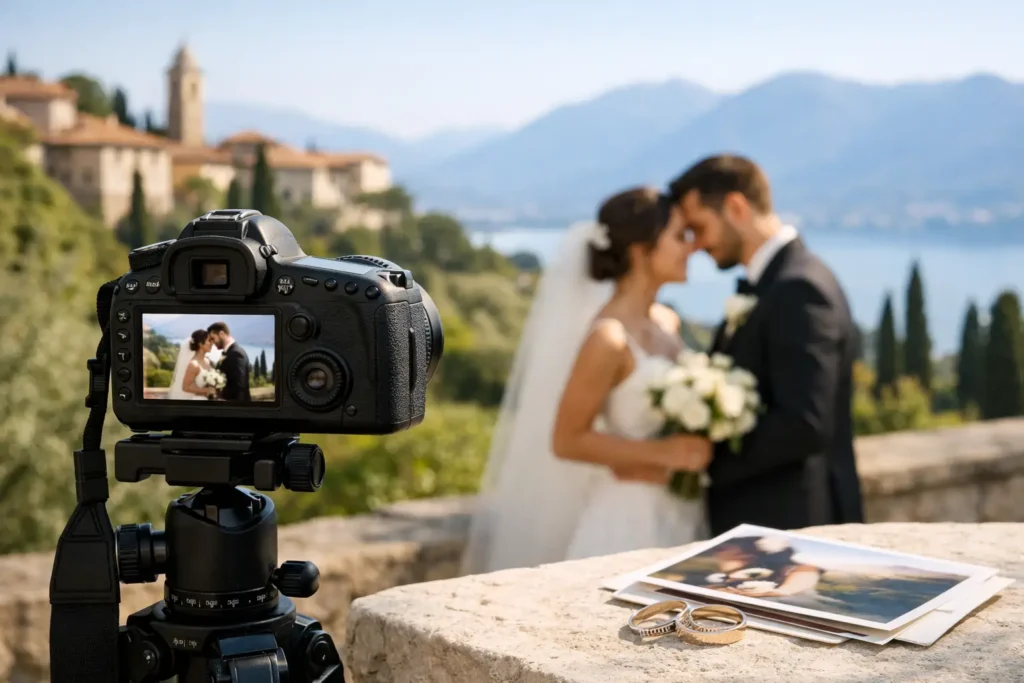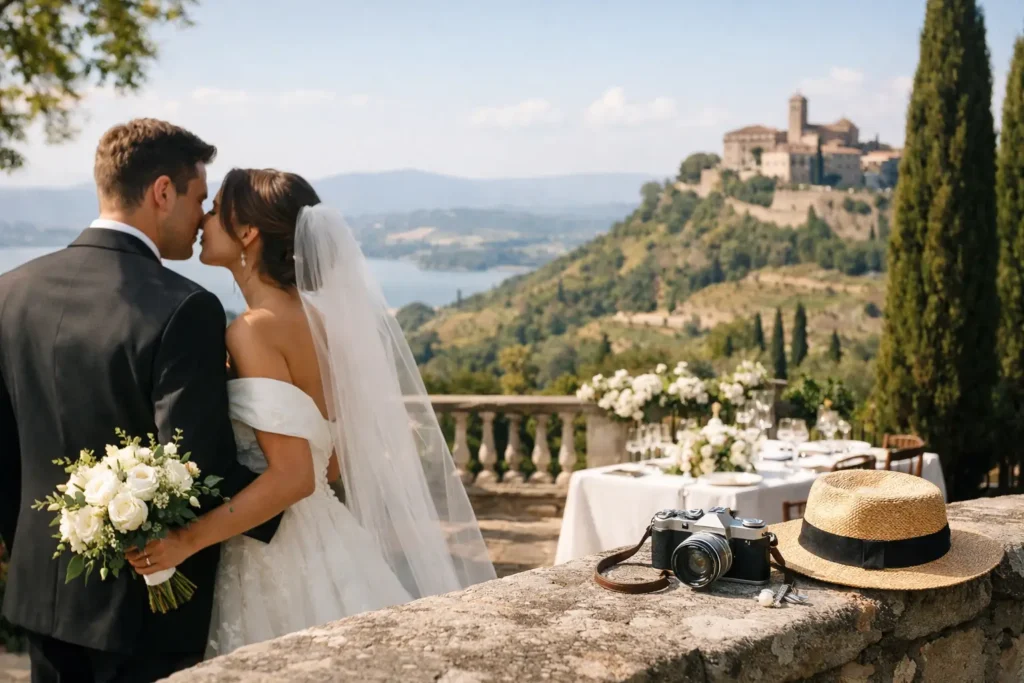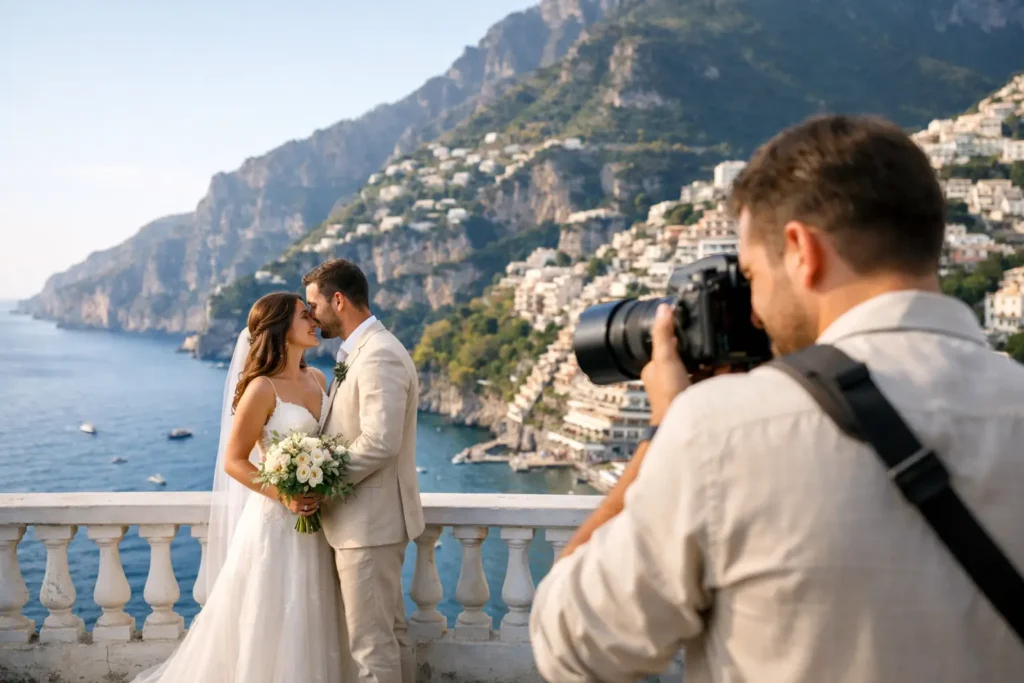
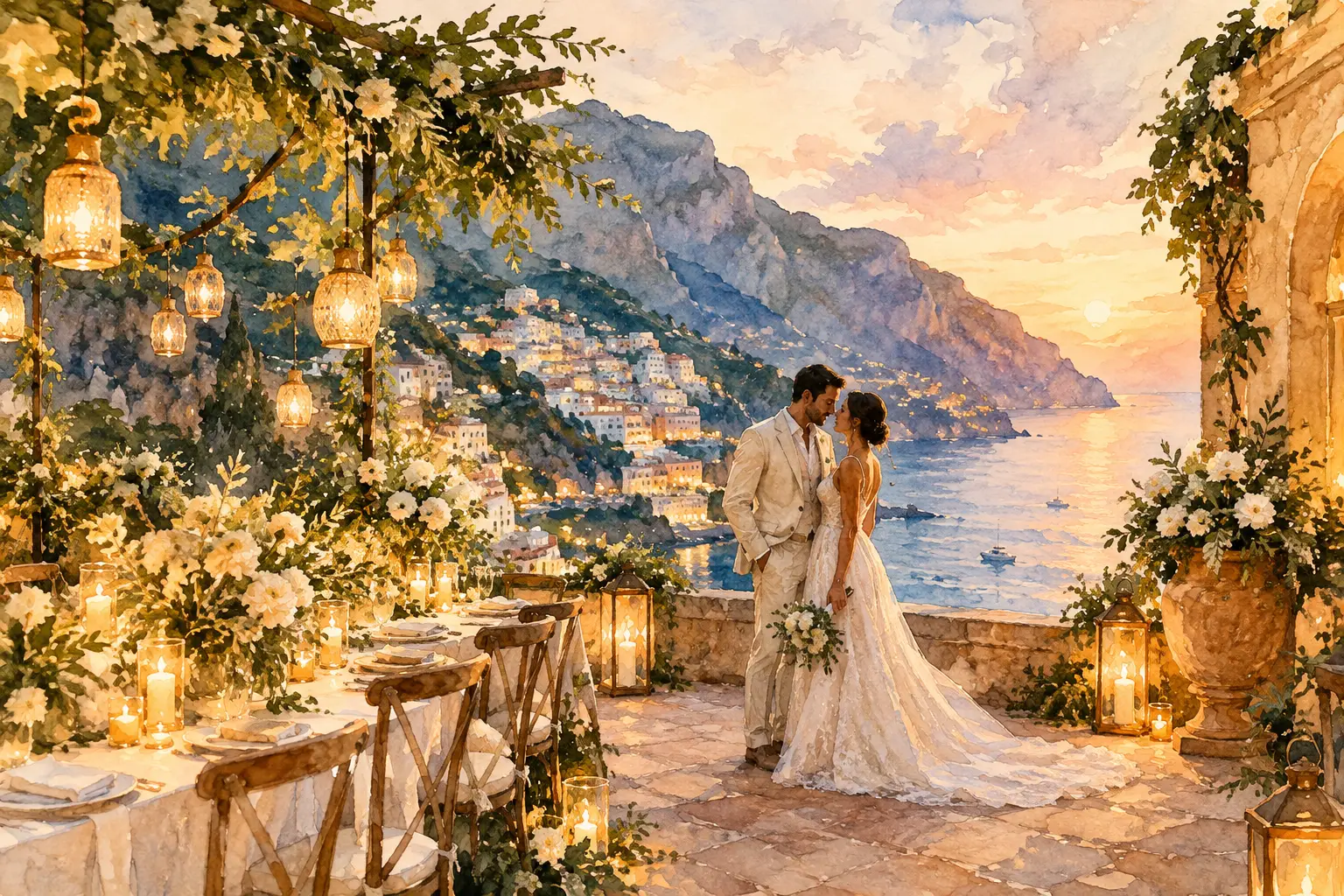
At a Positano wedding, the light can shift from brilliant Mediterranean white to soft blue shadow in the space of a single cocktail hour. In Ravello, a garden ceremony may begin in gentle mountain-filtered sun and end beneath a terrace glowing with candlelight. A thoughtful wedding lighting guide is not about chasing one perfect condition. It is about shaping a timeline that lets every part of the celebration feel beautiful, natural, and true to the place.
For photography, light is more than brightness. It determines the mood of a portrait, the depth of an architectural scene, the color of the sea, and whether a quiet exchange between two people feels observed or staged. Along the Amalfi Coast and in southern Italy, timing matters because the landscape is dramatic, the summer sun is strong, and many of the most memorable celebrations move between open terraces, historic interiors, gardens, and night skies.
Wedding Lighting Guide: Start With the Ceremony Time
The ceremony is the one part of the day that cannot be repeated. If you have flexibility, begin by choosing its timing before building the rest of the schedule around hair, makeup, cocktails, and dinner.
From late spring through early fall, midday sun on the coast can be exceptionally direct. It creates vivid blue water and crisp architectural detail, but it can also produce deep shadows beneath the eyes, high contrast on white fabric, and guests who are understandably searching for shade. An early-afternoon ceremony can still photograph beautifully when the setting offers complete, even shade. A covered cloister, a tree-lined garden, or a terrace where the building protects the ceremony area can be far more flattering than an exposed view at noon.
When the ceremony is outdoors and open to the sun, later is usually kinder to both guests and photographs. The exact hour depends on the month, the orientation of the location, and the mountains or buildings around it. On the Amalfi Coast, cliffs can bring shade earlier than a sunset app might suggest. In a narrow street or a hillside venue, one side of the space may already be in shadow while another remains brightly lit. This is where local familiarity and a venue walk-through make a genuine difference.
Do not plan only around sunset
Sunset is beautiful, but a wedding day should not become a race toward it. If the ceremony is too late, there may be little daylight left for family photographs, time with guests, or a relaxed aperitivo. The strongest timelines leave a generous buffer between the end of the ceremony and dinner. That creates room for a few composed portraits, spontaneous embraces, and the wider scenes that give a gallery its sense of place.
For couples who value an editorial portrait experience, I usually encourage a short period near the end of the cocktail hour rather than a long absence from the party. Fifteen or twenty calm minutes in the best available light can be enough. The aim is not to pull you away from your people, but to give you photographs with air, movement, and a little privacy.
Use the Coast Rather Than Fighting It
The Amalfi Coast is not a flat, evenly lit studio. That is precisely why it photographs so beautifully. Pale stone reflects light upward, sea horizons hold brightness long after the sun drops, and the folds of the coastline create pockets of shade that can be incredibly elegant for portraits.
In Positano, direct sun can arrive and disappear quickly behind the vertical architecture. Rather than insisting on a specific patch of sunshine, it is often better to work with reflected light along a pale wall, beneath a shaded arch, or on a terrace facing the open water. These spaces create softer skin tones while retaining the graphic quality of the town.
Ravello has a different rhythm. Its elevated gardens and formal terraces can feel open and luminous, while leafy paths and interior rooms offer relief from strong daylight. Sorrento often provides warmer, more level evening light, particularly where gardens and sea-facing terraces meet. Farther south, the Cilento Coast and Castellabate can offer a gentler, more spacious atmosphere, though the same principles apply: understand where the sun falls, identify the shade, and allow enough time for the landscape to settle into evening.
A view is never the only consideration. For a ceremony, a beautiful backdrop should be balanced with guest comfort and the direction of light on your faces. For dinner, the placement of tables, overhead fixtures, and candles affects both atmosphere and the way your guests appear in photographs.
Think of Daylight in Chapters
The most visually satisfying wedding galleries tend to have contrast. They begin with quiet preparation, open into bright arrival scenes, soften during portraits, then become warmer and more intimate as dinner begins. Planning for these transitions gives the story a cinematic, lived-in quality.
Morning preparation
Choose a preparation room for its windows as much as its decor. Natural light near a large window is flattering, dimensional, and honest. A room with good daylight also gives space for the dress, stationery, and personal details to be photographed without relying on cluttered corners or overhead hotel lighting.
This does not mean every room must be white or minimal. A richly textured Italian interior can be extraordinary. The key is to keep one area near a window clear and to avoid placing makeup chairs directly under mixed-color ceiling lights. If possible, ask for lamps and practical lights to be switched off while makeup is underway, unless they are part of the intended atmosphere. Mixed light can turn skin tones unevenly warm or green in photographs.
Cocktail hour and portraits
This is often the most flexible chapter of the day. The sun may still be strong, but shade, reflected light, and backlight can all be used beautifully. A little wind lifting a veil, a walk down stone steps, or a pause overlooking the water can feel far more natural than a sequence of posed images.
Trust the changing conditions. Some of the most compelling images are made when the sun has just passed behind a hill or a cloud, leaving a soft, luminous wash across the scene. A photographer who understands the light will guide you clearly when a brief window is worth taking, then step back when your celebration deserves your full attention.
Candlelight Needs a Practical Plan
There is a reason candlelit dinners are so memorable in photographs. Flames bring warmth to stone, linen, glassware, and faces. They create intimacy without making the evening feel over-designed. But candlelight alone is rarely enough to illuminate an entire dinner comfortably, especially in a large outdoor setting.
The best result is layered lighting: candles at table level, discreet ambient illumination around the dining area, and considered lighting for key architectural features or pathways. Warm white light is generally more flattering than cool white. It should feel present but not dominant, allowing faces to remain visible while the atmosphere stays romantic.
Avoid harsh spotlights aimed directly at tables. They can flatten the scene and make guests feel as though they are dining under a stage light. Equally, do not leave the dance floor almost completely dark. A little directional light helps preserve movement, expression, and the energy of the party without sacrificing mood.
If a lighting designer or planner is involved, ask to see the evening setup before guests enter. This is a practical moment to check whether candles are lit, pathways are safe, and any colored DJ lighting is controlled. Strong blue, purple, or green lighting may feel festive in person, but it can dominate skin tones and compete with the understated palette of an elegant coastal celebration.
Weather, Wind, and Backup Light
Coastal weather deserves respect, even in high summer. A passing cloud cover can be a gift for portraits, while wind can change the practical use of a terrace in minutes. Build a backup plan that is visually considered rather than merely functional.
For an indoor alternative, look for window light, covered loggias, arches, or rooms with character. If rain arrives, it does not erase the possibility of strong photographs. It shifts the visual language toward reflections on stone, close gestures, umbrellas, and the quiet texture of an Italian interior. The important thing is to avoid panic and preserve enough time in the schedule to adapt.
Your planner, venue team, and photographer should share the final timeline and understand where each major part of the day will happen. That simple coordination prevents rushed transitions and gives everyone the freedom to respond calmly when conditions change.
Let the Light Serve the Feeling
The right lighting plan does not make a wedding feel like a production. It gives you the confidence to be fully present, knowing that the ceremony will be comfortable, the portraits will feel unforced, and dinner will glow with the warmth you imagined.
When you are choosing a date, ceremony hour, or reception design in Positano, Ravello, Sorrento, or the quieter coast of Cilento, bring those choices into the photography conversation early. You can explore Gennaro Piscopo Photography’s portfolio for a sense of the story-driven, editorial approach, then use the inquiry page to discuss a timeline shaped around your celebration, your setting, and the light that makes it yours.