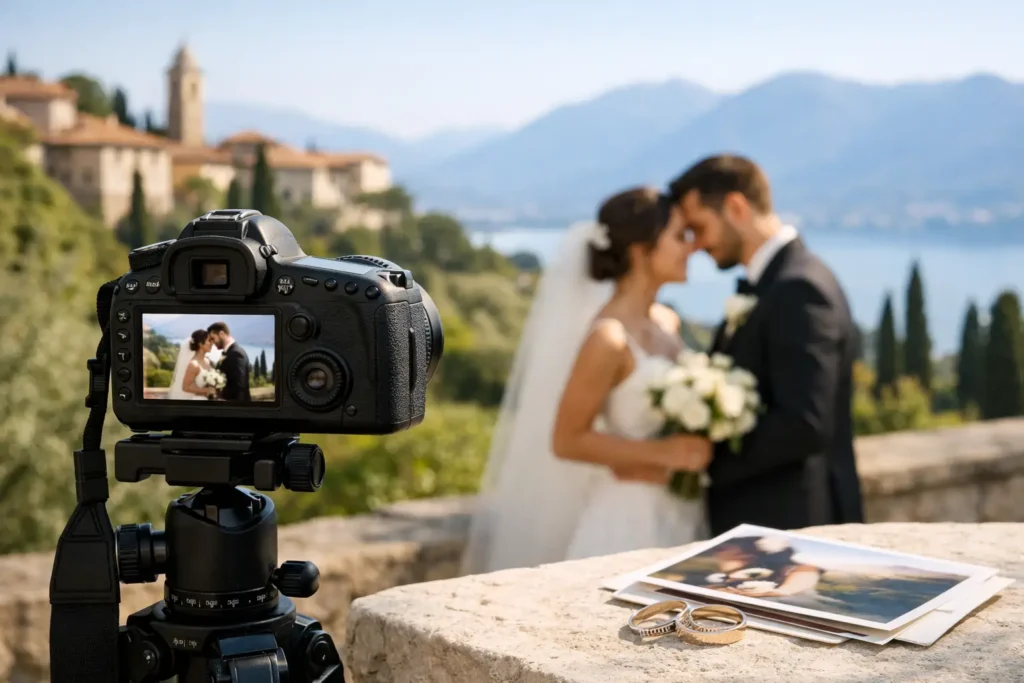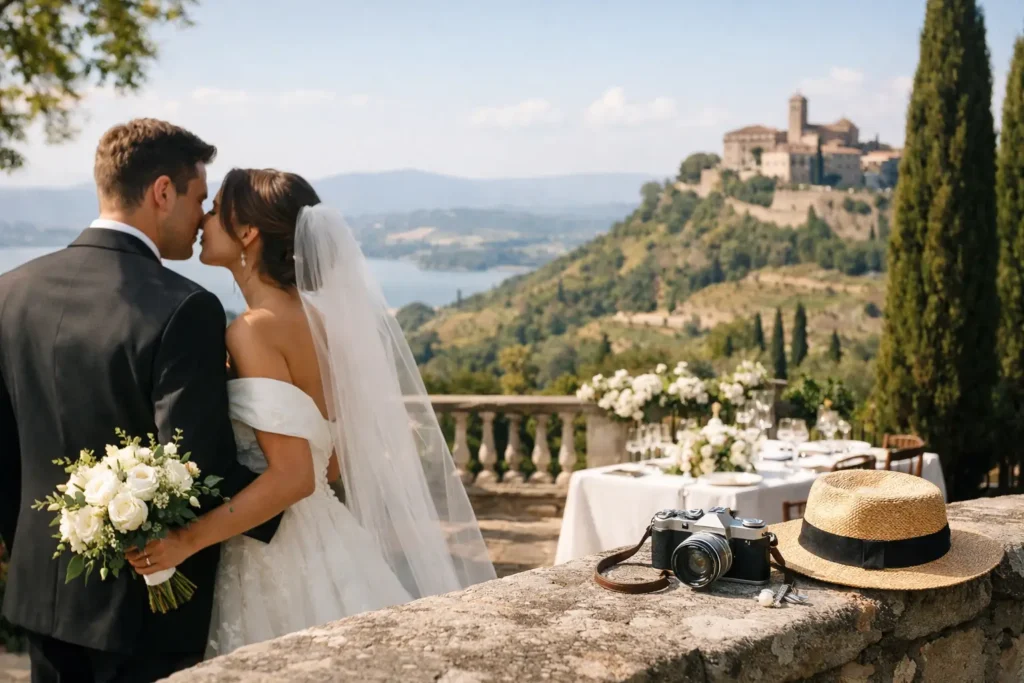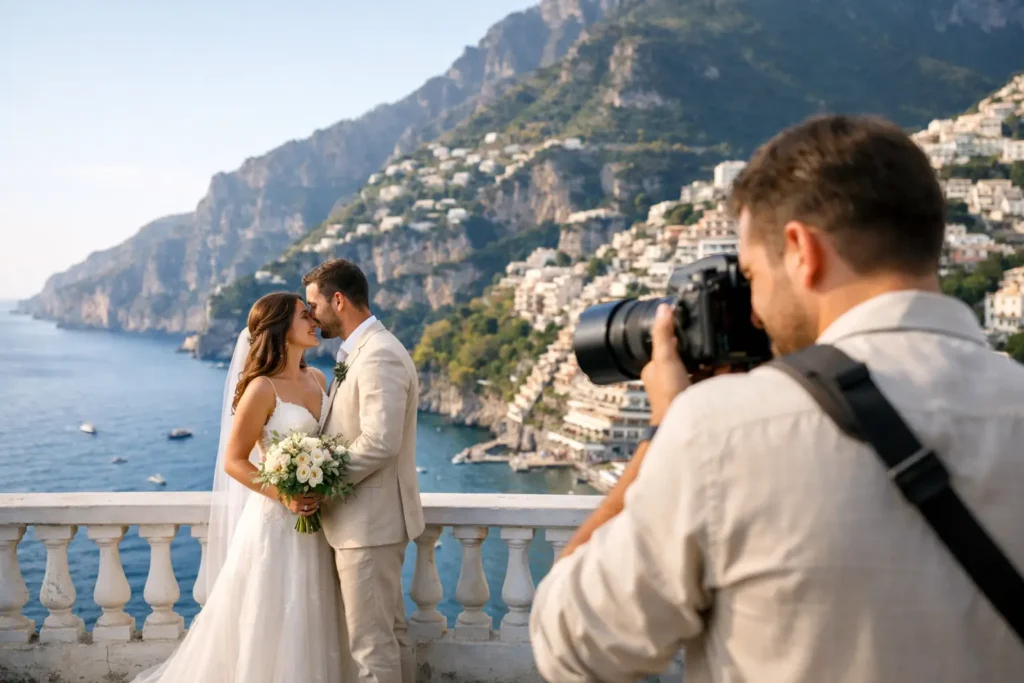
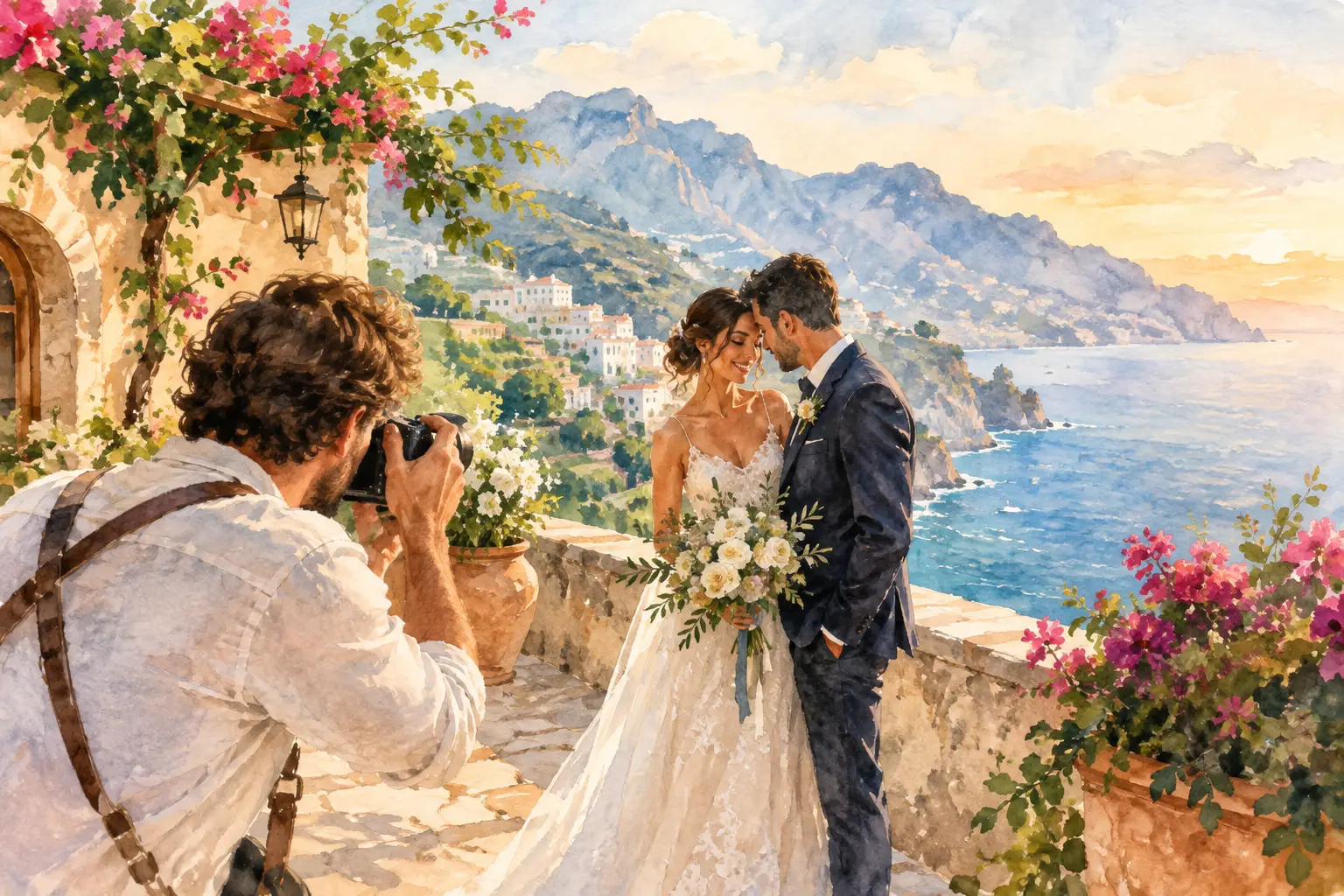
Ravello wedding photography lighting tips begin with one simple truth: this is a town of brilliant contrasts. A ceremony may unfold beneath soft garden shade, while a few steps away the midday sun bounces from pale stone, terracotta, and the distant Tyrrhenian Sea. The beauty is extraordinary, but it rewards thoughtful timing. For photographs that feel editorial yet alive, light should shape the rhythm of the day rather than become an afterthought.
The goal is not to make every image look identical. A Ravello wedding can hold luminous, sun-washed scenes, quiet portraits in the shade, and intimate evening frames warmed by candlelight. What matters is creating a visual progression that honors the architecture, the landscape, and, above all, the people within it.
Begin with Ravello’s changing light
Ravello sits high above the coast, with open views that make the sun feel close and powerful. In late spring and summer, direct light can become hard surprisingly early, particularly on exposed terraces and in formal gardens with reflective paving. This does not mean avoiding daylight portraits. It means choosing the right kind of daylight for each part of the story.
Morning light is often gentle and spacious, especially for preparations in rooms with large windows or doors opening onto a terrace. A bride standing near a window, turning toward the quiet of the room rather than facing the glass directly, can be beautifully lit without feeling posed. The same principle works for details: dress fabrics, handwritten notes, jewelry, and flowers look more dimensional when placed just inside the edge of natural light rather than in full sun.
By early afternoon, shade becomes valuable. Arcades, garden paths, interior rooms, and the shadow cast by mature trees can provide flattering light with enough shape to retain a sense of place. The most elegant portraits are rarely about placing a couple in the brightest available spot. They are about finding a setting where skin tones remain soft while Ravello’s textures – old stone, sculpted greenery, ironwork, and distant hills – still register with clarity.
Plan the ceremony for faces, not only for the view
An open panorama is one of Ravello’s great gifts, yet it can complicate a ceremony if guests and the couple are placed directly into the sun. Squinting, deep eye shadows, and high contrast can quickly distract from the emotional center of the photographs.
When a ceremony takes place on an exposed terrace, the ideal placement depends on the season, the exact orientation, and the ceremony hour. Sometimes a slight adjustment to the ceremony setup can make an enormous difference: positioning the couple so light falls across rather than straight down on their faces, or using the building’s edge and nearby foliage to create a little relief. The view remains present, but the exchange of vows becomes readable and intimate.
If a later ceremony is possible, the light generally becomes more forgiving. This is not a universal rule. Some locations move into shade earlier than expected, and an entirely shaded ceremony can be equally beautiful if it is planned deliberately. The important point is to assess the specific terrace at the actual ceremony time, rather than relying on a general sunset forecast.
Use the bright hours for movement and atmosphere
Hard sunlight is not a problem to be erased from every frame. On the Amalfi Coast, it is part of the visual language. The trick is to use it where it adds energy rather than asking it to flatter a close portrait.
After the ceremony, bright light can work wonderfully for documentary moments: guests crossing a terrace with glasses in hand, a veil moving in the breeze, musicians arriving, or family members gathering beneath umbrellas. In these wider scenes, contrast adds Mediterranean character. The white of a tablecloth, the depth of a garden shadow, and the blue beyond the balustrade can create a cinematic sense of place.
For couple portraits during this period, I prefer a short, efficient approach. We might use a shaded corridor, the side of a staircase, or a pocket of open shade where reflected light softens the face. Direction stays light and conversational. A small adjustment of shoulders, a pause close together, or an invitation to walk slowly is often enough. Couples should not feel removed from their celebration for an extended photo session when the day is at its most social.
Save a little time for the last light
The hour before sunset brings a different emotional register to Ravello. The landscape settles, the sky becomes less severe, and the warmth of the stone begins to feel more pronounced. This is often the right moment for a brief portrait interlude – not a production, but a chance to step away for ten or fifteen minutes and make images with a quieter sense of connection.
The best location is not always the terrace with the widest view. A narrow garden path may hold a softer glow. A shaded wall can become a clean, sculptural backdrop as the light falls. On some days, the sun disappears behind the surrounding terrain before the official sunset time, so it is wise to treat the published sunset as a guide rather than a promise.
Cloud cover changes the decision, too. An overcast afternoon can be exceptionally flattering, with soft light extending much longer than on a clear day. In that case, there is no need to chase a golden-hour effect that does not exist. The images can instead lean into Ravello’s gentle greens, faded stone, and atmospheric depth. A confident photography plan responds to the day that is actually unfolding.
Ravello wedding photography lighting tips for dinner and dancing
Once dinner begins, the lighting shifts from landscape to atmosphere. Candlelight, overhead festoons, table lamps, and architectural illumination can look deeply romantic in photographs, but they need to feel authentic to the evening. The aim is to preserve the warmth guests experienced while still seeing expressions, gestures, and the care in the tablescape.
Candles photograph beautifully when they are plentiful. A small number of isolated flames can disappear against a dark terrace, while layered candlelight creates depth and a convincing glow. Warm lighting also benefits from restraint. If every corner is flooded with bright artificial light, the intimacy of dinner can be lost. A considered balance allows the scene to feel inviting without turning it into a stage.
For speeches, ask the planner or venue team to avoid placing the speaker directly beneath a single harsh overhead fixture whenever possible. A slightly more open position, with faces turned toward the gathered tables, tends to photograph more naturally. During dancing, subtle supplemental light can preserve movement and expression while honoring the mood created by the band, DJ, or lighting design. The final images should feel like the night, not like a brightly lit studio.
Let the timeline protect the photographs
The most successful lighting plan is usually a calm timeline. Hair and makeup should finish with enough margin for relaxed preparation photographs. The ceremony should account for the sun’s position. Dinner should not begin so late that the only remaining portraits must happen after dark. These choices do not require a rigid schedule, but they do benefit from a photographer who understands how quickly coastal light can change.
A venue walkthrough or careful review of the spaces in advance helps identify where portraits can happen in sun, shade, and after dusk. It also gives the wedding planner a practical framework for the day. When everyone understands that ten unhurried minutes near sunset will create a meaningful set of photographs, protecting that window becomes easy.
For Gennaro Piscopo Photography, this preparation is part of working discreetly. The best direction is often nearly invisible: knowing where to stand before an entrance begins, anticipating when a parent will reach for a hand, and choosing light that allows a real interaction to remain real.
A final note on trusting the weather
Ravello can move from clear Mediterranean brilliance to mist, cloud, or sudden rain. None of these conditions diminish the story. Rain deepens stone and foliage, clouds soften the horizon, and an interior filled with window light can feel remarkably intimate. A flexible plan simply ensures that beauty is not dependent on one forecast.
When you are choosing the shape of your wedding day, give the light a place in the conversation early. A few thoughtful decisions about timing will leave you freer to be present with the people you love, while the photographs hold both the grandeur of Ravello and the soul of the celebration.