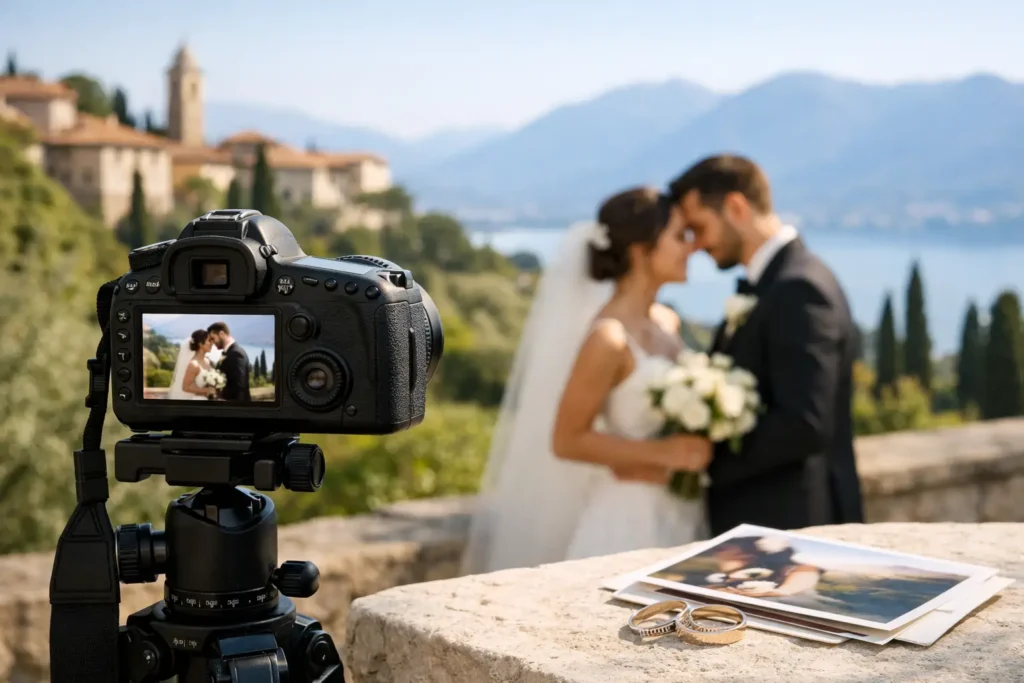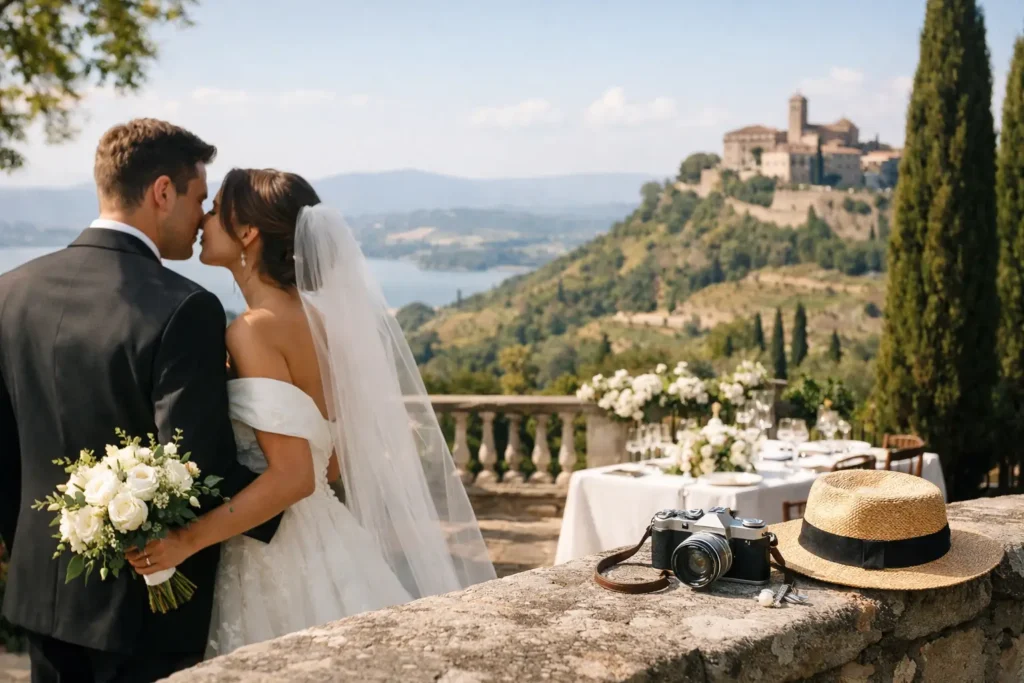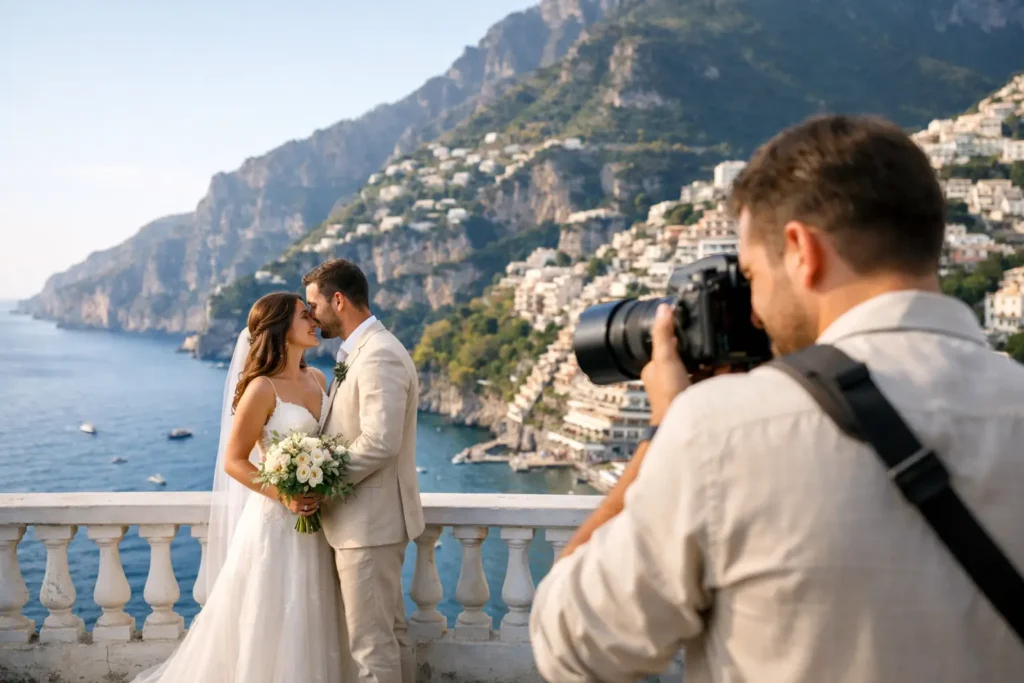
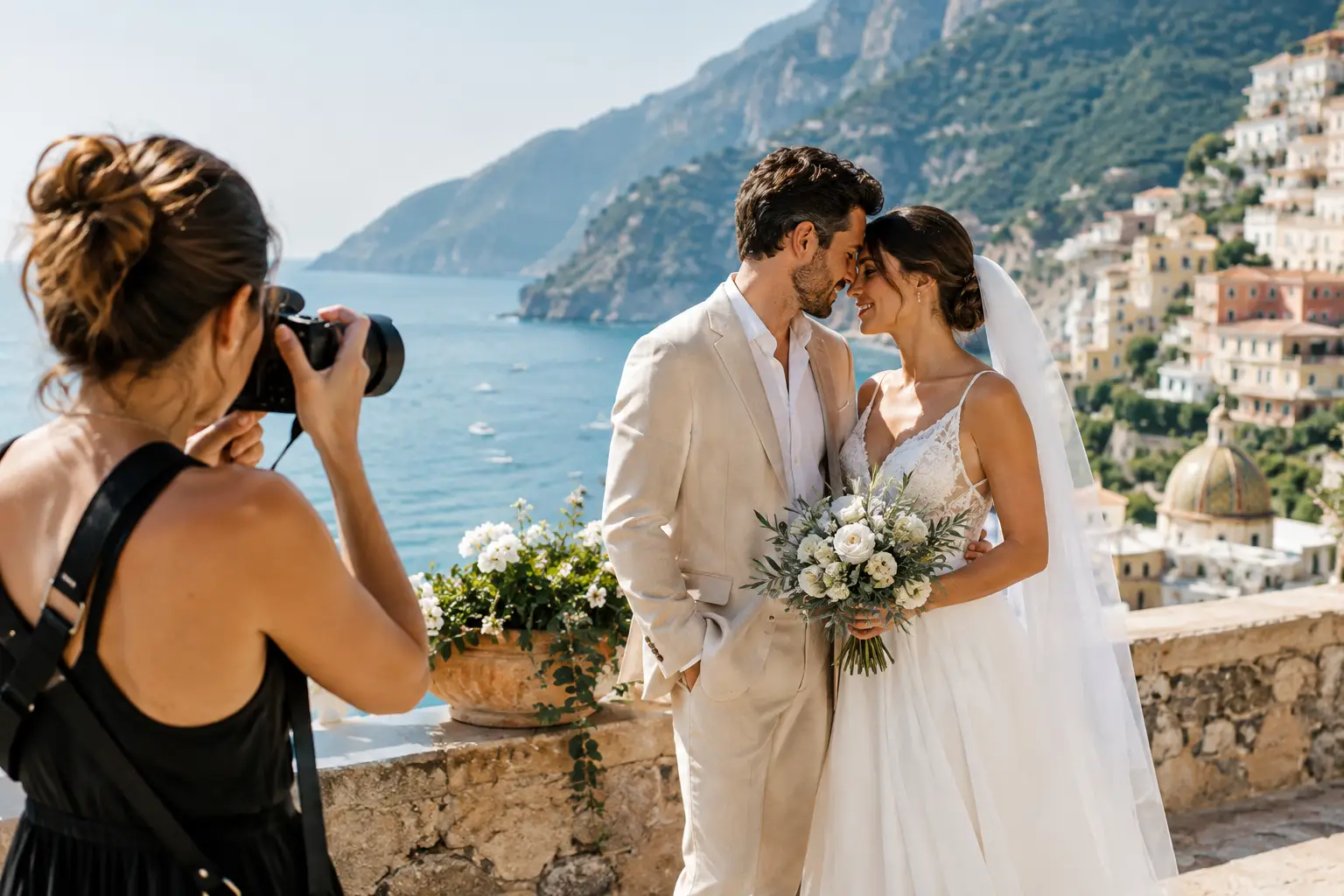
A Saturday in Positano can be spoken for long before the summer arrives. The same is true of sought-after dates in Ravello, Sorrento, and along the quieter Cilento Coast. If you are asking when to book wedding photographer coverage for an Italian celebration, the most useful answer is usually earlier than you think – particularly if photography is central to how you want the day to be remembered.
For couples planning from abroad, photography is not simply another item to confirm after the venue. It shapes the rhythm of the day: when you get ready, how you move through a busy coastal town, whether portraits happen in sharp midday sun or the softer light before dinner, and how freely you can remain present with the people you love. Booking early gives those decisions the time and care they deserve.
When to book a wedding photographer for Italy
For a destination wedding on the Amalfi Coast, aim to reserve your photographer 12 to 18 months before the wedding date. This is especially wise for celebrations from May through October, when international travel, limited venue dates, and Italy’s strong wedding season converge.
If your date falls on a Friday or Saturday between late spring and early fall, 18 months is not excessive. Positano and Ravello are compact places with an extraordinary concentration of destination weddings. A photographer whose work feels aligned with your vision may be committed well ahead of time, often before every detail of the celebration has been finalized.
A wedding in the shoulder months can allow more flexibility. April, early May, late October, and November may offer a wider choice of dates, although this is never a reason to leave photography until the last minute. Light changes beautifully across these months, but weather, daylight hours, and the logistics of moving between locations need considered planning.
For a smaller elopement, an intimate dinner, or a weekday celebration, six to 12 months can sometimes be enough. The distinction is not the size of the guest list alone. It is the importance you place on a particular photographer, the date, and the amount of guidance you would like before arriving in Italy.
Why early booking matters on the Amalfi Coast
The Amalfi Coast rewards preparation. Its beauty is immediate – stone terraces, faded facades, sea horizons, lemon groves, and evening light moving across the cliffs – but it does not operate like a flat, easily timed city wedding.
In Positano, narrow lanes and stairways can be lively from morning onward. In Ravello, the light can feel open and luminous above the coast, while the descent toward dinner may be cooler and faster than couples expect. In Amalfi, Atrani, Praiano, and Conca dei Marini, the route between a ceremony, a portrait location, and a reception can be affected by traffic, boat schedules, local activity, or simply the pace of a town built vertically.
An experienced local photographer does not need to turn the day into a photo production. Quite the opposite. Early involvement makes it possible to protect unhurried moments: a few quiet minutes while getting ready, an elegant portrait session when the light is kind, and enough margin for you to enjoy aperitivo rather than disappear from it.
It also helps establish what kind of imagery matters most to you. Some couples want a more editorial approach to their portraits, with gentle direction and attention to composition. Others care most about candid exchanges – a parent seeing the finished look, friends gathering on a terrace, the energy of a packed dance floor. The strongest wedding coverage can hold both, but the balance should be understood before the schedule is set.
Book after the venue is confirmed, but not after every detail
Ideally, secure the venue and date first, then contact your photographer immediately. There is no need to wait until floral designs, stationery, menus, or transportation are complete. In fact, waiting for every decision can put unnecessary pressure on the process.
A venue gives the photographer the essential framework: location, ceremony time, reception setting, access, and the general movement of the day. From there, a preliminary conversation can clarify the coverage that suits your celebration and identify any schedule considerations early.
This is particularly valuable for venues with a ceremony in one location and dinner in another. If a boat transfer, a walk through town, or a drive along the coast is part of the plan, photography timing should be woven into that journey with restraint. A beautiful view is never worth making guests wait or making the couple feel rushed. The goal is a day that photographs with ease because it has been designed with realistic timing.
Your date, season, and priorities change the timeline
There is no single deadline that applies to every wedding. If you are marrying on a weekday in the Cilento Coast, perhaps near Castellabate or Santa Maria di Castellabate, and have flexibility around the date, you may have more room to choose. The coastline there offers a different pace: historic stone streets, warm southern light, and a sense of space that suits intimate, story-driven celebrations.
Yet flexibility should not be confused with unlimited availability. Photographers often accept only one wedding per day, and a full wedding weekend can involve travel, scouting, timeline discussions, and the focused presence that destination coverage requires.
You should also book sooner if any of the following are true:
- You have a fixed peak-season Saturday.
- You are planning a multi-day celebration and want welcome-event or pre-wedding coverage.
- You would like an engagement session or proposal photographed during an earlier trip to Italy.
- You are drawn to a specific visual style and do not want to compromise on it.
For an Italian wedding, the date is only one part of availability. The scope of the story matters too.
What to ask before you reserve
The first conversation should go beyond availability. Ask how the photographer approaches the balance of documentary observation and guided portraits, how they work in bright Mediterranean conditions, and how they help shape a comfortable timeline. These answers reveal more than a gallery of beautiful images can on its own.
Look closely at consistency. A portfolio should show more than a handful of sunset portraits. Notice the quiet indoor moments, the changing color of late afternoon, ceremony expressions, family interactions, dinner under mixed light, and the movement of the party after dark. A wedding is not photographed in one perfect hour, and a complete body of work should feel assured across the entire day.
It is also worth discussing who will be present, how communication works before the wedding, and whether an album is part of the experience you want. A handcrafted fine-art album gives the photographs a lasting physical life. For many international couples, it becomes the object they return to long after the travel memories have settled.
Do not wait for a “perfect” planning stage
Couples occasionally hesitate because they do not yet know the exact ceremony time or how many guests will attend. Those details matter, but they can evolve. The first priority is to find a photographer whose eye feels right and whose experience gives you confidence.
Gennaro Piscopo Photography approaches each celebration with the discretion of documentary work and the considered direction of an editorial portrait. With more than two decades behind the camera, the focus remains on honest connection, expressive light, and images that retain the atmosphere of the place without overpowering the people in them.
If you are still deciding, reviewing a full portfolio story is more revealing than saving isolated images. It shows pacing, intimacy, and how a photographer responds when the weather shifts, the schedule moves, or emotion arrives without warning. Once the work resonates, an inquiry can begin the practical conversation around your date, location, and plans.
A considered timeline leaves room to feel the day
Booking early is not about making your wedding feel more formal or overplanned. It is about giving yourself choices. You can shape a day with breathing room, choose light rather than chase it, and work with someone who already understands the terrain beneath your plans.
Reserve the photographer when you know the date and feel a genuine connection to the work. Then let the planning unfold around that decision, with enough space for the coast, your guests, and the unscripted moments that give a wedding its soul.