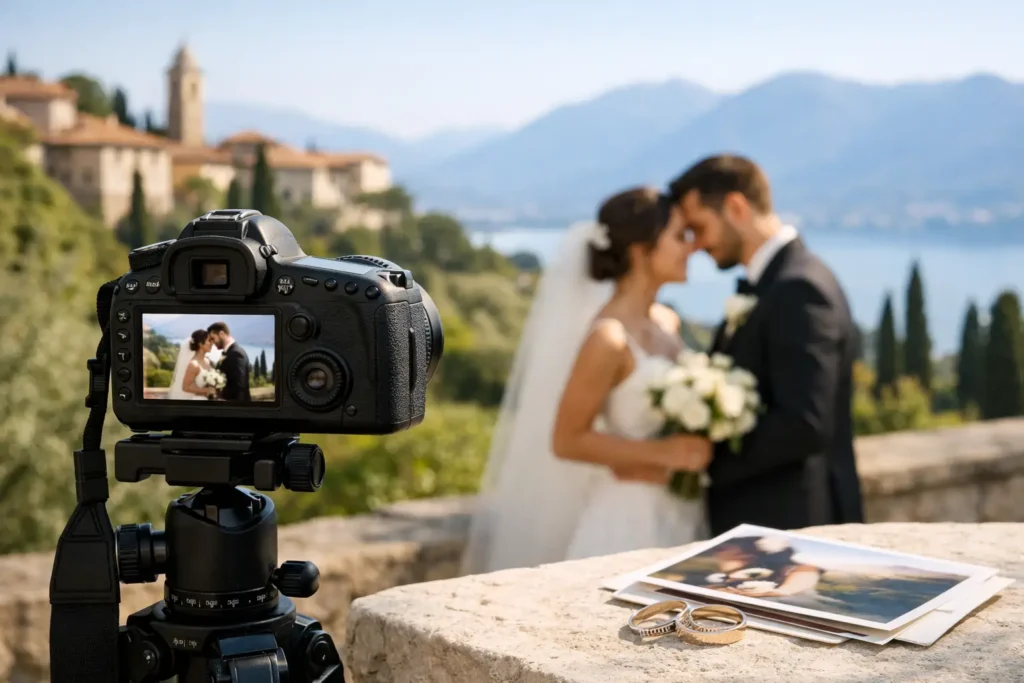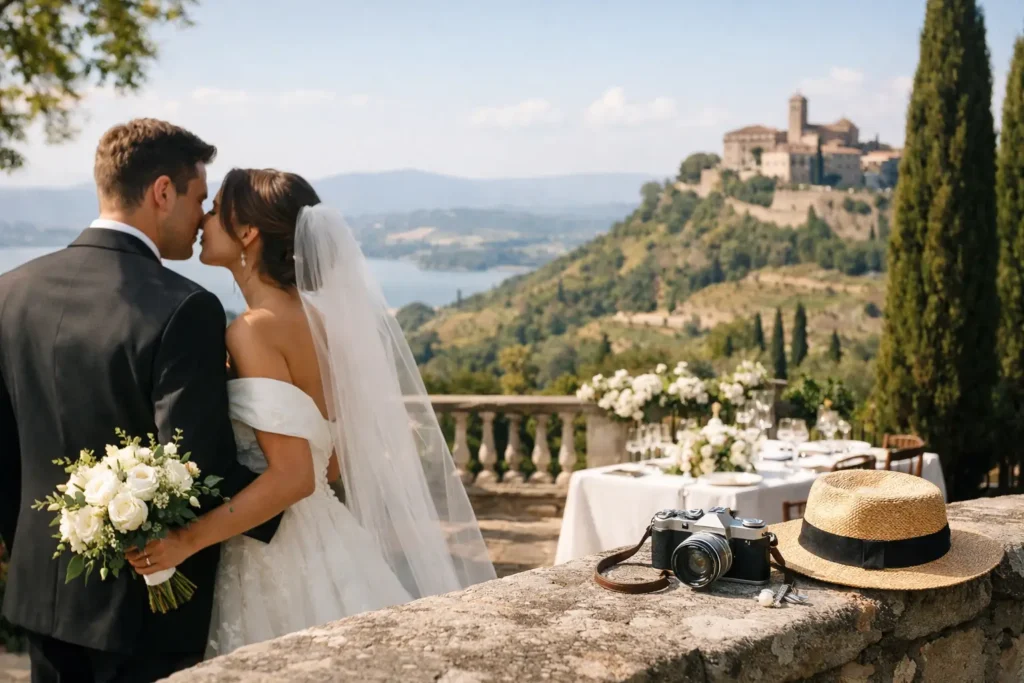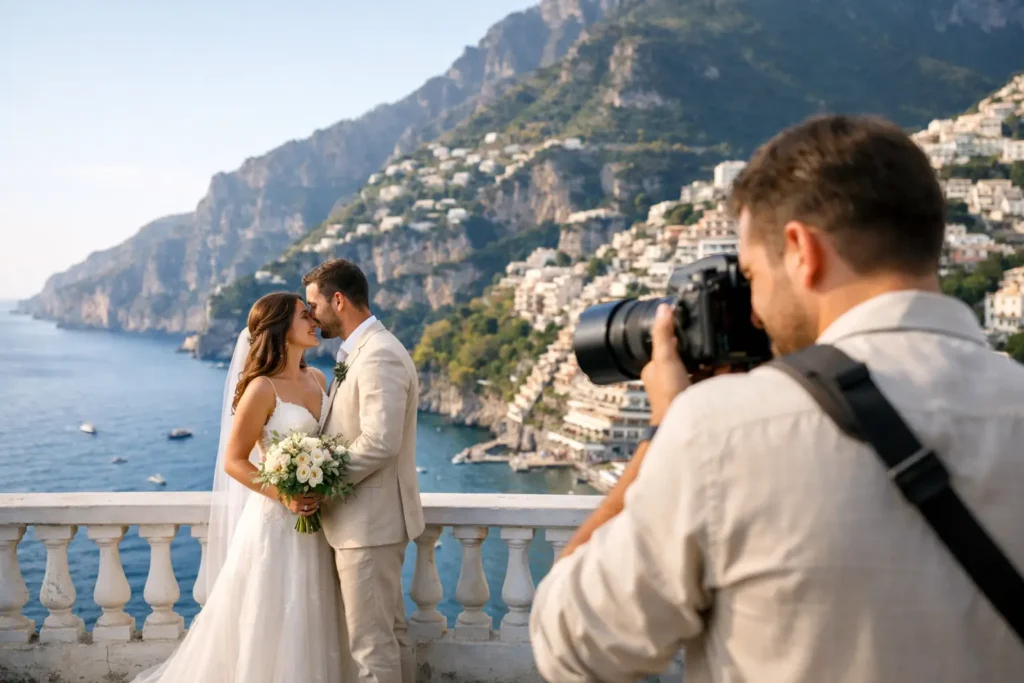
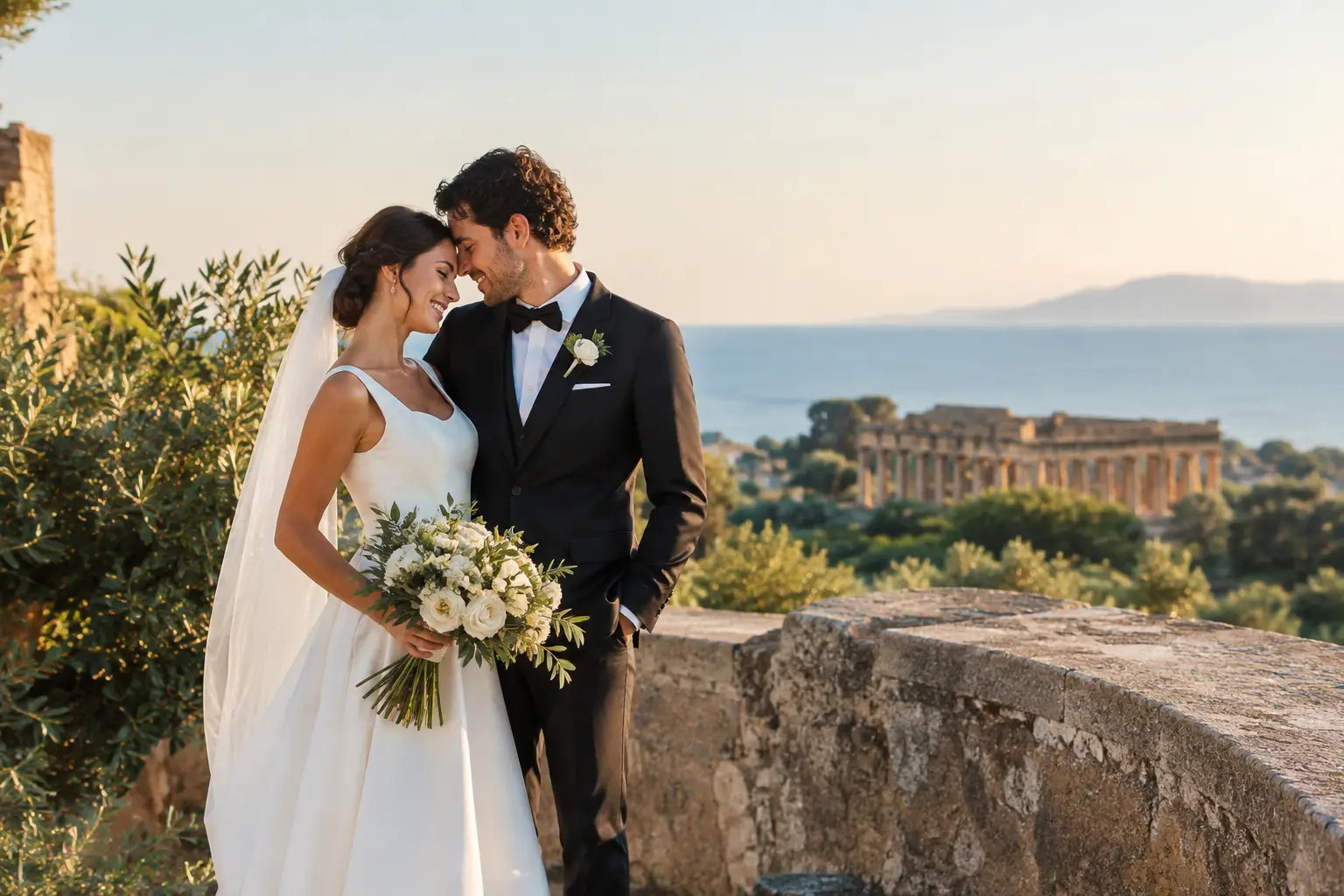
Paestum asks for a different rhythm. Its ancient Doric temples stand in an open coastal plain rather than above a busy cliffside, giving wedding portraits a rare sense of space, stone, and sky. This Paestum wedding portrait planning guide is designed for couples who want those photographs to feel editorial and emotionally present, without turning a celebration into a long production.
The key is not simply arriving at the temples in formal attire. It is choosing the right light, allowing enough time to move at an unhurried pace, and understanding where the grandeur of the landscape should lead the image – and where the connection between the two of you should.
Begin with the atmosphere you want to remember
Paestum has visual weight. The fluted columns, weathered limestone, long grasses, and broad horizon can make even a quiet frame feel cinematic. That scale is beautiful, but it needs a thoughtful approach. A couple placed too far from the camera can become a small detail in a grand view; photographed too closely, the site may lose its sense of place.
Before building a portrait schedule, decide whether you are drawn to architectural images, intimate portraits, or a balance of both. Architectural photographs use clean lines, negative space, and the strong geometry of the temples. More intimate frames might use a fragment of stone in the background, soft evening light on skin, or the movement of a veil against the open landscape. Both belong in a complete story, but they need different timing and direction.
For an elegant destination wedding, I usually recommend thinking of portraits in chapters. The first can be composed and spacious, allowing Paestum to establish the setting. The next should feel closer and less arranged: a hand held, a private exchange, the natural pause after walking away from the formal celebration. This creates images with both visual authority and soul.
Light at Paestum is part of the plan
The light here is not filtered by the narrow streets and high facades familiar to much of the Amalfi Coast. It arrives openly, often bright and direct during the middle of the day. In summer, that can be striking for the architecture but less forgiving for portraits, particularly when couples are dressed for a formal ceremony.
Choose early morning or late afternoon
Early morning offers a quieter, more delicate mood. The stone can appear cool and silvery, with soft shadows and a sense of stillness before the day begins. It is especially appropriate for an engagement session, an elopement portrait session, or a wedding schedule with a later ceremony.
Late afternoon brings warmer color and a more dimensional quality to the temples. As the sun lowers, the columns gain depth and the surrounding plain begins to glow. This is often the strongest window for wedding portraits, although the precise timing changes with the season and cloud cover. A clear summer afternoon and a hazy autumn evening can produce entirely different results.
The final light of the day is often best used for intimacy rather than trying to photograph every landmark. Once the sky softens, a few quiet minutes away from guests can create portraits that feel relaxed and unforced. If sunset matters to you, protect that time in the schedule rather than hoping it appears between speeches, greetings, and dinner.
Do not underestimate the midday alternative
Sometimes a wedding timetable makes golden-hour portraits impossible. That does not mean the photographs must feel compromised. Midday works best when it is treated honestly: use shade where available, look for strong architectural contrast, and embrace a more graphic editorial approach rather than attempting soft, romantic light in conditions that will not provide it.
A well-planned indoor moment can also be valuable. Near a window, a bride or groom can have a few calm minutes for portraits before leaving for the ceremony, while the brighter part of the day is reserved for family photographs, travel, or the celebration itself.
Build a portrait schedule with breathing room
For most wedding days, 45 to 60 minutes is a sensible starting point for a dedicated couple portrait session, plus any travel and walking time. Paestum rewards a measured pace. The strongest photographs often happen in the in-between moments: straightening a jacket, gathering a dress before a few steps across uneven ground, taking a breath together before returning to your guests.
Trying to cover the temples, nearby coastal scenery, and every group photograph in one short interval can make the experience feel rushed. It is usually more refined to choose one principal location and photograph it well. If you have additional time on another day, a pre-wedding session can give you greater freedom with wardrobe, timing, and movement.
A first look can be especially useful for couples who value portraits but do not want to miss the atmosphere of cocktail hour. It creates an intimate moment before the ceremony and opens a longer window for photographs while hair, makeup, and clothing are still fresh. It is not right for everyone; some couples deeply prefer the first meeting at the aisle. The best plan is always the one that protects the emotional shape of your day.
Respect the archaeological setting
The temples are not a backdrop to be treated casually. They are part of an extraordinary archaeological site, and that sense of history should inform how portraits are made there. Access conditions, opening hours, pathways, crowd levels, and photography policies can change, so confirm the current requirements with the relevant authorities well before the wedding date. Your planner and photographer should coordinate the practical details rather than leaving them to the final week.
Choose footwear with care, especially if you plan to walk beyond smooth paved areas. A dramatic gown, long veil, and heels can look exceptional in photographs, but the ground may be uneven and the coastal breeze can be stronger than expected. This does not call for less beautiful styling. It calls for a calm team, a little extra time, and practical preparation behind the scenes.
It is also worth considering the season. Summer brings longer days and a vivid, sunlit palette, but also heat and visitors. Spring can feel fresh and green, while early fall offers softer temperatures and a more muted, elegant color range. Winter light can be restrained and beautiful, though schedules need greater flexibility around weather and earlier sunsets.
Let the direction feel natural, not performed
Most couples do not need to know how to pose. They need clear, discreet direction and enough space to settle into one another. I begin with simple positioning that flatters the light and composition, then let movement do the work: walking slowly, turning toward each other, adjusting an embrace, pausing close enough to speak quietly.
At Paestum, this approach is particularly effective because the setting already provides structure. The vertical rhythm of the columns, a distant temple line, and the open sky give the frame purpose. There is no need to fill every moment with elaborate posing.
For editorial portraits, small adjustments make a meaningful difference: the angle of a shoulder, a hand placed with intention, the line of a dress, or a brief glance away from the camera. For documentary images, the focus shifts to what is actually happening between you. The best galleries move naturally between these two languages, preserving both the sophistication of the place and the genuine feeling of the day.
Consider a separate Paestum portrait session
A wedding day has its own momentum. If Paestum is central to your visual vision, a separate session before or after the wedding can be an excellent choice. It allows for early morning light, a second look, or more time to explore without guests waiting or dinner approaching.
This is also a thoughtful option for couples marrying elsewhere along the Cilento Coast, perhaps in Castellabate, Santa Maria di Castellabate, Acciaroli, or Agropoli, who would like Paestum to become part of their wider Italian story. The photographs need not repeat the wedding-day images. They can be quieter, more fashion-led, and shaped around the landscape.
When reviewing portfolio stories, look for work that balances a sense of place with natural connection rather than relying on scenery alone. Then use the inquiry page to share your date, itinerary, and the kind of images that feel most like you. A thoughtful conversation early in the planning process leaves room for the light, the setting, and the unscripted moments that cannot be scheduled.