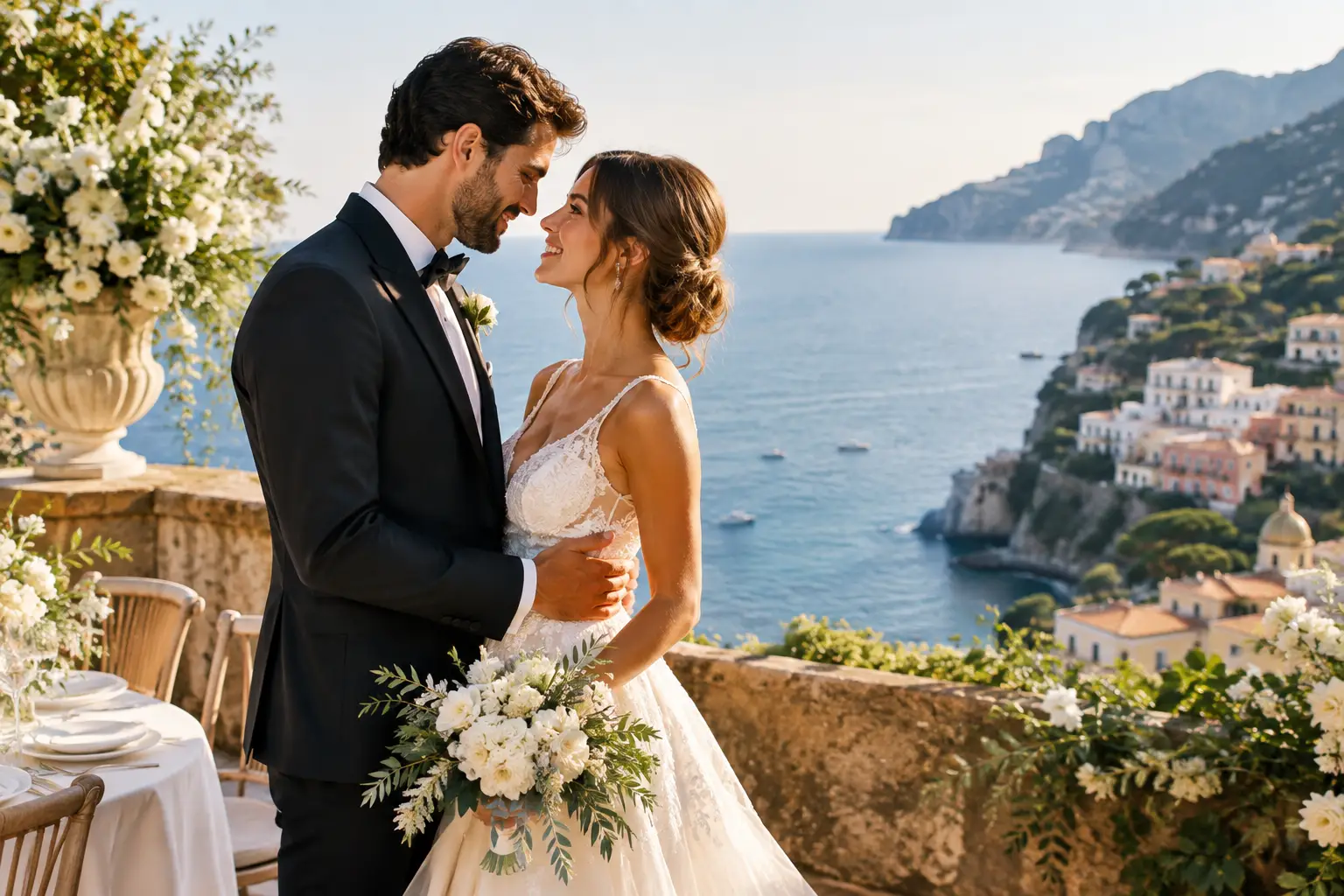
A wedding dinner on a Ravello terrace, with candlelight beginning to soften the stone and the coastline fading into blue below, has a very different financial shape from an intimate lunch in a family-run estate in Cilento. That is why the average cost of wedding in Italy is useful only as a starting point. Italy offers extraordinary range, and the final investment is shaped less by a single national figure than by your guest count, location, season, and the kind of experience you want to create.
For international couples, the question is rarely simply, “What will it cost?” More often, it is: where should we place our priorities so the celebration feels personal, beautifully considered, and relaxed from the first welcome drink to the last dance? Understanding where the budget goes makes those decisions much easier.
What is the average cost of a wedding in Italy?
For a refined destination wedding in Italy, many international couples spend somewhere between $60,000 and $150,000 or more. A smaller gathering, particularly outside the most sought-after areas and dates, may fall below that range. A multi-day celebration in Positano, Ravello, Capri, or another high-demand setting can rise substantially above it.
These figures generally reflect the wedding celebration itself: venue, food and wine, planning and design, flowers, music, photography, beauty, transportation, and guest-facing details. They do not always include a couple’s travel, honeymoon, or every guest’s accommodation. It is worth clarifying exactly what is included whenever you compare estimates, because Italian venues and planners can structure costs quite differently.
The useful distinction is between a wedding that is expensive because it is large and a wedding that is expensive because it is highly layered. A 25-person dinner with exceptional food, thoughtful florals, a private setting, and an extended photographic experience may have a similar overall investment to a much larger reception with simpler production. Neither approach is better. The right one is the one that reflects how you want your guests to feel.
The choices that shape wedding costs in Italy
Location and venue access
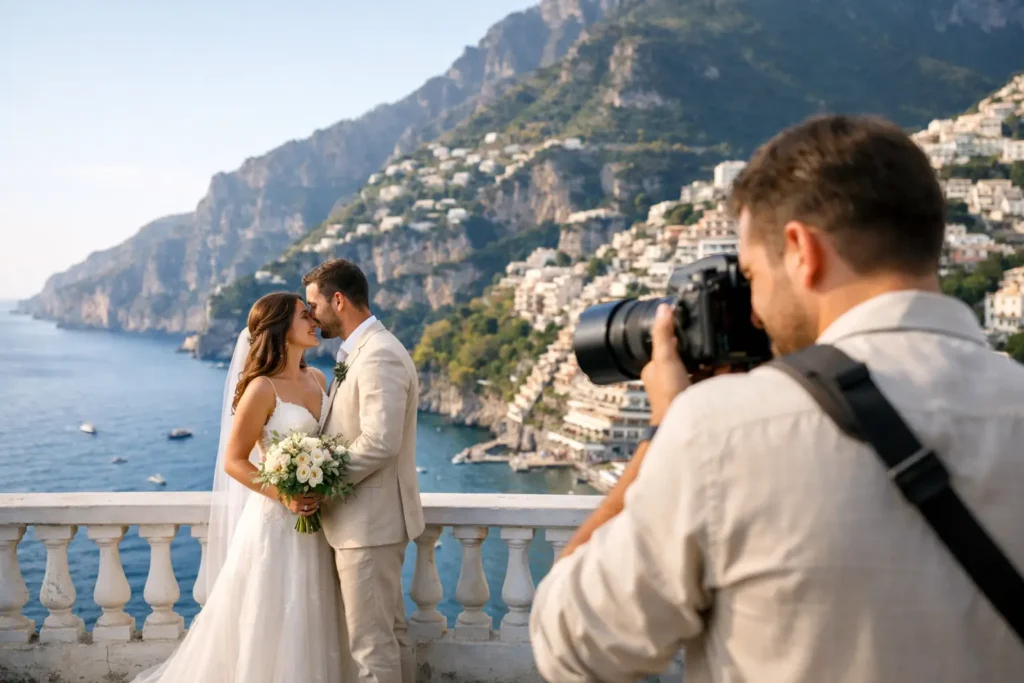
On the Amalfi Coast, the setting is part of the celebration. Historic villas, garden terraces, cliffside hotels, and restaurants with wide sea views require more complex logistics than a countryside property with direct vehicle access. In Positano especially, narrow lanes, stairways, pedestrian zones, and limited loading access influence staffing, deliveries, timing, and transportation.
Ravello offers a different rhythm. Its elevated gardens and formal architecture can create a composed, editorial setting, while the journey up from the coast still requires careful organization. In Sorrento, there can be more flexibility in terms of access and accommodation, while retaining views across the Bay of Naples. Further south, the Cilento Coast and Castellabate can offer a quieter sense of place, with a slower pace and more room for an event to unfold naturally.
The venue fee is only one part of the location cost. Ask whether exclusive use, ceremony setup, furniture, lighting, staff, taxes, and an alternate-weather plan are included. A lower initial quote can look very different once the practical requirements of a wedding day are added.
Guest count, dining, and hospitality
Guest count has the most immediate effect on the budget, but its influence reaches beyond dinner plates. More guests usually mean more transport, welcome drinks, seating, florals, rentals, stationery, staffing, and space requirements. A celebration for 80 guests is not merely double the cost of one for 40.
Italian hospitality is often a central reason couples choose to marry here, and it deserves room in the budget. A long aperitivo with regional dishes, a carefully paced dinner, generous wine service, and late-night food create an evening with texture and warmth. For many guests traveling from abroad, these details are part of the memory they carry home.
A multi-day format also changes the picture. Welcome gatherings, day-after lunches, and boat outings can make a destination wedding feel less rushed and allow more meaningful time with the people who have traveled far. They should be planned intentionally, rather than treated as incidental additions at the end of the process.
Season, day of the week, and timing
The months from late spring through early fall are especially desirable across Southern Italy. High season dates, particularly weekends, command greater demand from venues and experienced event teams. May, June, September, and early October are often favored for their balance of light, temperature, and atmosphere, although coastal weather always deserves respect.
There is no universally perfect month. July and August bring long evenings and luminous water, but also heat, crowds, and heightened logistical pressure. Early-season dates can feel fresh and green, while autumn can offer warmer sea tones and a more intimate pace. Choosing a weekday or considering the shoulder season may create more flexibility, but it should suit your guest experience rather than serve as a compromise for its own sake.
From a photographic perspective, timing shapes both the day and the images. A summer ceremony in full afternoon sun requires a different plan from a late-September ceremony. On the coast, a well-considered schedule protects the comfort of your guests and leaves space for portraits in gentler light, without pulling you away from the celebration for long.
Where couples often underestimate the budget
Transportation is one of the most common surprises on the Amalfi Coast. Moving guests between hotels, ceremony sites, and receptions needs close coordination, especially when roads are busy or access is limited. If guests are staying across several towns, the plan becomes more involved. Building in time is as valuable as building in funds.
Weather planning is another essential consideration. An elegant indoor alternative, clear tents, flooring, or the ability to move dinner without losing the character of the evening can affect costs. This is not pessimism. It is what allows everyone to remain calm if coastal conditions change.
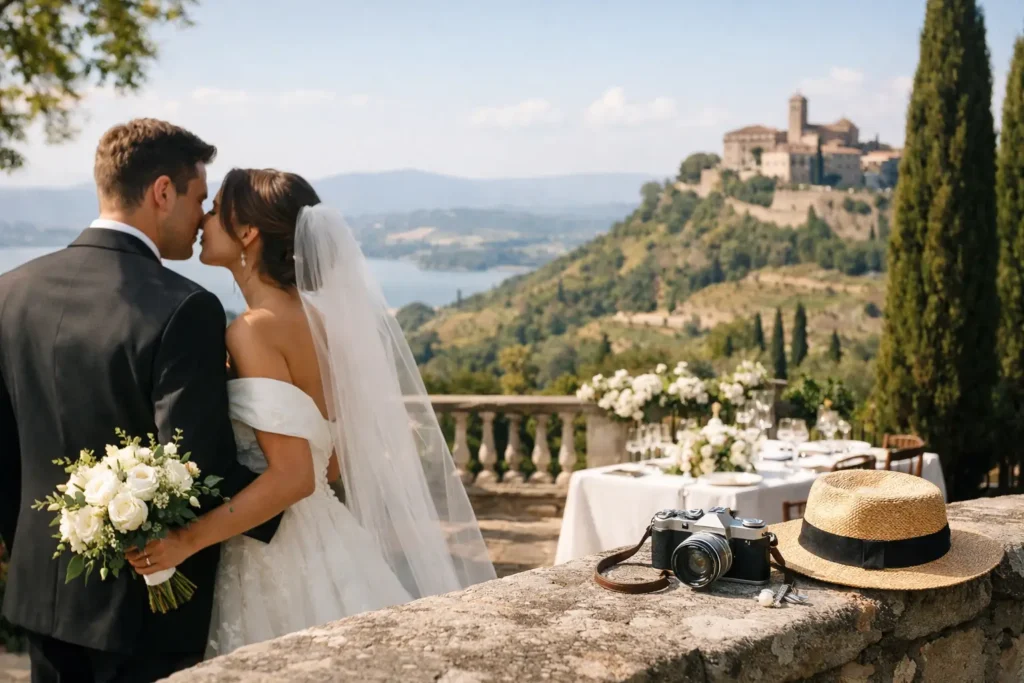
Florals and production deserve a similarly realistic approach. A few sculptural arrangements in the right places can have more visual impact than decorating every surface. But installations, candlelight, custom furniture, and lighting all involve labor, delivery, setup, and removal. Their value lies in the atmosphere they create, not in how much fills the frame.
There are also the quieter investments: hair and makeup schedules, welcome bags, printed menus, room blocks, guest assistance, and the planner’s coordination of an international event. None may feel dramatic in isolation, yet together they shape whether the day feels effortless for you and your guests.
How to set a budget without losing the feeling
Begin with three decisions: your approximate guest count, the part of Italy that feels most like you, and the experience you want guests to remember. Is it a candlelit dinner with 30 people? A lively weekend for 100? A ceremony with the sea behind you followed by a long, elegant meal? Once those choices are clear, the budget becomes a way of protecting the feeling rather than a list of restrictions.
Reserve a contingency from the beginning. Destination events involve variables that local weddings may not, from weather solutions to revised transport plans. A contingency offers freedom to respond thoughtfully instead of making decisions under pressure.
It also helps to decide what should be felt and what should be seen. Guests will feel exceptional food, ease of movement, genuine welcome, and a comfortable pace. They will see the design, fashion, landscape, and the intimate gestures between people. The strongest celebrations do both, but every couple will prioritize them differently.
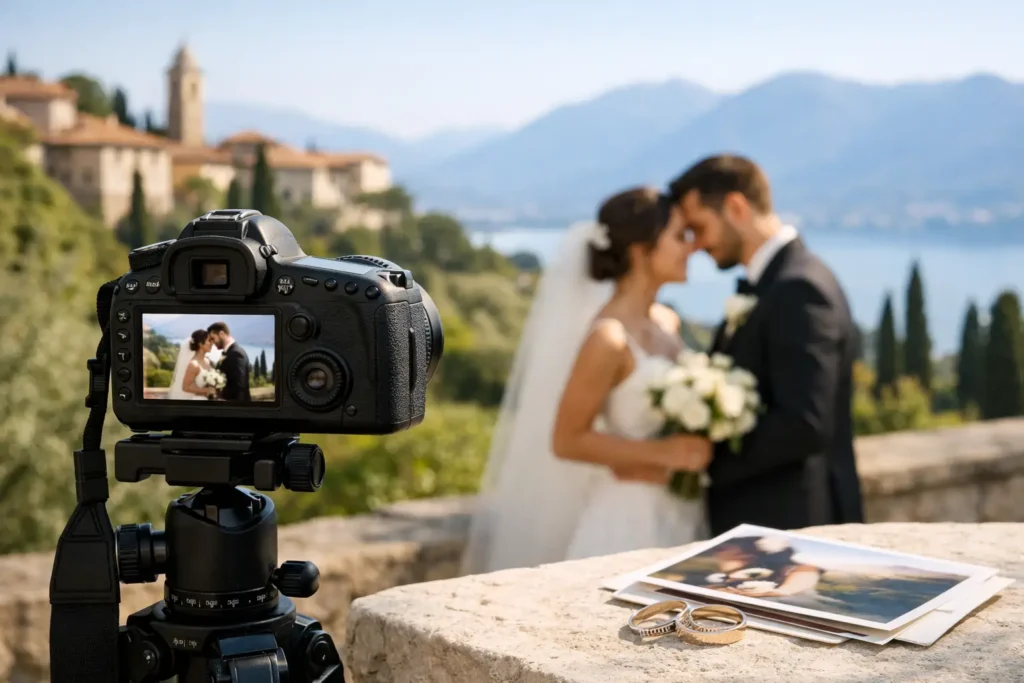
Photography belongs to both categories. It is an active part of the day, requiring sensitivity to changing light, crowded terraces, family dynamics, and the small unscripted moments that give a wedding its soul. It is also what remains after the flowers have been gathered and the tables cleared. When reviewing a photographer’s work, look beyond a handful of beautiful portraits. A full story should show how the day moves from anticipation to ceremony, dinner, and celebration with a consistent point of view.
For a sense of that story-driven approach, spend time with a complete portfolio collection rather than making a decision from social media alone. The images should feel natural but intentional, with room for both editorial elegance and the honest, fleeting expressions that cannot be staged.
A more useful question than the average
The average cost of a wedding in Italy cannot tell you whether a particular celebration is worth its investment. It can only show the scale of the decision. The more revealing question is whether each choice supports the atmosphere you want to create: generous, intimate, lively, composed, or deeply personal.
Give yourselves enough time to understand the practical realities of your chosen coast, especially access, guest travel, and the rhythm of the light. Then make room for the elements that will stay with you: the voices around the dinner table, the salt air after sunset, the embrace before the ceremony, and photographs that let you return to all of it with clarity years later. When you are ready to discuss your celebration in Southern Italy, an inquiry can be the beginning of a considered visual plan for the day.